The roomy church: Uniting around what unites us.

Minolta DSC

photo credit: Oh My Apartment. http://tinyurl.com/o4ouzg2

Snark Meter Sorta Snarky.002

A somewhat sarcastic yet serious call to our GC78 delegates to under react.

This post might be the blogospheric equivalent of whistling in the dark. You are pretty sure it won’t really help, but you do it because it makes you feel as if you are at least doing something…

To those of you packing your bags for General Convention let me share a story: Last year I was at the gathering of province VIII ministry leaders. (For non-episcopalians “the province” is episco-speak for one of 9 geographical regions in the Episcopal Church.) At the meeting we were discussing how difficult it is to get folk from the 19 diocese’ and jurisdictions in our province to work together. There was a good deal of frustration at parishes lack of participation in collaborative efforts. We discovered the reason was a lack of understanding of what we were united on. “We aren’t sure other folk are the same kind of Episcopalians we are?” several said. I suggested, “It might help us get buy-in if we had a statement of what we do agree on.” The consensus in the room was that we were such a diverse church that it would be impossible to agree on any kind of a statement. I pushed, “Can the youth people give it a try?” It took one draft and three edits for two liberals, a conservative, and a moderate to hash out a statement of “shared values.” Task completed in one day.

As we showed it around a fascinating thing happened: Other provincial ministry areas saw it and asked if they could use it too. An even more fascinating thing happened when I showed it to two groups of friends. One a group of progressive youth ministers from a variety of traditions (including those the Episcopal Church is in full communion with), the other a group of senior youth directors who lead the group that left us…you know, the grumpy quitters who say we drove them out. Here is where it gets really interesting: Those we are in “full communion” with said, “Those don’t describe us at all.” One, a person with a PhD in theology, said, “I’m not sure I know what half of those points are even about.” The response from the group led by former Episcopalians? “Those are fabulous. Far more descriptive of us than what we wrote!” Now the punchline: The former Episcopalians asked, “Can we use your statement?”

Insert snark: Yes, the theologically pure schismatists asked to use the shared values from a liberal province of the heretic church, while our other pure and undefiled progressive partners, with whom we have so much in common, didn’t even understand the statement.

My point: What unites Anglicans as Great tradition formed, prayer book using, rejectors of the modern pattern of song and sermon for the ancient pattern of scripture and supper, is still far greater than what divides us.

Please remember that as you travel to Salt Lake City. For all of our lawsuits and counter-suits and leisure suits, what unites Episcopalians, even today, is greater than what divides us. That will not be true, though, if you over-define and over-canonicize us. When you go to general convention, do work hard to shrink our national structures to keep resources in the parish for evangelism and discipleship. But PLEASE resist the urge to over-define and consolidate progressive “wins.” Because, as the Reformed Episcopal Church who left us in the 1870’s over two candlesticks and one word (“regeneration” in the baptismal liturgy) show us, what we are arguing about today is not what we will be arguing about tomorrow. Just ask someone from the REC. They put “regeneration” back into their baptismal liturgy in the 1980s. They put the candlesticks back on the altars in the ’60s. No, we will not be arguing about these things in fifty years. Or even twenty. Time will sort out our sexuality stuff. Canonical over-definition and prayer book revision always peels off another 100,000 Episcopalians. And in case you haven’t checked recently, we don’t have them to peel off.

So please, deputies and bishops, as you meet and deliberate our future, please make the hard decisions to shrink our top heavy structures. But when it comes to theological and canonical decisions, especially decisions around marriage, remember that success strategy that you learned in your parish ministry: the power of the under-reaction. You have the votes. You can win. But you can win in a way that creates so many losers as to erase that win. To quote a bishop friend, “Anglicanism, at its’ best is tentative, nuanced and compromised.”

Delegates and bishops, I beg you, under react. Keep us roomy. In a roomy church everyone wins.

Shared Values.001

The Future of the Episcopal Church: Being “poised for growth” is not growth

High-DiveSnark MeterrealMID.003

Old joke: “What do you call a leader with no followers?” Punchline: “Someone taking a walk.”

With General Convention just around the corner there is much talk in Episcopal clergy circles of internal restructuring schemes for our national church office. Interestingly, no one outside our tribe has ever asked me about our “structure issue.” When I speak with other clergy they ask about another issue: “What are you guys doing about your leadership issue?” They see us as having a pressing problem that most of us do not seem to be able to see: A significant number of our “leaders” don’t have many followers.

The numerical decline of the American mainline has left the offices of the historic denominations in a state of continual “restructuring” (a.k.a. “downsizing”). These efforts cost piles of money, take years to enact, and generally leave us with more of the ineffective same. There is a reality instinctively understood by independent churches: churches are neither planted nor grown from national headquarters but by local leaders and their local followers. Church planters know the leadership equation:

 Talent + Preparation + Opportunity + Expectations + Effort = Results

Or as Scott Haas the planter of Substance, a Minneapolis church exploding with millennial generation parishioners says, “The right person, at the right time, in the right location, with the right methods, with the right inner circle of leaders, equals success.”

Our results stare us in the face: In numeric decline for thirty years, we are now in numeric freefall. Episcopal churches have lost a quarter of our Sunday attendance over the past decade: 823,000-623,000 per week from 2003-2013. And, lest you believe the rhetoric our decline has bottomed out, in 2013, the last year we have statistics for, the decline was 2.6%, an increase over the 10 year average of 2.4%. Conclusion, we have shrunk, are shrinking, and the rate of our decline is accelerating.  To make matters worse, this summer our General Convention will contemplate new rounds of canonical and prayer book revisions that threaten to marginalize whole groups of parishioners, threatening yet another slow trickle from our churches. And, as if we have not had enough bad news, we are about to enter what church statistician Lovett Weems calls “the tsunami of death” as our builder generation attendance core become, paraphrasing St. Paul, “absent in the body to be at home with the Lord” over the next decade.

So, If our results do not “equal success,” where in the equation are we falling short? Is it the right people? The right location? The right methods? or the right inner circle? Because our leaders have been telling us for a decade that the Episcopal Church is “poised for growth.”

And, although the first half of this post might seem to indicate otherwise, I actually believe them.

I do believe that with our inner-city locations, historic buildings, broadly creedal ancient-future faith, communities shaped in daily immersion in the scriptures and weekly sacramental worship, our willingness to form communities that help one another strive for personal holiness with grace toward others, of agreeing to pray together rather than agreeing to sign the same doctrinal statements, that we really are poised for growth.

You should know, however, that I myself was once poised. I was a freshman in high school. It was in the swimming unit of second hour Physical Ed. I was poised on the end of the high dive. Every sinew of my skinny body twitched in readiness to propel myself off that board. However, fear won out over the desire to impress the girls below. Fear and the awareness that I did not know how to dive – I lacked diving talent and preparation. So I turned around and slunk down the steps of the board to the jeers of my pre-sensitivity era friends. The point: Being “poised” to do something doesn’t get it done. One still needs talent + preparation + expectations + effort in order to go get the results that opportunity leaves us “poised” to achieve.

Will we Seize Our Episcopal Moment?

Will we turn it around? As “The seed that grows on its own” parable (Mark 4:26-29) taught us this past Sunday, the kingdom will keep growing. Last year, for instance, the Sunday attendance of 10 American churches grew by 2000 people or more. But we will only reap the harvest into our churches if we cast the seeds of the Word of God and wield the sickle to bring in the harvest. We will have to overcome our hesitation at using the God given tools of evangelism and discipleship if we are to bring in the harvest God has prepared. The kingdom is growing. God sees to that. But I see a potential pitfall in our (much needed) restructuring efforts: That of staying in the shed “sharpening” the tools to create what has been referred to as a “leaner, meaner, more responsive instrument.” But then never using it.

Will we seize our Episcopal moment and join God’s harvest? Or will we leave it to others?

General Convention 2015 – Will history repeat itself?

photo credit Susan Snook

photo credit Susan Snook

Snark Meter Sorta Snarky.002

It is a business meeting that inspires either the deepest anxiety or absolute apathy: General Convention – the triennial business meeting of the Episcopal Church.* This July we will have another of these enormous shindigs in Salt Lake City. What happened at the last one encouraged me.

My perspective on General Convention 2012 was somewhat unique: I was not a member of any of the “usual suspects” at General Convention. I was not a “deputy” (elected lay and clergy representative), although I listened privately to the perspectives of many deputies. I was (obviously) not a bishop, although I spent a fair amount of time privately listening to the widely divergent viewpoints of four bishops and their spouses. Neither was I a member of one of the many lobbying groups that show up at these events to push the church toward greater “justice.” Why was I there? I manned a booth with several friends attempting to rally adults to take the Good News of Jesus to youth outside the walls of the church. In other words, I was about as dispassionate an observer as one can be as an insider in our institution.

What encouraged me at GC12? The legislation that summer fell into three basic groups that illustrated trends:

Group One: legislation for theological change

-Allow Communion for people who have not been baptized. (A no brainer for evangelicals, but a big deal theologically for the church historic.): No

-Remove Confirmation as a barrier to holding parish leadership positions. (i.e. some semblance of Christian commitment prior to church leadership.): No

-Updating the 1982 Hymnal (A political precursor to revising the prayer book): No

Trending down: Theological change.

Group Two: legislation for political change 

-The bishops voted to continue making statements on moral issues such as the plight of Palestinian Christians, the use of drones, world hunger, etc. (This is an attempt to “speak truth to power.” Not to be snarky, but it strikes me as somewhat humorous that we think anyone is listening when we, 1% of the countries’ Christians, tell the government to stop shooting cruise missiles.)

-We voted to include the word “transgendered” in the list of what will not prevent someone from seeking ordination.

-We voted to have same-sex blessing rite liturgies approved for use by those who choose to do so.

Trending up: progressive politics

Group Three: legislation for mission and overcoming organizational stasis

-Sell our church HQ building in Manhattan: Approved

-Establish a committee to restructure church governance: Besides our bicameral legislative body, the General Convention, we also have a large national church office and hundreds of national committees & commissions. This new committee to “restructure” was tasked with shrinking all of this.  Approved

-Remove the stipulation that the Presiding Bishop must give up their diocesan bishop role (An attempt to roll back the ever-increasing hierarchical structure of our church since setting up of the national office in 1947.) Approved

-Perhaps most interesting of all: The bishops re-established themselves as the fulcrum in our three part divided form of government by writing a letter to the courts in Fort Worth and Quincy. Skip bracketed paragraph if you are not a church geek. 

[How does a letter rebalance power? A group of conservative bishops had written a “friend of the court” letter (Amicus Brief) to the courts in Fort Worth and Illinois defending the ancient church practice and traditional Episcopal understanding that the diocesan bishop is our church’s highest authority. The majority of the bishops were very angry about this as it undermines our lawsuits in those diocese. However, in a stroke of brilliance they chose to write a letter supporting the new bishops and the churches that remained in the Episcopal Church in Fort Worth and Quincy, without mentioning the substance of the letter written by the conservative bishops. This is dense politics, even for Episcopalians, but our bishops, by affirming the new bishops and NOT addressing the substance of the letter, re-affirmed the traditional view that bishops are the highest authority in our church – rather than a metropolitan such as a Pope, prophet, Archbishop, or even our own Presiding Bishop.]

In one swoop the bishops appear to have re-established themselves as the locus of power in the church, rather than the other two groups (the national office/presiding bishop, and the House of Deputies/Executive Council) who each behave as if they are the prime authorities. Practically speaking, in an institution with balance of powers, someone always gets a vote with just a little more weight than the others. I think it is a good thing if our bishops, who are closer to the mission field than the national office, and in recurring collegial relationship with one another, unlike the deputies. It makes for a safer, more catholic church that the bishops would be the ones with tie-breaking power.

Trending up: The scent of a revolution to drive the church back toward mission.

Summary: We seemed to be becoming a more theologically conservative, more politically progressive church that is irritated at resources being siphoned away from mission to national structures.

Why is this important for this summer’s General Convention? Because this summer we will make decisions that strike at the heart of what many perceive as our orthodoxy: marriage in our prayer book and in our governing documents. These changes will be pushed for “consistency” sake. Indeed, we will be more consistent if we, a church where many are performing same-sex marriages has that practice canonically in place. We will also be a much smaller church if that happens. This will be a bridge too far for many of the 150,000 or so remaining social conservatives in our church. In 2003 823,000 people worshipped in Episcopal Churches on Sunday mornings. In 2013 that number was 623,000 people, numbers that do not include the loss of another 10,000 Episcopalians in South Carolina. Do we really have another 100,000 Episcopalians to peel off to make us, to quote one of our seminary professors, “a leaner, meaner church”?

Far better would be to resist the urge to over-define ourselves. As Nick Knisely, bishop of Rhode Island says, “Anglicanism is tentative, nuanced, and compromised.” The tendency to over-definition is characteristic of other traditions: fundamentalism with detailed statements of faith and Rome over-defining the Eucharist in the 11th century come to mind.

My hope this summer is that cooler heads will prevail. That we will continue our previous trends toward holding the line on matters theological, being open politically, and that the scent of revolution that wanted to drive mission from a national vortex back into thousands of local communities to proclaim the Good News of Jesus in word and deed would be the place our leaders will focus this summer.

Will history repeat itself? One can only hope.


*Bunny trail: Episcopalians will tell you, chests heaving with pride, that our General Convention is the second largest legislative body in the world. When one considers that Episcopalians now comprise less than 1% of the Christians sitting in American churches on any given Sunday morning (623,000 in 2013), it raises one’s eyebrows at the hubris necessary to think that we need a decision making body second only to the group representing the one billion people of India.

Changing your church: The difference between attractive and bizarre


photo credit: oddee.com

photo credit: oddee.com

Snark Meter Sorta Snarky.002

I had a great case of teenage acne. My doctor prescribed one tetraclycline tablet per day to clear up my skin. It worked; my skin began to clear up. A big dance was on the horizon, though, and I wanted to ask a girl that I found to be particularly fetching. In my internal dialogue I wished my face looked better before I stood before this beautiful thing to ask her out. I thought, “If some tetracycline is making my face better, a bunch of tetracycline would make it much better. What I didn’t realize was that too much of a good thing has some pretty ugly side effects – such as nausea, vomiting, diarrhea, and my skin turning yellow.

In his old book The Tipping Point, Malcolm Gladwell describes the unintuitive fact that the difference between abject failure and runaway success is razor-thin. Gladwell powerful articulates that success is not additive but multiplicative-like a flu epidemic. He gives a dozen cases of small ideas that became iconic (like Sesame Street, Gore-Tex, and Hush Puppy shoes to name a few) when they “tipped.” He exposes the small tweaks that were key to getting diseases, social trends, events, and companies to “tip.” We have much to learn from Gladwell in the church – in particular his genius for mining data for what is actually there rather what we expect to see there.

Another area we could use Gladwell’s help with in the Episcopal Church: The razor thin difference between being attractive and being off-putting for the majority of seekers. Both involve change. But one change creates a fragrant aroma that draws you in. The other is a bridge too far. One is like cookies baking in the oven. The other like someone forgot to take out the trash. The first makes one interested in stepping further in. The other repulses.

Here is the principle that stands between the two: one standard deviation from the expected makes something attractive. Two standard deviations makes it bizarre. As an example, young men right now are really into big ol’ lumberjack beards and mustaches. But when one does what the fellow in the photo at the top of this post does with it, it is one standard deviation too far. It goes from attractive to bizarre.

You can see this in churches: A church that changes its music or preaching grows wildly. Change them both to something that runs counter to the expectations, and you become a bridge too far and are preaching to an empty room. You can become a socially engaged evangelical church (like Mission Community in Queen Creek, AZ) and explode, or liturgically evangelical (like New City in downtown Phoenix). Do both at the same time and it closes the front door rather than opening it.

You can see this in seminaries: A seminary that teaches the standard, expected evangelicalism starts an “Anglican Formation” program. These have become the fastest growing programs at more than a dozen evangelical seminaries across the country, while our seminaries continue to struggle for students. Why? One reason is that our seminaries tend to teach experimental theologies, community organizing, and a minimum of the expected biblical languages, scriptural foundations, and exegesis courses. We are two or three standard deviations past “attractive.” This makes our seminaries “scary” to gifted but unaffiliated students.

In another example, I started a church that had a difficult time generating momentum for a host of reasons. One significant issue was trying too many things at once. We were multi-ethnic and liturgical. Either one of those was attractive in our context. But being both liturgical and tri-ethnic in our leadership teams was a very difficult balance that kept many who were game for either/or but not both away from us. In addition, we had a third deviation from the norm: we were in a neighborhood of immigrants who had never heard of the Episcopal Church. And a fourth: We were a training ground for young adults in leadership, so our service quality was pretty uneven. Being “different” made people want to come. But we were often a too different for folks.

The church often gets lured into the fallacy that more of something successful is better. “Progressive politics helped us, so lets have progressive liturgies, and progressive theology.” (You could very easily substitute the word “conservative” here. Or most any other word, for that matter.) How do we avoid becoming bizarre?

Take aways:

-Ask good questions.

-Listen to both what those who are and those who are not visiting your church are saying.

-Know your culture.

-Ask the question, “What do we offer the body of Christ that is unique to this place and time?

-And don’t get lured into thinking that if a little of something works, a lot of that something is even better. More isn’t always better.


480226747


Funerals: Recovering hope in a culture terrified of death (2 of 2)

clip of leaves

Snark MeterrealMID.003

I promise you interesting reading on a topic you were not looking for in the middle of Advent. Although not the usual topics for youth ministry and/or church planters, as advertised in part one (The obsession we cannot avoid), here is the text to our Q & A on funerals.  It will give you a glimpse into the purpose and power of the traditional burial office. It was produced by Nicholas Knisely, Bishop of Rhode Island, Bryan Owen, Rector of St. Luke’s Baton Rouge (blogs as Creedal Christian), and myself. It is available as text for websites or as a customizable flier.

Why have a funeral in a church?

One of the characteristics of an Episcopal or Anglican Church is that you will often see graves inside the church or on the church grounds. When we speak of the Church, we mean both the church militant (those who are alive right now) and the church triumphant (those who have died and ended their earthly race). When you worship in a liturgical Church you are literally and tangibly in the presence of the whole Church. A funeral in the church building is a sign that, even though death seems to divide us from those we love, the Body of Christ is never divided. As members of Christ’s body, we are still connected with those we love but see no longer. Therefore, a funeral in the church building foreshadows that day when we will be reunited with the entirety of the Body of Christ in the presence of God.

Why a burial office (prayer book funeral service) instead of a memorial?

Rather than focus on what we believe to have been important about our loved one’s life, the burial liturgy reminds all present that we are brought into a reconciled relationship with God after our death because of what God has done, not because of what we did in life. Using the burial office rather than trying to create a particular and personal memorial service is a consequence of that belief. In the burial office the gathered body of Christ expresses gratitude for God’s redeeming work in our loved one’s life, hands them over to God’s gracious care, and looks forward in hope to God’s future resurrection of us as well.

Why do clergy accompany the family on the initial consultation with the funeral home? 

It is often a good idea to have the church funeral planner accompany you to the mortuary in order to coordinate arrangements at the beginning of the planning process. The clergy/church representative is your advocate and a calm and supportive presence at a time when difficult decisions must be made.

Why is it important for the body or cremains of the deceased to be present?

Christians believe in the bodily resurrection, not just of Jesus, but of each of Jesus’ followers. We do not know what our new bodies will look like, but we do know that God is going to transform the essence of our whole selves, our minds, our souls, and our bodies. The presence of the body or cremains of our loved one is a sign to all of our trust in God’s plan to redeem and transform us in the end.

When there is a body, why is the casket closed and covered with a pall? 

Holy Scripture tells us that “to be away from the body is to be home with the Lord” (2 Corinthians 5:8). We close the casket because our loved one is no longer present-only their remains.

Once inside the church the casket is completely covered with the “pall.” As Easter people we are dressed in white in our final church service. The pall points to the reality that, whatever our station in life, we all come before God by virtue of being clothed in robes made white by Christ’s loving action on our behalf.

Why are there no eulogies?

Although there is a degree of latitude granted in some parishes, there is a longstanding tradition of not having eulogies in the burial office. This is because the burial office, rather than fixating on the past, orients our faces toward the future promised by God that is a consequence of our relationship with Jesus. It is a good thing to remember the lives of our loved ones and to give thanks for all they have meant to those who remain behind. That work of remembering, though, happens best when we can do it in conversation. Perhaps you will want to have someone speak about your loved one’s life during visitation hours before the burial office, or at the reception following.  You also have the option of having a Vigil the evening prior to the funeral as a time to offer prayers and to share memories of the deceased. (BCP, 465-466). *Feel free to speak with your priest if you wish to discuss this further.

Why is that ‘big candle’ used in the service?

The Paschal Candle is first lit each year in the Easter Vigil to symbolize Christ dispelling the darkness. As the candle is brought into the darkened church, we sing that the light of Christ has conquered the darkness of the grave. The Paschal candle is lit every time the Church celebrates a baptism. In baptism we are “sealed by the Holy Spirit” and “marked as Christ’s own forever.” (BCP, 308) The candle is lit at every funeral to remind us of this unbreakable bond and the truth that nothing in all of creation, including death itself, can separate us from the love of God in Christ Jesus our Lord (Romans 8:38-39).

Why Is the church adorned in white?

The church is adorned in white because the burial office is an Easter liturgy and focuses on the unexpected joy of the resurrection, which the Church has proclaimed for two thousand years. In the liturgy, there is a beautiful phrase, “Yet even at the grave we make our song, Alleluia, Alleluia, Alleluia.” It is in the hardest, darkest times of our lives, that we insist on proclaiming our hope that “in Christ all will be made alive” (1 Corinthians 15:22).

Why does The Prayer book select certain Scripture readings to be used in the service??

The Book of Common Prayer is the result of centuries of thought and theological reflection. As the result of this intentional conversation across generations, the prayer book has provided selections from the Holy Scriptures to sustain us at the time of death. There is a certain latitude given to the officiant and the family planning the liturgy to chose favorite hymns or alternative readings, but the appointed readings have been chosen because they speak directly to the resurrection hope that lies at the heart of the Christian faith.

Why do we have Communion?

God has given us the chance to be united with those we love but see no longer through the redeeming action of Jesus’ sacrifice on the cross. When we share in the sacrament of bread and the wine, partaking in the body and blood of our Lord, we are united with all the hosts of heaven, and all the members of Christ’s Church of all time. We share this final Communion meal, the family meal of God’s own household, in anticipation of that great day. We will not be able to share Thanksgiving or Christmas, birthday or anniversary meals any longer with the people we have lost, but we will, for eternity, share this Eucharistic meal with them. *There are occasions in which communion may not be desirable. Discuss this with the church when planning the particulars of the service.

In Summary

Few are the times in this present age when people are aware of God’s acting to graft us in to his larger and eternal purposes. Baptisms, weddings and funerals are among those occasions. It is in those events when time and eternity touch that we and our loved ones need the truth, beauty, and comfort of the words of Holy Scripture and the great tradition. The burial office exists because the final goodbye to your loved one is simply too significant a matter to make it up as we go.

The liturgy for the dead is an Easter liturgy that finds all its meaning in the resurrection of Jesus Christ.  It gives us permission to express deep sorrow over the death of loved ones.  It also reassures us that all who die in Christ share in the victory of his triumph over death.  Using this liturgy in the church for the burial of a Christian reaffirms and strengthens our faith that just as God raised Jesus from the dead, he will also raise us.

We are glad that you are considering our church for this important event in the life of your family.

Please contact the St. Jude’s church office at (602) 492-1772 to set up an appointment to plan the particulars of the ceremony.

We are planning for this to be the first of a series entitled “Your Church. For Life.” It will include Baptism, Confirmation, & Marriage, four events people look to mark in the church.logo

All of which is to say: When I die, do the world a favor. Give me a funeral.

What the heck are Anglican/Episcopalians? How “brand name” Christianity might bless you. (1 of 2)

In this post-brand era, why would anyone join a denominational church? 

Many are blessed by what they are experiencing in the post-denominational “generic” church that dominates the church-going landscape today. If that is you, I am glad and genuinely celebrate with you your satisfaction in God. Many others, however, are longing for something more: searching for something “missing” in their Christian walk.

Do you long for a faith that is more internal than external? More communal than individual? More rigorous on yourself and roomier toward others? More focussed on the world’s needs and less on the church’s? Do you long for a faith experience with access to the ancient wisdom of the faith and less wedded to our contemporary culture? If any of this resonates, to quote the old commercial, “this Bud’s for you!”

Yes, denominations may be dying, but Anglicanism* is growing, and rapidly. This is especially true among young adults around the world. Some of the growth of Anglicanism is in Anglican churches, but it is also occurring in the larger evangelical world. “Wait a minute?” You might say, “I went to an Episcopal Church and it was 75, 75 year-olds.” That may be true, but Anglican thought and practice is popping up everywhere these days-like at Willow Creek or among the 1000 young adults at PhoenixOne. What is Anglicanism? The simplest definition I have is Reformed-monasticism. Huh? Let me flesh that out a bit…

Anglican Christianity is not about rigidity, ritualism, or being locked into any tradition, old or new, that is not rooted in Scripture and found in the great arc of God working through history. We aim for both the message and methods of Scripture and the earliest Christians.

Now that you know what we are not, what are we? To begin with, Anglicans/Episcopalians are Christians. And Christianity is Christianity. However, Anglican Christianity is a unique and nuanced expression of the Christian faith.

To be grasped Anglicanism really has to be experienced, and more than once. Anglicanism is not about a different Sunday morning experience, but a different vision of life. As such it takes time to be captivated by it. Because it represents a different vision for life, explaining it is also complicated. Indeed, if you ask 10 Episcopalians to explain Anglicanism you may get 11 answers. Another difficulty is that, although we are such a large group worldwide, we are very small in the U. S. Because we are small, most people’s experience of the Episcopal Church is through the media. The Episcopal Church is not very much as it is portrayed in the media-any more than Pentecostals spend all of their time doing backflips down the church aisles or Bible church people spend their days shouting at folks. Anglicanism is more complex than the stereotypes and is differentiated from the other branches of Christianity in some very distinct ways. These distinctions include:

  • Protestant theology/catholic worship. This is where “Reformed Monasticism” comes in. The Episcopal Church embraces the theology of the Reformation with the worship practices and spirituality of the ancient Christians. By “ancient,” Episcopalians are not referring to the theological innovations and abuses of 1200-1500 C.E.,  but rather to the first 5 centuries of the church. That early period saw the New Testament written, confirmed which books would comprise the Scriptures, and developed the Nicene Creed which defines the Christian faith and answered the cults about the nature of the Trinity with a clarity that the faith still relies on today. That period also gives us a pattern of worship. That pattern dates from at least the early-100’s. Our worship is built around monastic rhythms of being immersed in and formed by the daily reading and praying the Scriptures together as a community (called the Daily Office), the weekly communal celebration of communion (called the Eucharist) and then living those rhythms out in the world to bring honor to God’s name and aid our fellows. You will notice that our words and actions in worship are God-directed rather than back and forth from stage to congregation.
  • We both practice and are led by common prayer: “Common” is an old word for “shared”. Churches are always trying to figure out what banner to unify under. For some it is the beliefs of a person (like the Pope or Mark Driscoll), for some a doctrinal statement (like the Westminster or Augsburg Confession). Episcopalians are unified around the idea of being willing to pray the same words together…the words of Scripture and the “safe,” vetted words of the church until God works out our stuff in our own lives. That comes from our roots in England as being Catholics, Protestants and social Christians all in church together. Some long for the idea of “purity” and uniformity of belief in the church. History and experience tells us that theological uniformity is a mirage at best. Being unified around praying the same words is a value that is both holy and extremely difficult to live out. This can be very frustrating as there are often people with us that we think are a bit crazy. They tend to think we are a bit crazy back. But we are attempting to err on the side of generosity and give people room to “work out their salvation” in honesty and sincerity, not to mention “fear and trembling.” So we agree to major on the majors and give room on the minors. What are the majors?
  • Majoring on the Majors: “The Chicago-Lambeth Quadrilateral” defines our “Big Rocks.” They are:  1) Scripture contains all things necessary to our salvation 2) The historic Creeds of the faith (Apostle’s Creed and Nicene Creed) as the sufficient doctrinal statements (which really means that Episcopalians see ourselves as “a church in relationship with other churches” rather than “the ‘true’ church”). 3) Our worship is ordered around the two sacraments that Jesus taught: Baptism and the Lord’s Supper. And 4) Churches are led by bishops who have continuity of relationship and teaching back to Jesus. (Btw, until the 1500s this was the only form of church leadership and to this day about 3/4 of the world’s Christians are part of churches led by bishops in lineal relationship with the first Apostles.)

Why is this important? Simply because it has a high probability of blessing you…and of other’s being blessed as a result of what you receive as you “grow in the grace and knowledge of our Lord and savior Jesus Christ.” (2 Peter 3:18)


I Double-Dog Dare You: The playground predicted TEC/South Carolina problems.

How does a group with so much in common: worships the same God, reads the same Bible, and orders its worship from the same Book of Common Prayer…how does that group end up in such an intractable conflict? Why did South Carolina have such a strong need to put “reactive” measures into place? Why has the national Episcopal Church been unable to tolerate their self-differentiation? The playground offers insight on why the relationship between South Carolina and the Episcopal Church soured…

If you follow the Episcopal blogosphere you have watched us catalogue South Carolina’s offenses and pile-on the snarky follow-up commentary. Harnessed to this finger pointing is a good deal of labeling – on both sides. We lampoon the “good ol’ boy network” in South Carolina…although we know they have women in leadership. In return, I have heard it said in South Carolina that, although men work in our Church Center, the Presiding Bishop, the President of the HOD, and 75% of our Church Center employees are women. But rather than engage in tit-for-tat, what if, for a moment, we give one another the benefit of the doubt and take the mutual critique at face value: Could gender-based ways of relating with one another be a contributing factor to the current situation?

We know from experience that, when under pressure, humans tend to make reactive decisions and default to old behavioral patterns. Institutionally, we are at such a point right now. But what if we rewind to an earlier time-a less polarized time…a time in which we may have learned the behavior patterns we use today? Lets, for a few moments, roll back the clock to elementary school and imagine we are in 4th grade and the bell has just rung for recess…

If you are a boy, you are running to the ballfield, heart filled with hope that you might play well in the game about to form. This is your ticket to social success. Distracting you from your quest is the ubiquitous bully boys must watch over their shoulder for: A larger, older, kid. This kid will eat your lunch, steal your cap, and find any excuse to harass you. What are your options? Avoidance is usually a bad strategy since a bully’s most highly developed sense is the ability to smell fear from across a schoolyard. The only real option is to act big: puff up your muscles, strut a little – out-rooster the rooster. When the fight comes, come back swinging. After you take a few punches the bully will respect you and move on to another target…usually someone who will not hit back.  At least, that is what tends to happen on the playground if you are a boy.

The girl’s side of the playground usually had a completely different dynamic: Girls gather for complex and nuanced interpersonal activities. On the playground, girls tend to be collaborative, social, and aware of one another’s feelings. Being “in” the group is everything. Within those groups the turf wars are just as ruthless as on the kickball field – social Darwinism is at work here as well. But it tended to play out differently: The socially weak, rather than being targeted as they were on the boy’s playground, on the girl’s side, the socially weak were likely to be left alone. Who is the target? The ones who dares to be different: wear different clothes, talk differently, who stands out or stands up to the Alpha girls. If you are a girl, being “different” is at your own peril.

Where, on the boy side of the playground, weakness was the kiss of death; on the girl side strength through differentiation was punished, and the weak were usually given emotional support.

These playground dynamics are hauntingly familiar in the South Carolina debacle. One side, afraid of being bullied plays “look strong.” The other, valuing conformity, is incensed at the self-differentiation. Now, I am not saying that what is going on between TEC and South Carolina is a “battle of the sexes.” Surely this is not a male v. female argument. But it does feel as if a conflict between values with some basis in gender is playing out its script.   Under pressure, when we are all most likely to do what we have previously learned, groups with a set of values is using the strategies they learned for self-defense in conflict. Under pressure the group with feminine values is using the collaborative, relational, “conformity” strategies that they learned on their side of the same playground. The other side with masculine values is using the “appear strong strategies they learned on their side of the playground.

To the national church, a group in which collaboration and social conformity are highly valued, differentiation and bluster are the ticket to sanction by the larger group. To South Carolina, defiance was just the opposite – their strategy to stay in. Could South Carolina have chosen a strategy that could have caused them to be seen in a worse light by the rest of us, a group whose highest value is playing well with others? Probably not!

But put yourself in the shoes of a priest, parish vestry, or diocesan Standing Committee member living in Charleston five years ago: They are nervous that the faith they have known is being redefined by us…afraid that we have an incrementalist strategy to push a creeping redefinition of both the faith and human relationships on them. (A fear they felt confirmed in, by the way, this summer at General Convention when we added the “transgendered” category to the clergy non-discrimination canon with surprisingly little controversy.) They are afraid that outsiders want to come in and force them to be someone they are not.

So time comes for them to elect a new bishop. And we tell them, “We don’t like your choice, pick another.”

Still walking your mile in their Southern moccasins, imagine the ways their deepest fears are being confirmed: They have theological fears. They have social-order fears. Now we give them a fear of a new “Northern aggression” to add into this volatile mix.

So they do what you might have done in their place: They re-elect the same person.

And that was just the beginning. From there the playground games of dare, re-dare, and “the vaunted double-dog dare,” to quote the classic movie, A Christmas Story, began in earnest.

1. In 2008, after the novelty of making them elect their choice for a bishop twice, Mark Lawrence was made to sign affidavits and theological statements by Diocesan Standing Committees…an unprecedented action to take when consenting to a bishop’s election.

2. At the 2009 General Convention we revised Title IV, the clergy disciplinary process. South Carolina saw it as aimed at giving us the legal cover to attack their bishop, so they change their clause acceding to the canons of the national church (but not the constitution)…putting them in the same boat as (what I have read is 12) other diocese’ – including, strangely enough, the diocese’ of several of those on the disciplinary board charging South Carolina with “abandonment” based on non-accession.

3. In 2010, TEC & SC together lost the Pawley’s Island lawsuit. South Carolina’s largest parish, St. Andrew’s, left on the heels of that decision. SC had other churches asking to leave. The bishop, in an action  to respond to his own people (not us) in 2011 distributed quit-claim deeds saying, “Here, this is proof that we are together out of relationship rather than law.” Since no churches have left since that time, it is a strategy that seems to have worked.

4. In 2011 the Title IV Board went forward with nameless/faceless charges against their bishop – they responded with putting into their canons a disaffiliation clause to prevent more of what they saw as “meddling.”

5. In 2012 We tried their bishop on essentially the same charges as the previous year. They activated their disaffiliation clause.

As my brief chronology points out, the actions the diocese of South Carolina took were always in response to what they perceived as threats on our part. Did South Carolina “poke the bear”? Absolutely. Was it in order to quit?  Who can say for certain. But as someone who has been in regular relationship with South Carolina-with their people, at their camp, in their diocesan offices, I too could see what was going on and asked the obvious “departure” question. I asked it a dozen different ways and dozens of times: I asked on the record, off the record, by phone, in person, via text, over beer. You name it, I asked it. And I never once heard, “We want to leave.” Every time I heard, “We have powerful voices who want to leave, but we are trying to do two things: hold ourselves together and remain in the church.” Should you believe them? Ask yourself why Mark Lawrence, the most notoriously traditionalist bishop did not have his name on this summer’s amicus brief’s filed in the departing diocese’ court cases defending the traditional view of the role of the national church. What other reason than he didn’t want to be involved in something to further irritate the national church? It was a perfect opportunity to goad the national church to attack South Carolina. Why not take it?

Sadly, we all acted in very predictable ways. In the end, we did what we know: asked people to prove they desire to be a part of the group by acting like part of the group. South Carolina did what they know: tried to out-rooster the rooster to keep their place on the playground.

It has all the makings of a Mars/Venus moment, doesn’t it?

Or as Strother Martin said in Cool Hand Luke, “What we have here is a failure to communicate.”

What can we do now? I would hope we could ask South Carolina to the ice-cream social and playground mediation before conventions start being held and lawsuits start flying. Any takers?

I double-dog dare someone.

What Jerry Colangelo taught me about recruiting and training leaders…by a former Suns ballboy

Walter Davis. A great guy, neighbor, and the silkiest jump shot in the NBA. A basketball was a dagger in his hands at the end of a game.

I picked up a great many leadership lessons as a teenage ball boy for the Phoenix Suns in the late 70’s and early 80’s. It was a heady era when new Commissioner David Stern and General Managers like Jerry Colangelo remade the N.B.A. That leadership team gave us superstars and entertaining rivalries. Those were the days of Magic, Isaiah, Larry, and Michael. The N.B.A. went from a backwater 3rd tier sport to, arguably, the most influential professional sports league in America. Here are three leadership lessons from those days that have application for leadership recruiting and training for the church:

1. Get players who produce – people who can fill up a stat-sheet. You are never better than your best players. A team with second-level talent, will never be better than .500. Are we ordaining people because they are the most gifted or because they are not doing something better…or, even worse, because they self-selected? Scottsdale Bible, a church with a history of great pastoral leadership, finds 95% of the people they hire. Then, only ordain those people after they have proven that they can grow a fruitful ministry.

Most people who fill up a stat-sheet are quirky. So you need good training. That is why we need to…

2. Have great coaches.  As legendary Dallas Cowboys football coach Tom Landry said, “Leadership is getting people to do what they don’t want to do, in order to achieve what they want to achieve.” We need high capacity, high-expectation mentors for emerging leaders – folks who can get new leaders doing the things it takes to be successful. Success is not just Sunday Attendance. There are other metrics that are of great value to the church…but to not be concerned about Sunday attendance is absurd. What are some things great coaches do?

  •  Give structure. Quirky people need to be protected from themselves-structure does that! Teams have curfews on the road, dress codes, special diets. There is a theory- practice -theory pattern in the season. There is no three-year pre-season camp. It is 6 weeks of camp and then into the theory-practice-theory long season.
  • Show and tell. Someone who has played the game and can show others how.
  • Push them to over-achieve. Have the hardest practices in town!
  • Set clear goals.
  • Study to have a good game plan.
  • Live with your player’s quirks– after all they produce! Don’t frustrate them with making them impress those up the food chain…or those beside their ministry setting. Set them free to produce for the team and the fans.

All of this makes players into a team. Then, when they do well…

3.   Be a great PR person. Showcase your player’s talents. When the team does well, we all do well. Sing their praises. When your people know you will make them a star they will repay you in loyalty and effort.

A few thoughts specifically on leadership in the church…

  1. Calling is not just heard by the individual, it is discerned by the community and confirmed by fruitfulness in ministry.
  2. Capacity is not the only quality we are looking for:  Character (are they dependable) and chemistry (work well with others) are also important.
  3. We  should stop ordaining people because they do good ministry. We should ordain people who can recruit, encourage and deploy other leaders.

It was a lot of fun to be a junior and senior high student sitting on the floor and hanging out in the locker room during Suns games and watching a near-dead league ramp up into a day of influence it had never known. With the movement of the Holy Spirit and the right group of called people of character, capacity, and chemistry, I am convinced our “heady days” are yet in front of us. I am hopeful that I will be sitting front row and in the locker room when that day comes.

Ballplayers Doing Brain Surgery: What might have been done in & about South Carolina Episcopalians.

In case you have not been following events between the Diocese of South Carolina and the Episocopal Church, here is a short version: South Carolina is very traditional in terms of biblical interpretation and marriage. The rest of the Episcopal Church tends not to be. A conflict, brewing for quite some time, came to a head a week ago when a “letter of restriction” was placed on the ministry of their bishop, preventing him from any ministerial duties during the investigation. This triggered automatic disaffiliation clauses South Carolina had put in place. The accusations involve two old charges that were previously dismissed and a new charge of abandoning the Episcopal Church by giving Quit Claim deeds to the churches in their diocese. In Episcopal Church polity church property belongs to the national church, rather than the local body that built it. While this seems counter-intuitive to non-denominational Christians (and to most lawyers that I know), that is our polity. The South Carolina issue is presumably headed to court where years of lawsuits will consume millions of dollars contributed by parishioners for the work of God. The following is a response to many questions as to “What would you have done?”

Jordan Haynie, Candidate for the priesthood in Fort Worth (and many others) had the following question:

“I do not think the Episcopal Church is as big a tent as we claim to be, nor are we as big as we want to be. But I do not think that is the issue here. Bishop Lawrence and the diocesan convention of South Carolina were making the moves to make it possible for them to leave. How should the Disciplinary Board of Bishops respond to actions like that? What do you recommend?”

Hi Jordan,

Thank you for joining the conversation. I am excited for you in your candidacy to Holy Orders.

I will give you my best shot at where the people I know in SC were coming from. I think it will be instructive as to how we got where we are, and then I’ll attempt my best shot at what I hope I would have done…

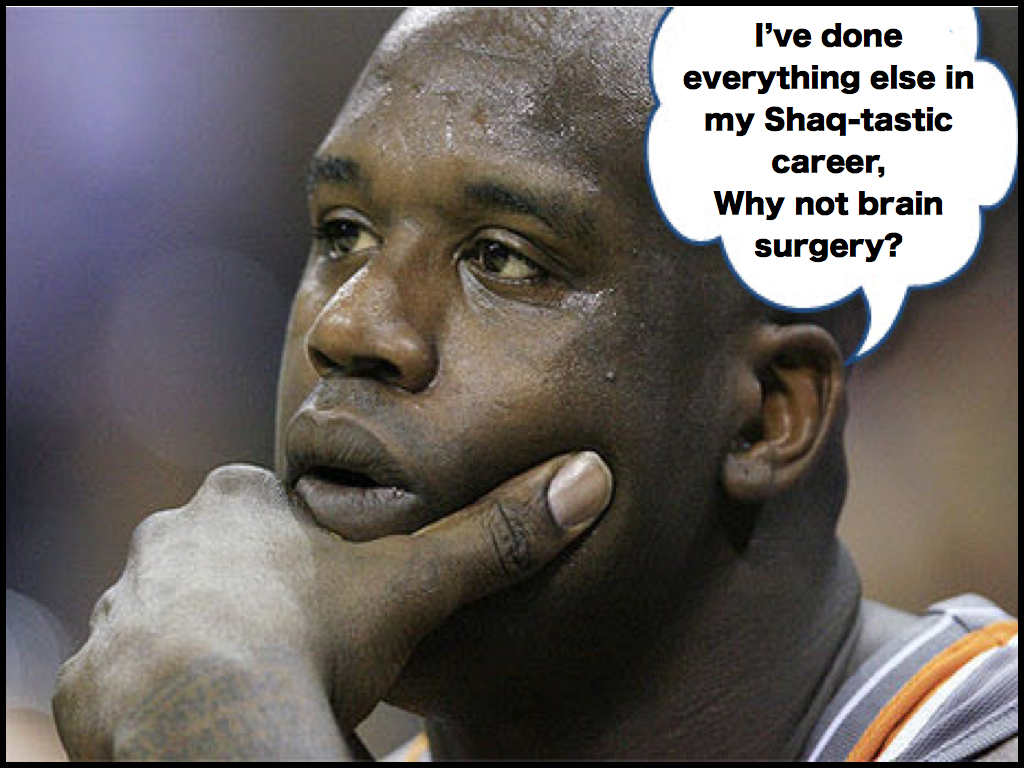
I am not a bishop, presiding bishop, or member of the disciplinary board. Asking me to solve this problem is a bit like asking a basketball player to perform your brain surgery. I have neither experience nor training, so I am weighing in on a subject that is above my pay grade so I wade into these waters with fear and trepidation.

Although I lack authority, influence or power in this matter, I am a person whose primary friendships in our church, outside of my own diocese, are in the Diocese of California and the Diocese of South Carolina. My connections are primarily relational rather than theological. I am convinced that the great people I am friends with in the SF bay area would really appreciate the great people I am friends with in Charleston…on every subject minus one. And vice-versa. As my connections are relational, any solutions I attempt would be as well…and would have involved being in one-another’s world.

I did not understand Charleston until ministry took me to South Carolina three times. Because I have spent probably two weeks there – at their camp, diocesan office and with their youth ministers, I understood where they were coming from. Because I am not from there, I understand where we are coming from and our institutional need not to “give away the farm.”

I was on phone or text with friends during each of their “troubling” decisions. I can tell you that my diocesan friends in SC: a) wanted to remain in the Episcopal Church (unlike the four departing diocese’), b) were convinced that they were being attacked by the larger church, c) did have voices in their midst that wanted to depart and d) were making their moves thinking they had both insured protection for their place in the church and maintained their own internal unity.

To the outside world, it was Tom Ferguson’s slow motion accident in the print shop he wrote about the other day on the Crusty Old Dean blog. I could see how what they were doing made sense to them as a way to insure their continuance in the church…and that it would have the exact opposite effect with the rest of the church. Then I would talk to our people going to meetings to respond to SC and beg them to give room. We would then respond in equally predictable ways to insure our position was protected. In the end, like Tom as a teen in the print shop, I am too removed from the levers of power for my opinion to have any influence whatsoever. Unlike Tom, I do not think this was the way it is supposed to happen. I am not enough of a Calvinist I suppose – I think we all missed it. All of us.

People keep saying to me, “This is exactly what they were angling for.” There were those voices in SC. I do not believe Bishop Lawrence was one of those. I may be completely wrong. But if I am, he and his staff are the best liars I have ever met. What motive would they have had for being dishonest with a youth guy from Arizona…on multiple occasions over a four-year period?

Jordan, you asked what I would have done. I would have risked everything for unity. I think that was actually what the Quit Claim deeds were for. A bishop whose rectors said, “We are only with you because you will sue us if we aren’t.” Put yourself in his shoes for a few moments: Pawley’s Island had already gone against the diocese – making them the one diocese in which the courts have not sided with the rest of TEC. I cannot imagine doing what Bishop Lawrence did, but bishop’s are under pressures that people who do not work in bishop’s offices do not see. What I was told was that Bishop Lawrence made an attempt to keep his diocese together on collegial bonds rather than canonical bonds-which is the diocese’ understanding of what the courts in SC have said they wouldn’t uphold anyway. Like I say, I do not think I would have done what he did, but my experience of Bishop Lawrence is that, like my bishop, Kirk Smith, Bishop Lawrence is a straight-shooter. He was quite willing to say plenty of things to me he could assume I would not agree with.

I choose not to read motives into people on either side. I find it uncharitable. What is public is that Bishop Waldo and Bishop Lawrence were in dialogue with the Presiding Bishop. That was why I used the counselor’s office analogy in my previous post.

I tend to give bishops the benefit of the doubt – mainly because I work for one. I watch my bishop daily balance the needs of the larger church, the needs of congregations, the needs of individuals and what he is convinced is his proper response to the call of God. Being a bishop is complicated and he does the best he can as a follower of Christ, utilizing his experience and wisdom. And in that complexity, someone’s felt needs are often thwarted. Win-win is hard to achieve in a world of scarcity. So I give grace in my assessment of bishops.

I am not a Presiding Bishop either, so I want to be charitable with ++Katherine as well. None of us know the pressures that she is under institutionally. I do hope that I would have had the patience to let the attempts at reconciliation with Bishop Waldo work themselves out before presenting the restriction letter.

So, if I were bishop I hope I wouldn’t have given the Quit-Claim deeds…and I might have lost all of my cardinal parishes. If I were presiding bishop I hope I would have let the reconciliation process go on-in which case, I am sure that there are institutional needs of the larger church being met in the timing of the charges that we are not privy to…and I would guess I would have had a high price to pay for that action as well. If I were on the disciplinary board I hope that I would have looked at what was going on, asked questions, listened, expressed understanding as to the pressure the bishop was under. I then would have pointed out our ability and right to step in, then affirmed their right to differentiate. I would have asked the bishop what SC could do to show good faith that they wished to remain with us. I would hope I could have started with the assumption that we are on the same team…and remember that most bishops don’t really want to be congregationalists and ask more questions and then ask for them to throw us a bone…specifically to use more care in their language and to begin financially giving to things in the national church they could support in good conscience.

Would any of this have worked? I do not know. Maybe not. I’m just a basketball player. You are asking for brain surgery and that is way above my pay grade.