Unintended Consequences: How the “relevant” church and segregating youth is killing Christianity.
I recently spent six-months doing a rotation as a hospital chaplain. One day I received a page (Yes, hospitals actually still use pagers). Chaplains are generally called to the rooms of people who look ill: People gray with kidney disease, or yellow with liver failure, discouraged amputees, nervous cancer patients. In this room, however, was a strikingly attractive 23 year-old young lady sitting up cheerfully in the hospital bed, holding her infant daughter and chatting with family and friends.
Confused, I stepped outside and asked her nurse, “Why did I get paged to her room?”
“Oh, she looks fabulous. She also feels great and is asking to go home,” the nurse said.
“…And you are calling me because?” I asked in confusion.
The nurse looked me directly in the eye and said: “Because we will be disconnecting her from life support in three days and you will be doing her funeral in four.”
The young lady had taken too much Tylenol. She looked and acted fine. She even felt fine, but she was in full-blown liver failure. She was dying and couldn’t bring herself to accept the diagnosis.
Today I have the sense that we are at the same place in the church. The church may look healthy on the outside, but it has swallowed the fatal pills. The evidence is stacking up: the church is dying and, for the most part, we are refusing the diagnosis.
What evidence? Take a gander at these two shocking items:
1. 20-30 year olds attend church at 1/2 the rate of their parents and ¼ the rate of their grandparents. Think about the implication for those of us in youth ministry: Thousands of us have invested our lives in reproducing faith in the next generation and the group we were tasked with reaching left the church when they left us.
2. 61% of churched high school students graduate and never go back! (Time Magazine, 2009) Even worse: 78% to 88% of those in youth programs today will leave church, most to never return. (Lifeway, 2010) Please read those last two statistics again. Ask yourself why attending a church with nothing seems to be more effective at retaining youth than our youth programs.
We look at our youth group now and we feel good. But the youth group of today is the church of tomorrow, and study after study after study suggests that what we are building for the future is…
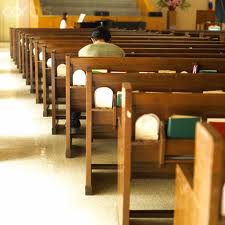
…empty churches.
We build big groups and count “decisions for Christ,” but the Great Commission is not to get kids to make decisions for Jesus but to make disciples for Him. We all want to make Christians for life, not just for high school. We have invested heavily in youth ministry with our lives specifically in order engage youth in the church. Why do we have such a low return on our investment?
What are we doing in our Youth Ministries that might be making people less likely to attend church as an adult?
What is the “pill” we have overdosed on? I believe it is “preference.” We have embraced the idea of market-driven youth ministry. Unfortunately, giving people what they “prefer” is a road, that once you go down it, has no end. Tim Elmore in his 2010 book entitled Generation iY calls this “the overindulged Generation.” They ask for more and more, and we give it to them. And more and more the power of God is substituted for market-driven experience. In an effort to give people something “attractive” and “relevant” we embraced novel new methods in youth ministry, that 20 years later are having a powerful shaping effect on the entire church. Here are the marks of being market-driven; Which are hallmarks of your ministry?
- Segregation. We bought into the idea that youth should be segregated from the family and the rest of the church. It started with youth rooms, and then we moved to “youth services.” We ghettoized our children! (After all, we are cooler than the older people in “big church”. And parents? Who wants their parents in their youth group?) Be honest: Have you ever thought you know more than your your student’s parents? Have you ever thought your youth group was cooler than “big church”?
- Big = effective. Big is (by definition) program driven: Less personal, lower commitment; a cultural and social thing as much as a spiritual thing. Are those the values that we actually hold?
- More programs attended = stronger disciples. The inventers of this idea, Willow Creek, in suburban Chicago, publically repudiated this several years ago. They discovered that there was no correlation between the number of meetings attended and people’s spiritual maturity. They learned the lesson. Will we?
- Christian replacementism. We developed a Christian version of everything the world offers: Christian bands, novels, schools, soccer leagues, t-shirts. We created the perfect Christian bubble.
- Cultural “relevance” over transformation.We imitated our culture’s most successful gathering places in an effort to be “relevant.” Reflect on the Sunday “experience” at most Big-box churches:
- Concert hall (worship)
- Comedy club (sermon)
- Coffee house (foyer)
And what about Transformation? Is that not missing from these models? Where is a sense of the holy?
6. Professionalization. If we do know an unbeliever, we don’t need to share Christ with them, we have pastors to do that. We invite them to something… to an “inviter” event… we invite them to our “Christian” subculture.
7. “McDonald’s-ization” vs. Contextualization: It is no longer our own vision and passion. We purchase it as a package from today’s biggest going mega-church. It is almost like a “franchise fee” from Saddleback or The Resurgence.
8. Attractional over missional. When our greatest value is butts in pews we embrace attractional models. Rather than embrace Paul’s Ephesians 4 model in which ministry gifts are given by God to “equip the saints” we have developed a top-down hierarchy aimed at filling buildings. This leaves us with Sunday “church” an experience for the unchurched, with God-centered worship of the Almighty relegated to the periphery and leading of the body of Christ to greater spiritual power and sanctification to untrained small group leaders.
Does not all of this work together as a package to leave us with churches full of empty people?
Here is an example: Your church. Does it look like this?
If you look closely, you will see the photo on the right is of a nightclub, rather than a church. Can you see what I mean about “relevance” and the clean Christian version of what the world offers? Your youth room is a pretty good indicator of what your church will look like 15 years from now. Because of the principle “What you win them with, you win them to,” your students today will expect their adult church to look like your youth room.
In summary, “Market Driven” youth ministry gave students a youth group that looks like them, does activities they prefer, sings songs they like, and preaches on subjects they are interested in. It is a ministry of preference. And, with their feet, young adults are saying…
…“Bye-bye.”
What might we do instead? The opposite of giving people what they want is to give them what they need. The beauty is that Christianity already knows how to do this.
Once upon a time our faith thrived in a non-Christian empire. It took less than 300 years for 11 scared dudes to take over the most powerful empire the world had ever seen. How did they do it? Where we have opted for a relevant, homogenously grouped, segregated, attractional professionalized model; the early church did it with a multi-ethnic, multi-social class, seeker INsensitive church. Worship was filled with sacrament and symbol. It engaged the believing community in the Christian narrative. This worship was so God-directed and insider-shaping that in the early church non-Christians were asked to leave the building before communion! With what effect? From that fellowship of the transformed, the church went out to the highways and byways loving and serving the least, last and lost. In that body of Christ, Christians shared their faith with Romans 1:16 boldness, served the poor with abandon, fed widows and took orphans into their homes. The world noticed. We went to them in love rather than invited them to our event.
The beauty of where we are today is that, unlike the girl in the hospital bed, our fatal pill could still be rejected. It is not too late. We can leave the culture-centered models we have been following for more Christ-centered ones. More ancient ones. More rooted ones. And the most beautiful thing is that students actually enjoy them.
So many have commented on this post in the last month that I did a follow-up: O Yeah! And other things I wish I would have said on “Cool Church.”
 the gospel side
It’s not about the outside. A demon can come in many forms. Blaming outward issues is a divisive tool. Churches can take on many appearances, but if God is truly the foundation, those churches will see Christ’s love and life-change spread. When revival happens, it is solely because God’s guidance and provision is at work, not because we, in our finite human knowledge, created the best programs for ministry. Each person has a different path to take and a different role to play in the kingdom of God. I love the small country church, but my current “big church” (Crosspoint Nashville) has stimulated more of a transformation in me than any small church I attended in the past. It’s not the medium. It’s the message. Surrender control to God, and watch the grand, beautifully diverse story of redemption play out.
I give a double-ditto to redoakheart’s sentiment. Bigger is only better with commitment. Smaller is death if Jesus Christ is not the absolute focus. Our large church (Crossroads UMC – Concord, NC) stresses personal relationship with discipleship.
“It’s not the medium. It’s the message.” A big AMEN!
well put
“It’s not the medium, it’s the message.” – Except that this statement falsely assumes that the two are separate entities. The medium implies a message: sometimes one that is more powerful than the verbal or written message. I thin that’s what Marino is trying to get across in his writing. The medium influences the supposed message in ways that might make the medium sometimes as important to consider.
Hi Robby,
Medium and message tend to be far more tied than we want to admit. Thanks for that!
I’m older – attended church all my life. Still do. The biggest thing that I see that’s caused so much disconnect with religion is the erosion of our mores. Nothing is a ‘sin’ any more. Those things we once stigmatized are now accepted. What caused the erosion? I dunno, but I suspect it started with the burning of the first bra. Someone NEEDS to be at home instilling traditional morals and values into our children. If the women want to bring home the bacon, then let the men stay home and raise the kids.
Ministers need to be more bold in preaching the truth. Wimpy ministers have wimpy congregations.
I agree. The medium is a conduit for the message so they are undoubtedly tied together. However, the message ought to remain constant while the medium can change depending on the context one is in. ( i.e. you don’t speak in English to a non-English speaker). This is why criticizing the medium can cause problems because many mediums are necessary in order to convey the message to a variety of populations. And I believe our direction regarding which medium to use ought to be Spirit-led, not a one-size-fits-all prescription.
Amen! He is always faithful to meet us when we allow Him control to lead & love through us – whatever the method. I also find the teaching in this article to be devisive.
The problem is simple. The whole idea of converting people to become religious is the same thing as brainwashing people. Today’s generation realizes this and with the power of education and science; people are given less reason to believe in something that can not be seen or proven. Churches focus more on fear and all that does is turn people away. You can’t scare people into buying your product. Your product being religion.
I actually haven’t seen any research that people are becoming less religious, Dan. Not Pew, Newsweek, Time, Barna. I see tons that shows that the church is being seen as a toxic place to exercise that internal wiring. But religiosity is having no downturn anywhere in the world according to Pew. It sounds to me as if you might have been wounded by some toxic churches yourself. If you are in Phoenix I could point you to at least 30 in which people are welcomed, loved, cared for, in which they use their brains, and serve others and care for the stranger in tangible ways – Places where you won’t see fear. Some are conservative. Some are Liberal. Some are old. Some are new. They are from many different denominations. They are sweet people seeking God…to paraphrase Micah, “doing justice, loving kindness and walking humbly with their God.
They invite you!
Indeed, throughout the world, religion still has a solid and expanding footprint. Upon closer examination of the research though, the levels within developed countries where education is broader, religion is failing rapidly. I don’t think Dan is implying that churches don’t offer love and acceptance, only that the product is on a continued path toward irrelevance. This is a result of an ever increasing demand for proof instead of the obligation of faith that religion requires. You easily slip into the religious defense mechanism that assumes Dan has had a negative religious experience. The willingness of the Faithful to accuse those who have left the flock of ‘not doing it right’ is quite transparent. Your attempt to hide the fear inherent in Christianity only serves to conceal what is actually divine blackmail. Choose Christ or be damned.
Hi Marty, I thought I heard Dan say that he has had recurring bad experiences with Christians. If I missed that, I apologize, Dan.
I think that it is important to mention that tangible “proof” of mankind’s origination is not found by evolution over christianity. Both require faith to believe.
Nice try but not even close to true. The theory of evolution requires as much faith to believe as the theory of gravity. I actually feel for you. If the theory of evolution is true, its implications are a real threat to your Bronze Age myths. What a shame for you that it is.
Actually Art, there hasn’t been a documented macro evolution in the fossil record, so yes, evolution requires a great deal of blind faith. Blind faith which you not only have, but are evangelically compelled to force on others who disagree with you.
Amen sister,
God made what is seen from what is unseen.
If you have not seen the research that suggests that people are becoming less religious, you have not looked very much.
http://www.pewforum.org/2012/10/09/nones-on-the-rise/
Or perhaps you aren’t looking very far because it challenges your worldview: http://www.amazon.com/Shall-Religious-Inherit-Earth-Twenty-First/dp/1846681448/ref=sr_1_1?ie=UTF8&qid=1376411793&sr=8-1&keywords=the+religious+shall+inherit
Or, perhaps you are ignoring research you don’t like because it conflicts with your worldview? http://www.amazon.com/Shall-Religious-Inherit-Earth-Twenty-First/dp/1846681448/ref=sr_1_1?ie=UTF8&qid=1376411793&sr=8-1&keywords=the+religious+shall+inherit
Birthrate evangelism fills churches, but its an extrinsic thing, it may or may not correlate to matters of the heart, and its long term implications are somewhat iffy. Bottom line, Jesus should be the primary reason folks are in church, not tribal identity. An Islamic apologist friend says they have the same liberal conservative wars we have. He too questions the birthrate evangelism thing.
As far as the pew poll goes, its focus is on extrinsic religiousity… and only briefly mentions intrinsic. Hopefully Barna will take a look at this at some point.
Our product is Jesus! Religiosity CANNOT SAVE ANYONE!
I’m amused that you think churches focus on fear. I’ve seen quite a few churches and never heard a sermon that was based on fear. What precisely is the power of education and science? As it turns out, church members live longer; are better educated; are wealthier, and consistently are better off financially. Perhaps most importantly, studies tell us that church members are happier. If only more people avoided churches, perhaps they could be sick, poor, miserable, and unhappy like the super smart scientists of today.
Dan,
There are those of us who walk this Earth, who have been blessed with a rich, loving, profoundly amazing, personal relationship with God. Some of us want to help and please Him by “making” other followers of Christ, as Christ instructed his disciples to do. I think sometimes we forget that we cannot “make” followers. It is God who does the making in the hearts of those who are open to seeking Him out. Our “job” is to let God work through us as He sees fit. I don’t have a “product”. I have a love inside that was a gift to me; something that gives me joy I could never have imagined, love for others I didn’t know I had, strength, courage, and wisdom not in my nature. I am sure that God would not want me to try to scare people into believing in Him, or brainwash them. And, I’m sure that if there is anything that I am doing that is getting in the way of others being able to see Him or believe in Him, He would want me to get it out of the way. In the Bible Jesus instructs us to “Love the Lord your God with all your heart and with all your soul and with all your mind.’[a] 38 This is the first and greatest commandment. 39 And the second is like it: Love your neighbor as yourself.” (Matthew 22:37-39). The bible, also, teaches us that “Pure and lasting religion in the sight of God our Father means that we must care for orphans and widows in their troubles, and refuse to let the world corrupt us.” (James (Jesus’ brother) 1:27). Please, don’t look at all of us flawed humans and think you can see Him. Go and see if you can find Him yourself.
Hi! Thanks for the article. I basically raised myself religiously, attended the largest church in my hometown, was active in youth group, sang in the youth choir and young people’s singing group, worked in the church nursery, and taught Sunday School. I found it and Christianity a welcome refuge from the alcoholic home I grew up in and the school where I was teased and tormented almost every day.
When I became an adult and moved to the big city in my 20’s, I could not find a welcoming congregation, so I gave up and spent five years away from God. Then God led me to the Catholic Church where I have been for 28 years. However, truth be told, if I were not already Christian, I would not become one. What I see now, is a lot of judgmental “rule police’ running around telling people what they are doing wrong, how they are a disgrace to the church if they do not believe the same as them and insisting that whatever church the other person is going to is the wrong church if it is not the one the “rule police” are attending. Nobody talks about cans very often, only can’ts.
The other thing I see is a lot of Unchristian behavior, from the Westboro Baptist Church to Archbishops condemning Gays. I see Priests who refuse to visit the dying or help distraught people who come into the office because it is their day off, churches held hostage by the agendas of a small number of parishioners, people fighting with one another, rude people in the front office, and a small number of people doing all the work or attending functions because the rest do not feel they have to contribute time, talent or money. And many times people step up and say they will do something and then refuse to follow through or they drop the ball. It is only focusing on my personal relationship with God/Jesus/Holy Spirit and the beauty of the Eucharist that sustain me; that and the power of prayer and the people who truly are walking lights of Christ doing the work of the Kingdom. No wonder young people are leaving the churches and their faith, they see one thing preached and another practiced!
The focus on what not to do rather than what to do is particularly frustrating for me. I wouldn’t have chosen to be a Christian myself. I had the inescapable experience that God chose it for me. Thank you for sharing.
“78% to 88% of those in youth programs today will leave church, most to never return.”
It doesn’t say they reject Christ, though.
No, but they are not attached to Jesus’ mechanism for sustaining faith. The Church is Christ’s bride. I have a post on that topic in which i wonder about our low view of the church:
The question is, how many of them truly ever had a relationship with Christ? Or were they merely attending a weekly social occasion because it was free and fun?
DITTO, Kait! I was at any church with a bus ministry to escape my home life. I sought after the love & acceptance of Christ. I was starving for it! Sadly, you rarely see the bus ministries today. We are members at a small community church and we are seeing a transition to the more contemporary service along with later service times on Sundays. These things their core will not keep our doors open, true. However, as long as we remain focused on being a bible believing, Christ centered church, & remember to keep the main thing the main thing, our church will reach a seeking generation. We need to remind ourselves that we all have a God given talent and use it to further his kingdom. A revival is coming, I can feel it!
Erica, In the Catholic Church they used to have trailer ministries usually led by the Paulist fathers. But, even they no longer do that. I wonder if that were to start up again, would it attract young people or anyone seeking God? I believe that one thing that is lacking is personal connection. Like the Cheers theme song that states I want to go where everybody knows your name. I believe people (not just young people) want to know that a Priest, Minister, fellow church members know them by name and care about them and their lives. How is your Mother doing for instance and then really listening, accepting the person where they are at and listening or praying with them without judging, genuinely being glad to see them, instead of quickly moving on to the next person or being such a mega church they don’t know very many people.
I agree – and it’s not just the mega churches that are losing that connection. I am a frequent attender at a couple different churches. Theoretically, every member is assigned to a deacon in the church, who is supposed to make sure that someone DOES maintain an interest in how that member is doing, how they’re feeling, what their kids are up to, etc., and then can keep that member connected with other church members. I’ve been introduced to my assigned deacon in each church, but honestly, it was so long ago, I don’t remember who either of them are. Years ago, I used to get frequent letters and phone calls from my deacon at one of the churches, but he passed away, and I was assigned to a new one. I got one letter from him right away introducing himself as my new deacon, but that was the only letter I ever got. I have a number of friends in both churches that do keep in touch, but I’m quite an outgoing person to begin with. What about people who have trouble making friends?
Sounds good, but Paul said that “no one seeks after God.” How do we deal with that?
God very much wants us to seek Him.
In Romans 3, Paul was referring to what David had written in Psalm 14: “2 The Lord looks down from heaven on all mankind to see if there are any who understand, any who seek God. 3 All have turned away, all have become corrupt; there is no one who does good, not even one.”
But Paul also says in Hebrews 11:6 “But without faith it is impossible to please him: for he that cometh to God must believe that he is, and that he is a rewarder of them that diligently seek him.”
And in Acts 17:26-27 “26 From one man he made all the nations, that they should inhabit the whole earth; and he marked out their appointed times in history and the boundaries of their lands. 27 God did this so that they would seek him and perhaps reach out for him and find him, though he is not far from any one of us.”
Amen!
Seminary is not the gatekeeper of Gods radiance.
Hi Kait, My husband and I have been through some similar experiences, and more and more I see there is also poor formation in the seminaries. Some seminaries are really solid and others have abandoned the fundamentals in favor of following the cultural (superficial ) trends. Having said that, we have also experienced firsthand small groups of lay people controlling agendas in the church and snubbing new comers to the point of making them leave. That and their exclusivism ( because they think they are very religious and knowledgeable), has been bad for my children. And yes I talked to a friend who said a priest (who was normally held in high esteem wouldn’t leave his lunch break to bless a woman in the hospital just down the corridor who was dying. He eventually came too late. Very sad. Yet despite seeing all this human frailty we decided to just pray and stay, and realize some of this is to remind us not to be that way.
You and your husband are a gift to your church.
I truly appreciate your comment as I find it somewhat familiar. I was raised with church in the periphery. I was told what you should do and cannot do as my basis for religion. I didn’t know about Jesus or why he was our Lord and Savior. I didn’t know he was killed until my senior lit class in high school. It was quite humiliating to have claimed to be a Christian, yet know nothing of Christ.
Through a series of events, God found me, I learned, and my faith was born. My husband and I struggle to find a good church. It’s so difficult to find a church where I don’t feel like judgment is an ongoing issue, whether it is directed towards me or those outside the church. Fortunately, my faith is strong enough that the lack of worthwhile churches hasn’t shaken my love and appreciation for Jesus.
I wish those representing Jesus would do more to prove His love and consistent teaching against judgment. I would also love to find a church that does the same.
Thank you for sharing your story. I hope many will see your struggle to find a church that loves and work on that. 🙂
In reply to your comments about the separation of the youth from the older folks in the church, I intended to say that from what I have observed in the church in the past 40 years, the separation of the younger folks from the older folks has created a lot of problems in the church, which includes the loss in attendance of the younger group. When the apostle Paul wrote Titus to tell him the older women were to teach (train) the younger women, it was for passing on specific experience and knowledge, and that can’t happen when church leaders, for example, divide the women’s classes into two groups and separate the younger ones from the older ones (and I’m not talking about once in a while, but month after month and year after year). The same is true whether the youth and the older members are male or female. This idea didn’t originate with us; it originated with the Spirit of God guiding Paul to write what he wrote to Titus. Without a doubt, God knows what is best for us!
Perhaps I need more clarification. Perhaps I didn’t read well enough. Are you saying we shouldn’t have lessons geared to age groups?
Let me make my comment and then you can help me understand.
I teach Children’s Church, the kids stay in “grown-up” service until after the scripture is read. They come into the Youth room and we sing songs geared to kids, pray, take offering, read scripture, use that scripture reading as the basis for the lesson and have a craft or activity that helps the passage stick in their mind.
I feel passionately about children’s church because, as a child, the ONLY thing i can remember learning in “grown-up Church”; prestidigitation means magic. Another reason? When my great-niece was 3 yrs old, the minister said “if you don’t believe that God keeps his promises that’s, pretty much saying, God is a liar.” Plain as day she pipes up and says “God not a liar!” As adults, we understood the lesson. As a child, she heard a grown-up saying God is a liar.
Christ taught in parables so the “uneducated masses” could understand his heavenly message.
I wonder if so many teens and young adults leave the church because they remember it as boring when they were children. Could that be why some of the churches are using the “cool church” tactic. Meet them the kids where they are, make God relevant in their lives and when they begin to grow in maturity the church will grow with them?
thanks so much
Marsha
Hi Marsha, You are obviously a passionate children’s minister that kids and parents are lucky to have. You have kids in the sanctuary. That is what I am arguing for. When kids grow up and have NEVER been in the sanctuary and come back from college and find that no one is “packaging” anything FOR them, they leave. We gave them a steady diet of themselves for 23 years and then wonder why they left. I am saying they didn’t leave. They were never their. The affiliation bond was with the youth pastor and youth room, not the church.
Steve Wright wrote a great book about this: ReThink.
Hey Marsha, I’m a children’s pastor, too. I understand your point and appreciate your ministry. Our church has a culture of parents bringing kids to worship by the time they get to kindergarten. Kids worship packs engage kids in the sermon passage and children’s time is carefully prepared from the sermon passage to bring a clear point to the kids. Even though we are a fair sized church, (1,100 in worship), in Sunday school, we limit the age stratification modeled by the public school system, in order to model the community of faith. About half of all our kids that attend Sunday school attend youth-type groups on Sunday evenings beginning in 1st grade that teach them about worship and the Sacraments, how to study the Bible, and how to apply the Bible to their lives. That gives them a chance to learn, ask questions about what they think they hear in worship, and challenge what they think does not make sense. In short, as much as we love and respect our pastor, we don’t leave all worship training to him. God bless your faithful ministry.
The issue here is that the church did not grow with them. That’s why they did not return. They were forced to put on a mask for the “Stain Glass Masquerade” and it was fake, a lie, a presentation that many young people today find sickening. They want relevance, transparency, authenticity and if they have to change into a person that they are not, they will not participate. We cannot water down the Word, we have to make it relevant, AND we must contextualize it into our world today. Each community is different. Just look at foreign missions and their model for church/evangelism. They MUST make the Gospel relevant to the culture in which they are serving. We can’t sit back and say to our young people that they have to do the same things as our members before us did it. The problem with this mentality is that as far as you go back you will find that they way things were done was RELEVANT at that time. You have to get your head out of the sand and wake up to the reason for relevant church and it is NOT to water down anything or to create a culture of “ocean wide and inch deep” Christians. It is simply to help make God’s Word relevant in our culture.
Quite frankly I find this article to be very divisive and doing NOTHING to equip or unify the church. It is judgmental and in many ways hypocritical. Just one thing for instance where you say “More programs attended = stronger disciples. The inventers of this idea, Willow Creek, in suburban Chicago, publically repudiated this several years ago. They discovered that there was no correlation between the number of meetings attended and people’s spiritual maturity. They learned the lesson. Will we?” This issue is not limited to “relevant” or “cool” churches. I was a youth pastor at three different churches and they were VERY traditional (which sounds like what you want for all churches to be) and there were people who forced their youth to be at the church EVERY time the doors were open. They subscribed to this very method you are criticizing and their children turned out to RUN from the church when they were able to. This was the norm, not the exception for families who did this.
There is much more on here I could comment on but I do not have not enough time to spend on this. I was quite disappointed in most of what you had to say here mostly because it has nothing to do with “cool” or “relevant” churches but with the traditional and liturgical churches AS WELL. Many churches in general suffer from some of the issues you have listed as specific to the “cool” or “relevant” church.
Hi Chris, Are you saying we do not need to evaluate what we are doing in youth ministry? Or the church when youth pastors move into the senior pastorate? My post is a critique, Chris, offered by someone who has spent 30 years in youth ministry…spanning rural, suburban and urban ministry settings. I have started youth programs from zero students and built programs that had more than 400 per week in attendance. I have been a part of camp teams that have hosted more than 30,000 summer campers. I have put more than 20 students from our ministry in full time Christian service. I developed the multi-ethnic training program that, in an adapted form, is still being used by Young Life around the West. I think I have earned the right to critique what we are doing.
Do we not need to evaluate? To monitor and adjust when we discover more faithful and effective ways to minister? I address some of those things you allude to in a post I just put up. You might want to check it out. I am not criticizing Bill Hybels. Hybals is a phenomenal leader. He asks hard questions and does hard things when the data doesn’t say what they thought it would. Most of the church is thoroughly unwilling to look at information that contradicts our assumptions. Are you?
It’s not that the church did not “grow” with them. It’s that the church did not help them to grow spiritually. Too many churches have youth groups that are nothing but clubs, so when their youth become adults physically, they still want to simply attend their club. They have been conditioned to think of church as a place to go hang out and have fun, rather than a place of teaching and worship. It’s not enough to simply reach the youth and get them into the church, we have to help them develop a relationship with God, so that when they grow out of the youth groups, they want to continue that relationship as adults. If all they do is develop a relationship with their friends at their Sunday “club,” then their relationship with their friends will be what they want to continue when they grow up, and they’ll simply go find another club to do it in.
Yes, we need to have events and activities that are geared toward the young people, but that shouldn’t be the Sunday morning service. There should also be events and activities that are geared for adults. And then there should be activities and events that are designed for the youth AND the adults together. The church is the body of Christ, but if the parts of the body are only connected on Sunday, it won’t be a strong connection. Having such outside activities helps keep the members of the church – both the youth and the adults – connected during the week as well, and having activities that involve both youth and adults helps to keep the youth connected to the adults.
They are only separated during the sermon when things are “too intellectual” for them. There are so many theological discussion that make no sense to children. Kids just tune out. Some churches have activity bags to keep the kids occupied so they won’t make noise during a sermon that is over their head. This just teaches presenteeism, “I’m here, now give me a coloring book.” Church should never be about “look at how quite my children are” it should always be about “I’m so glad they are learning the gospel.”
Marsha,
One solution that has worked for many of the families in our church is asking the pastor to make sure to provide at least one story that will illustrate the main or major points of the sermon. We train our children, even at an early age to listen for the story and then we (parents) and talk about the story and how it communicates some biblical truth. The other thing that help some of our families is the fact that each family has family worship which last for about 15-20 minutes. This helps train the children to sit still and practice listening. 20 minutes is only half of the time of an average service. We don’t do it perfectly, but I wish more families in my church would get on board, I know it would make such a huge difference. It the father’s responsibility (or head of household), and there are resources available. Please check out: http://brianlspivey.wordpress.com/
Hi Marsha, Just a different outcome with children’s liturgy. When my husband and I were young we were taken by surprise when (in our small church) some parent wanted to take the children downstairs for their own thing. (liturgy,/catechesis) Out gut reaction was to keep our young daughter with us. At times we were made to feel uncomfortable about our decision as there was almost a mandatory order to follow the others. What we noticed over the ensuing months and years, is that predictably, the kids ALWAYS arrived back making noise and showing their parents various art and projects they had done. They had no clue, as to the consecration and usually were fiddling idly and distracted during the rest of the Mass, We eventually had 6 children and many people were impressed with their attention to the Mass and would ask for our secret. I was baffled, because I had no secret.. They were just used to following the Mass. At home they were required to pray with us on a daily basis, and we also taught them the Catechism on a daily basis. More than 20 years later I’m in the same parish and have noticed that every single child that attended those “children’s liturgy” no longer attend Mass. All my children, almost all grownup, except two at home, are dedicated to their faith, wherever they happen to be. They all know how to have fun, and during Mass where we fall on our knees to worship God, is not the place.
I don’t believe it is about fun either. But it should be about feeding them the gospel on their level.
My niece couldn’t understand why anyone would call God a liar because she had the faith of a child. The pastor was talking to adults who had forgotten how to be childlike in their faith. As adults we need that. We need to be called on the carpet for our lack of faith and our cynicism. Children need to be nurtured in their faith.
I will be honest. About half of the kids I taught in Children’s Church (many years ago) did not continue to come as young adults. Most of those that left were “bus kids”, the kids who’s parents did not attend. Only 2 “deserters” were children of faithful parents. I have no data on the kids I have now.(New city, new church) But I see them growing in faith and that is the most important.
My main message in giving testimony was basically to say I don’t think segregating works, for worship. I’ve attended every Sunday for decades and I’ve seen lots of restless babies and toddlers, but even they are not without perceptions. They see Mommy and Daddy paying close attention to something that is very important to them…and they get it. Eventually. I think alot of people on the organizing side of things try for so much control over the environment. An environment that is totally quiet will definitely be without children, sterile. They are the hope for the future, and as such they need to observe their parents’ worshiping on a regular basis so they will pick up on what is important. Little kids are great imitators, as we know from other areas of life. and this is such an important area to model. The understanding comes later, and gradually. but for a small child to see physically, the parent interested in the Word of God, is really the only way they will make a true connection. Being with us (my husband and I) was relevant enough for all our children, even though they are all different from each other. Almost 30 years later, their faith is going strong! I really feel that was my main calling, to try to plant and nurture those seeds.
THIS IS NOT IN RESPONCE BUT PART OF AN ARTICLE THAT SHOWS WHAT WE AS PARENTS NEEDTO DO
Training Solomon For His Life’s Work
Not only did David gather abundant material for the temple, but he was also occupied with training his son, God’s designated successor, for the task God appointed for him. God loved Solomon and had given him the added name, Jedidiah, meaning “loved by the Lord” (2 Sam. 12:24-25). In due time, David told Solomon that God had chosen him for this special work.
Do we realize how much God loves our children? He wants them for Himself and even calls a child with only one Christian parent “holy” – that is, set apart for Himself (1 Cor. 7:14). He specifically instructs fathers (and mothers as well), “Do not provoke your children to wrath, but bring them up in the training and admonition of the Lord” (Eph. 6:4). Many parents today conscientiously seek to carry out this command, though the task more often falls on the mother than the father. Just what did David emphasize as he taught young Solomon? We find these things already cited in Proverbs 4 and also in 1 Chronicles 22:6-16 and 28:9-21.
•David shared the personal history of God’s dealings with Solomon, how he wanted to build the temple but God did not permit it, and was careful not to blame God. May we likewise be open with our children, sharing with them an appreciation of God’s love shown in His ways with us.
•David urged Solomon to know the God of his father, to seek Him and serve Him with a loyal heart and a willing mind. It is important for us as fathers to have a strong personal relationship with the Lord if we are going to encourage our children to do likewise.
•David emphasized to Solomon the importance of wisdom, urging him to get and love wisdom and understanding at all costs. True wisdom is far more than knowledge. The fear of the Lord is the beginning of wisdom.
•David highlighted obedience to his commands and teachings. While here upon earth, the Lord was that one whose ear was ever open to His Father’s voice. He was subject to His Father’s will and led by the Spirit.
•David repeatedly reminded Solomon of the grand and glorious task for which God had chosen him – to build a magnificent temple for Jehovah – and encouraged him to begin. Do we remind our children of God’s desires for their lives? We may not know in precise detail what occupation God has for our children, as David knew by revelation of Solomon. But we know from the Bible what God is looking for in His children, and we should ever set these things before them as goals.
•David told Solomon that there were many workmen to assist him, skillful men for every kind of work. We must emphasize to our children the importance of working with others. God has given a great variety of gifts and we should teach them to appreciate these gifts in others.
Making Things Easier For Solomon
David gathered huge amounts of material for the building of the temple. On several occasions he commanded all the leaders of Israel to seek the Lord, help Solomon and build God’s sanctuary. Israel was a turbulent people at the close of David’s reign. Absalom became a popular leader in rebellion against God and David, his father (2 Sam. 15-17). David and the forces loyal to him were able to defeat Absalom’s army, and afterwards the troops of another rebel, Sheba the son of Bichri (2 Sam. 18; 20).
David’s son Adonijah likewise attempted to stage a coup d’etat. Once he was made aware of Adonijah’s plot, David moved quickly to set Solomon on the throne, thus frustrating Adonijah and his co-conspirators (1 Ki. 1). And in 1 Chronicles 28 and 29 David publicly expressed his confidence in Solomon. There may well be things we can do to make things easier for our children who want to serve the Lord.
In 1 Kings 2:1-11 we come to the end of David’s life and read his final words to Solomon, where he urged him to:
… be strong and prove himself a man. Earlier David had referred to Solomon’s youth and lack of experience. Then he encouraged him, repeatedly expressing his confidence in him.
… walk in the ways of the Lord, to keep His statutes, His commandments, His judgments, and His testimonies. David reminded Solomon that this was the only way to true enjoyment of God’s promises.
… use his wisdom in dealing with matters David had been unsuccessful with during his lifetime. While not always easy, it is vital for a father to recognize the wisdom his son has and to humbly admit his own failures.
… show kindness to the sons of one who had shown kindness to him at a very difficult time.
Solomon’s Appreciation Of His Father
How lovely was Solomon’s reference to his father David in prayer when the Lord appeared to him at Gibeon! (1 Ki. 3:4-15). He referred to David walking before the Lord in truth, righteousness, and uprightness of heart. And these were not empty words, for He sought wisdom at its true source, even as David had taught him. God was pleased with his prayer and gave him “wisdom and exceedingly great understanding and largeness of heart like the sand on the seashore” (1 Ki. 3:10; 4:29). When the temple was eventually completed, Solomon, in his prayer at its dedication, was still found acknowledging his father’s good example and desire to please the Lord (1 Ki. 8:14-26; 2 Chr. 6:4-17).
May the Lord help us fathers to encourage our children so that they may respond to us and be able to thank God for us with a grateful heart!
By Eugene P. Vedder, Jr.
It’s a great article ,but we are talking about translating that understanding into what actions are more effective for children, practically speaking; and I think a focus was, should the children be treated as separate from the family while in church, and segregated? Does that really help their faith journey?
I’m a Christian musician and have played for ultra mega churches in Calif. and now Colorado for most of the last 24 years, I raised my two sons (one adopted) in those churches. While playing music at those churches my oldest son attended (Big Church) every Sunday with his mother because he didn’t fit in w. the youth group having aspergers syndrome. He couldn’t handle the huge noise and cacophony of tons of kids in a group setting. then something happened, I was forced to leave a large metropolitan area because of circumstances beyond my control. The last 2 years I’ve been playing as a volunteer once a month for a “Coffee House Church” in Northern Colo. that’s part of a larger church in town. There seems to be this thriving “Coffee House Church” movement in this area that attracts a lot of young people and artsy types like myself. Personally, I’m poorer (finacially) than I’ve been since college in the 70’s but I have to say I feel spiritually much richer. As for my oldest son he’s at Colo. Christian University on three scholarships and entering his junior year so we must have done something right.
Hi Dave,
It sounds like you did a lot right and are enjoying your caffeinated but spiritually wealthy poverty. Thanks for posting.
There is a great revival going on among the youth of America that is not getting noticed as it should be. Rather than outstanding numbers, we are seeing a generation rising up that is not concerned with playing church or looking right, but in living daily passionately for GOD with a zeal that has never been matched in any generation known in history. They have body piercings, tattoos, drooping pants, rainbow Mohawks or dreadlocks and have been written off by most of the Body. GOD is not interested in our opinions of who HE sends, but our willingness to go beyond our own pride issues and embrace “whomsoever will”. In churches that preach solid truth and have gotten beyond the stereotyping, GOD is raising up a generation that are today the warriors in the last generation that will win the war. Soft, seeker friendly religion as well as prejudices will keep these warriors away. There are millions of teens waiting to be loved. It is not so much that we have the wrong program; it is much more that the Church needs a new heart, one that will love like JESUS-unconditionally. It’s not time to condemn the Church, and I am not intending to do that, but it is time to get back to the reason why we are who we say we are to begin with. Without love it is impossible to please GOD. Why should it be any different with HIS people?
I totally agree Rachel. People want to see, need to have God’s unconditional love!!!!
I agree with every word you typed. God Bess You.
Whats pushed me away is a type of inconsistency from ministry to ministry. I’ve participated in three years of Fine Arts, each year includes 3 main services at the national level in the entire week. My first year was really an awakening for me and i genuinely enjoyed the message. The second year we not much different than the first, however this past year, the serves at both the district and national level changed my outlook on what people consider a “true christian” anymore. Running on the basis that you must “give up your dreams to follow Christ”. That if you want to be a welcomed into heaven that you must “reject the stage and the pew for the alter”. To me it seems like believing in Jesus going to church and living a holy life isn’t “good enough” anymore. It’s like everyone who wants to be welcomed into heaven must be a missionary, pastor, or something to that effect. Not only that but then in the same service we’re instructed to purchase the worship album that the performing worship group has produced. That alone is like a blockade and a contradiction. You’re supposed to give up the stage but then give the church money to support it. Between that and texting your offering in ($10 minimum), buying apps to send money from your bank account, atms in the church lobby and other obnoxious devices to get money from you, it’s like the entire Assemblies of God thing is all about money masked by a religion.
“it’s like the entire Assemblies of God thing is all about money masked by a religion.”
It seems like you have a lot of generalizations, if you have concerns about your church’s finances, seek out a pastor and ask to see the budget. They should be available to anyone. If the church refuses to show you then just go elsewhere.
My guess is the church has a lot of expenses that you have not considered: utilities, maintenance, staff (yes, full time pastors need full time salaries) community outreach programs, websites or sponsoring overseas missionaries.
I agree with much of this. But we have grown too church dependent. Parents are to disciple and train their children in the way they should go. I mean real one on one, life on life discipleship with intention. The church/youth group then supplants that. Whether the youth group is indulgent or not becomes less relevant because that’s not where my kids should me getting their three squares and five food groups spiritually. They should be getting that at home. Sunday youth group is just a snack. the real reason this generation strays is based in the family structure. That is where the faith of Christianity is patterned out in daily life moments. Growing up in households that model Christian virtue for 2 hours a week would leave anyone unconvinced
I totally agree; it’s the bottom line. The home. Father Fessio used to say that every home should be its own monastery, meaning we have huge control over what culture is practiced within the confines of a home. It should have learning, joy, beauty, hospitality, lots of shared experiences and prayer, and a discipline to follow the churches’ teachings. Letting the entirety of the vulgar culture into your home 24/7 almost makes going to church irrelevant and foreign. The faith needs to be played out at home…on a daily basis. The rewards are never-ending!
Amen to that. We have to quip the fathers and heads of households. Will this help: http://brianlspivey.wordpress.com/
We, as humans can do very little to change others’ hearts, except to focus our love more deeply on Christ, and love these others as ourselves (as Christ has commanded us). We must effectively teach the faith to our young. However, the Holy Spirit is the one who draws people close, not us. We must pray regularly and diligently for each other and for those who have wandered from the fold. I truly believe that very few, in reality pray as fervently as we are called to do. Today’s world offers endless distractions, but we must insist upon still making time for DAILY prayer. One must remember that our church thrived in medieval times, not due to the creativity of church leaders incorporating worldliness into the liturgy, but because of the great fervor which was expressed by Christians, even to the point of accepting martyrdom. Today’s priests need to celebrate the Eucharist with unabashed love in their hearts, realizing the great gift and privilege it is to walk out every time, onto the altar and and bring the true presence of Christ to His people. Only then, will we begin to see our churches filling back up.
Amen.
Amen,here also!
I don’t disagree on the Mega trendy churches where it is more of a “club” than a place to be challenged and grow. but is this a conflict of the more traditional church that is struggling to keep members versus the non-traditional church that is at fault too relevant but a least adapting? You could say not having air conditioning is traditional way, but not sure that would help members find deeper meaning in scripture. The fact is churches 120 years ago probably; had better buildings than most and were centers of community. ALSO find it ironic that we throw around terms such as prosperity gospel when most denominations have massive financial holdings with 401K benefits that a Christian in Africa or Middle East might think is prosperity at a very gross level. Lets not pretend that prosperity is limited to the mega tv preacher when most in America denominations are wealthy compared to most of the world.
You are right. But there is a level. Private jets, Bentleys, MaiTai’s while getting a massage in the Bahamas. Those are the things prosperity theology buys it’s proponents. I heard a pastor say in a sermon, referencing the new multi-million dollar mansion, “don’t hate me because I got mine. God has to get me out of line so you can get yours. God is just lining us up and going down the line blessing us.”
If I want my children to grow up to be God-following adults, then spending time with other kids is the last place I want them to be, I want them with me, with other adults, watching and learning from those I want them look up to. I think there is a place for youth activities, but NEVER should they be during the main service.
I have not found Youth group to be a very safe place for my kids. My kids have found places of service within our church where I would much rather have them. My 12 year old loves serving in the nursery, my 10 year old works for our church’s coffee shop. They sit in the service with me, take notes, and we talk about it. Their spiritual training takes place at home where we study verses and work out our faith with each other. We don’t study the Bible for hours each day – we are good to do something a couple of times a week. But when they are in Sunday School, the teachers don’t know what to do with them cause they know more about whatever the lesson is about. One teacher confided in me that she just made my child an assistant teacher so he wouldn’t be the only one answering questions. He was 8. Knowing how little we really do at home, I found that profoundly sad.
We homeschool, but I cant see how we can follow the command to raise our children according to Deuteronomy any other way than to have them with us.
Well said. This was our experience as well.
Praise God. http://brianlspivey.wordpress.com/
Bless you, I wish I had raise my children you way.
Excellent article!!
Great article. I am reading more and more articles like this – it seems like God is stirring the waters in America. However, I would like to point out that writers of articles like this are making a big assumption, and therefore missing something even more profound. And that is, what they are calling “The Church” is not really “The Church.” The “Church” as defined in the Bible is the Body of Christ. The Body of Christ is not broken but whole, not sick but healthy. There is nothing “wrong” with “The Church” since there is nothing wrong with Christ’s Body. The problem is religious leaders have redefined the word “Church”. No longer does that word represent the Body of Christ, the followers of Christ, nor Disciples of Christ. No longer are Christians “Being” the Church. Today, the word “church” is something people “go to”. They “attend Church” instead of “being the Church”. Instead of the body of Christ ministering one to another, it sits in pews singing songs and listening to a sermon. Instead of Biblical ministries, people are given “jobs” (they are called “ministries” but no where can you find in the Bible the ministry of ushering, car parking, banner making, audio/visual team, nursery workers, youth pastors, flower arrangement team, and the list of jobs goes on and on). No longer are Disciples of Christ being made, but rather followers of man’s programs. So yes, I applaud this article, but let us not forget, that what was being described in this article and the many that are popping up on the Internet is not necessarily the true Church of God, but rather it is the substitution that religious men have created and call it, “Church”. Paul makes mention of this in Acts Chapter 20. He is concerned that when he leaves men will come into the Church and turn Disciples of Christ into followers of man. How right Paul was! So the real problem here is that what we call the church is not really the Church. Once we make the distinction between the institution of church and the Biblical Church, we will see that the Church (the Body of Christ) is not failing, falling, or crumbling – just the man-made institutions. Praise God!
AMEN Alan Beckwith!
I will add one of my recent favorite quotes that I have heard to back this up a bit:
When the Greeks got the gospel they turned it into a philosophy
When the Romans got the gospel they turned it into a government
When the Europeans got the gospel they turned it into a culture
When the Americans got the gospel they turned it into a business
-Frank Viola requote
You are right indeed Alan, a huge assumption is being made that the Church is an institution.
Also one of the Greatest failings of the church as a whole as far as I can discern in scripture is the inviting of unbelievers to “Church” instead of the God ordained, Evangelism, discipleship, then coming together of those who believe (the church). An unbeleiver is welcome to come in to a gathering of Christians of course, but to be invited and even ministry all geared towards them goes against everything that the sound instruction of the bible tells us. THAT is why the “Church” looks so much like the world. Not just in its entertainment but in its sin just the same. It was simply invited in. Hateful comments? 🙂
Finally. Someone willing to point out what the “church” is. It is the body of believers. And we aren’t sick or broken. We are daughters and sons of the living God, redeemed by the grace of God. Made whole and complete in HIM. Therefore, as the church, we are given the privilege of gathering together corporately and then called to “go”. Not coerced and guilted into going and doing. But following Jesus and living like him and letting our lives make disciples. Thank you for sharing this Alan.
This was a great article. Very thoughtful.
“We developed a Christian version of everything the world offers: Christian bands, novels, schools, soccer leagues, t-shirts. We created the perfect Christian bubble.”
It seems to me that it would be helpful to find the religious and holy in the world around us, rather than creating a bubble. For example, The Hunger Games was very popular. What themes, scenes and situations created moral conflict and what situations were also reflected in the Bible and situations young people experience in their everyday life.
To me, it’s far more valuable to integrate religion and spirituality into the world around us, than creating a bubble away from the secular world.
(I’m not sure if this went trhough the first time – I received an error).
Great article! I am reading more and more articles like this – it seems like God is stirring the waters in America. However, I would like to point out that writers of articles like this are making a big assumption, and therefore missing something even more profound. And that is, what they are calling “The Church” is not really “The Church.” The “Church” as defined in the Bible is the Body of Christ. The Body of Christ is not broken but whole, not sick but healthy. There is nothing “wrong” with “The Church” since there is nothing wrong with Christ’s Body. The problem is religious leaders have redefined the word “Church”. No longer does that word represent the Body of Christ, the followers of Christ, nor Disciples of Christ. No longer are Christians “Being” the Church. Today, the word “church” is something people “go to”. They “attend Church” instead of “being the Church”. Instead of the body of Christ ministering one to another, it sits in pews singing songs and listening to a sermon. Instead of Biblical ministries, people are given “jobs” (they are called “ministries” but no where can you find in the Bible the ministry of ushering, car parking, banner making, audio/visual team, nursery workers, youth pastors, flower arrangement team, and the list of jobs goes on and on). No longer are Disciples of Christ being made, but rather followers of man’s programs. So yes, I applaud this article, but let us not forget, that what was being described in this article and the many that are popping up on the Internet is not necessarily the true Church of God, but rather it is the substitution that religious men have created and call it, “Church”. Paul makes mention of this in Acts Chapter 20. He is concerned that when he leaves men will come into the Church and turn Disciples of Christ into followers of man. How right Paul was! So the real problem here is that what we call the church is not really the Church. Once we make the distinction between the institution of church and the Biblical Church, we will see that the Church (the Body of Christ) is not failing, falling, or crumbling – just the man-made institutions.
Thanks, Alan. Surely God is stirring something.
Amen.
Pingback: Why does a fuller church mean a better faith? | Thoughts on where faith, church and vitality meet
I grew up in a mega-church. As a kid and teen I thought it was cool. Now as an adult I’m embarrassed by what I saw and experienced. I was on the “inner circle” and it took me a long time to realize how self-important and narcissistic and power-hungry leaders can become due to the pressure of filling seats, and building funds and finding “respectable” congregants that won’t make any demands on the organization. I was taught to despise the needy person because they are a drain on the organization. I was taught that as a young leader I knew more than aging parents. Parents weren’t allowed to sit in or attend our trendy meetings. Pastors rarely know anyone’s name let alone anything about anyone’s life… I once asked a pastor…. aren’t you supposed to be a shepherd? I was told, “pastors of large churches are ranchers”… they don’t get personally involved, they simply oversee other people who do. I now go to a small “little house on the prarie” type of church where pastors are shepherds and visit the sick and are not celebrities or too important for the “little people” at church. There were a lot of good people that were faithful in the mega-church scene but I knew I had to get out. Someone once asked me about big church experience and I said I don’t really like to talk about it. I don’t want to make anyone look bad…its interesting the church that tried so hard to be relevant had become totally irrelevant to me and my generation. thanks for the article… it was validating and healing…God Bless!
Yipes. That is pretty scary. I am sorry. I had a friend who was a megachurch youth pastor who quit and became a volunteer in the ministry he had been “the man” in. I think there are more and more of you finding peace, Kim. blessings.
And that “rancher” thing is really grotesque.
Hi Kim,
This Sunday I am preaching a sermon, “What’s a priest for anyway?” With your permission I would like to use a quote from your letter: “Pastors rarely know anyone’s name let alone anything about anyone’s life… I once asked a pastor…. aren’t you supposed to be a shepherd? I was told, “pastors…(I will delete “large churches”) are ranchers”… they don’t get personally involved, they simply oversee other people who do.” May I have your permission?
Good article. I’ve reached a lot of the same conclusions myself. I am pretty much done with “church as a performance” whether it be today’s Mega-church model or the hierarchical model we’ve used for the last 1700 years. I’m drawn to the open participation model talked about in 1 Cor. 14:26 — If ANYONE (emphasis mine) has a song, a teaching, a revelation, a message… All of this must be done to deify the body.
Steve, you are right on! After being a Christian for 30 years, I am finally catching on to I Corinthians 14. For the spiritual gifts to be exercised, we need to spend time together, in devotion to the apostles’ teaching, prayer, fellowship, and the breaking of bread. (Acts 2:42). We need to be equally devoted to Christ and his body.
The bread breakingwas where they,early church sang hymns and prayed and thanked Christ for what he did for us, Thats worship. HYMNS with a focus on thanking the Lord for what he did for us at Calvary.THE hymn “Holy Lord we think of thee, of your agony” WE praise, we worship thee ETCETC. Today so many songs have no contents,nomeaning just repeating the same words
Edify, sorry. Autocorrect doesn’t allow King James. Lol.
glad for the edit….we definitely don’t want to “deify” the body, LOL!!!
I’m big on discipleship. I’ve seen how the church gets people into pews and then they are entertained. I’ve discipled quite a few believers and it is hard work and time consuming. Many believers in the church can not defend their faith and can not disciple because many don’t know how. I’ve been working with Muslims and trying to disciple MBBs and I love it because they challenge me to know the Word and my relationship with Jesus. Growth comes from spending time with the believer so they know who they are in Christ and what the Bible says the purpose of being a believer.
I agree. I go to a relatively large size church and during the sermon, I look around and see people on their iphones, or just sitting being entertained. Every sermon I’ve heard since 1976 when I got saved, I have taken notes because I’m hungry and thirsty for more of Jesus. I want to constantly talk about Jesus. Many believers in the church don’t have that desire. I pray for something bigger to happen to the churches—turn their world upside down so the church can be like the one in ACTS. Everyone —families were sharing —-money, food, help, teaching, communion. Let’s get back to the real church.
Some of the ones that appear to be on iphones are actually looking up the scripture verses on them!
key word..”some”
Franzen50, it’s wonderful what you are doing. We are called to make disciples. I came to Christ through a parachurch ministry, which trained me in evangelism and discipleship. I must say that I have not been as faithful in passing on what I learned. After floundering around in church for many years, I decided that a life dedicated to Christ in community and his service is what I needed, so I joined Youth With A Mission. I am attending their School of Biblical Studies with a view toward serving Christ in eastern Europe or wherever He leads me. I want my life to count for him. Two hours a week of being with God’s people doesn’t cut it as being a disciple.
Pete, many blessings as you enter the mission field. I have had several friends have fantastic experiences with YWAM.
Good for you. I was with YWAM in the Middle East and had a great experience. I have been with several different parachurch ministries and they opened my eyes to many things about the Lord. The best thing is community living. I seek that today but it is hard for Christians to truly live together. I just enjoy being around Christians a lot. Don’t get me wrong, l love to preach the gospel. But iron sharpens iron. The more you are around Christians— the more you are ready to take the gospel to the world.
My real church were the churches I attended as a child and young adult, and my heart yearns to find that church again where we followed Jesus word to love with all our heart. I see less and less real love in this world of today.
We ARE the church…the early believers met wherever and went around telling everyone what they heard and experienced..no big buildings, memberships and religious super stars. It’s sad to see ‘leaders’ so busy building their ministries…my 82 year old mother attended the same church and faithfully tithed there for decades, when she could no longer drive and get there, the pastor never even checked on her and no one else did either….They say they are all about the youth, great but instead of entertaining, why not make them into disciples? I was involved in church ministry for a long time and then in an international ministry and I was led to quit all that and minister locally..ministry is us doing ministry together..no one should be lording leadership over you. We are all one in Christ..denominations fractured the body…be the Church, the Bride, the body of Christ. Resist the church cliques, denominations and religious demigogues. The youth will recognize authenticity. Even if it does take time to reverse the damage done. Keep praying in the Spirit, be led by the Spirit and God will make the way.
Amen.
the sad truth is though… my parent’s were the leaders of the church I couldn’t wait to escape.As I got older we reonciled on many levels and I love them as parents/family….. but we have an understanding…although I love them I I will never attend their church or consider them my pastor. They say I’m emerging…. it’s a phase…but I’m really happy and free…what I learned is that we must decrease so Christ might increase.
While I agree with your intended point, I just wanted to clarify. Reminder to not judge a church by its cover…just because a church is blessed with size, great, creative and talented musicians, and a dynamic youth leading team doesn’t mean it’s not Spirit led. God had a big game plan for the temple that Solomon built and He has a big game plan for His Church today (of all sizes and shapes)…Larger cities will have larger buildings, more sound so it can be heard, and bigger youth programs…not necessarily to please people, but to glorify God and it works with their growing numbers. If they are preaching the Word and serving the Lord whole-heartedly, who are we to judge God’s work in their lives. In the same way, smaller towns will have smaller buildings, less artists, but talented just the same, and less youth who may not need such a structured youth program for accountability… who are we to judge these smaller churches that can barely pay the bills? Maybe they are struggling because they are too caught up in tradition or maybe God has blessed them with a smaller way to build intimacy and accountability. Larger churches do accomplish accountability and discipleship, just in their own way…the pastors will be held accountable for it in the end. Big can be good, big can be bad…small can be good, small can be bad …Bottom line there is no correct outer way to worship, God looks at our heart. Always has, always will. Also if I can add…youth programs can be good and can be bad…having no separate youth programs can be good and can be bad…do what works so that their hearts grow, don’t worry about the numbers…
Hi Sarah, I said a version of that on today’s post.
I think it’s obvious why there are continually declining rates of youth attendance at church; because youth, and the majority of us, are getting smarter. We are realizing that religion was just an invention to explain the unexplainable. Science has shown us how the Earth was created, how we evolved and many once unexplainable facets of life. We have no need for religion or Gods in this day an age. I don’t need a God to tell me to be good and I don’t need a God to tell me I should feel ashamed of natural impulses. I do good I feel good.
If “the cosmos is all there is, was and ever will be” why do you feel a need to do good?
And how do you know what ‘good’ is?
Andy’s claim has a much bigger hole than the question of moral imperatives. Indeed, the question of moral imperatives isn’t even a proper hole. Psychology can explain the behavioral side of “good”. As for the question of what makes a thing good or bad (the purview of metaethics), while it’s interesting to discuss, we don’t actually need an answer to have a working conception of what particular things are good or bad.
The real problem (and irony) with Andy’s claim is that he’s not offering any data to back it up. Church attendance has been declining, especially among younger people– I haven’t seen the data myself, but it sounds consistent with what I’ve observed in my own church, and I’ll take matarrino’s word for it that he’s done his research. Where’s the correlated data that suggests people are getting smarter? I haven’t *noticed* people getting smarter. Indeed, each successive generation seems dumber to me, and while that could be in part my perception changing as I get older, I suspect US education policies are having a nasty effect, too.
Andy’s claim is that scientific understanding replaces religion. Ironically, mattarino’s analysis is far more scientific than Andy’s. In science, you don’t get to believe stuff just because it sounds plausible; you have to check your guesses against actual observation, with the understanding that observation trumps your guess.
Thank you, Greg. You write well and think clearly. Obviously you are not the product if my generation’s education. 🙂
Ok, here is some data…
D.E. Sherkat’s Religion and Scientific Literacy shows a correlation between religious belief and a lack of science literacy.
Zuckerman et al, Religiosity, A Meta-Analysis and Some Proposed Explanations, presents data that shows a negative correlation between religious beliefs and analytic intelligence.
Granted, correlation does not equate to causation and smartness or lack there of is much greater than analytic intelligence alone. Also, within the scope of this blog, one must keep in mind the difference between intrinsic (religious belief) and extrinsic (religious practice).
Sadly, the actual observation data is behind a paywall… but there is much that can be gleaned from the papers if you can find a library with access to them, or are willing to part with a chunk of change. The abstracts while useful as a means of generating controversy and page hits in the media and blogosphere, do not go anywhere near the indepth data which could potentially be helpful from a mission development point of view.
Thank you for digging for this, MN physicist. I am in Minnesota for the first time in my life right now. Minneapolis is a great city!
It adds to the conversation to talk about your question. Although being locked out of information is frustrating. Since, sociologically, some people use religion as a cultural tool to avoid change, I would suspect that correlation. I think the divorce between belief in practice is fascinating. As I read comments I am hearing people frustrated that the conservative church has taught dogma without practice and the progressive church practice without dogma. There are people left flat by both. Thanks again for digging.
As a youth pastor, I can attest that many feel that same as you. Smarter. However, I see the same mistakes made as previous generations, but the difference is that our culture accepts these mistakes now as acceptable. We don’t want God because our mistakes will be labeled correctly as that. We want science because it cannot divulge right or wrong, only what is or is not. Science cannot tell us that there is not God and won’t be honest to tell us how much of science points to Him. Instead conjecture, speculation and lies replace the honest science that drew Copernicus, Sir Francis Bacon, Kepler, Galileo, Descartes, Pascal, Isaac Newton, Robert Boyle, Michael Faraday, Mendel, Kelvin, Pasteur, etc. to an unshakeable faith in God. Their faith was challenged fiercely and it led them to further dig their feet in. Using science as a means to explain away God is nothing more than excuse to do as you please with the consensus of modern culture.
Science: you were born that way.
God: I created you.
A different branch of science: You should accept the way your were born and be happy.
Paul: What right does the clay have over the potter!
Grin.
Preacher man: this is how you do it
God: Here is my Word
Seminary: we will teach you what you don’t understand
God: Ask and you shall receive.
Can I get another grin brother Matt?
Hey Ted, you replied to one of my comments on here which has now been buried. I don’t want to derail this comment stream, but just wanted to say thanks. Your insight on that is much appreciated.
Loved the article and the truth about the church and the “times”…If we would all just go back to the Owner’s Manual on Church and the Great Commission (i.e. GO!) and not waste time and resources on making/building a culturally relevant place to invite people, I mean just show me Christ’s example on that one??? Or in the early Church??? Did God not scatter the early “mega church” ??? I wonder why;-)???
Good point.
The problem is arrogance of people today. We think that if we “get it right” that will somehow force the hand of God and Jesus will return. Because of this attitude the assumption is made that all of the generations before us “got it wrong”. We try to refashion God and make Him less formal to make Him palatable to the “next generation” and we turn them out to fashion God in their own preconceptions so He ends up looking like more of what they want in a God and less like the Holy God of the bible. We are widening the gap between generations because we are not bringing them up in the precepts of faith, we are letting them create their own faith. So in the end they talk about relationship over religion and how a church compares to a garage and they have no depth of the things of God beyond how they feel in a worship service that is void of adults.
As a 67 year old woman with 2 grown children, I find myself looking out my door crying for my broken, sick and sinning neighbors, so I pray for them. We are born in sin and die in sin. BUT my Heavenly Father has promised me a mansion on a hill.
I agree with you- and especially with your reply to Marsha about the segregation of youth. However, I have noticed the segregation of youth from the ‘adult’ service starting at ages younger than teens in many churches- and this has caused a major problem in later years. In our city of 1 million, there are fewer and fewer churches who allow children to join their parents during the praise and worship service. If you walk in to the church before the service as a newcomer with children, then you are expected to line up, register your kids and get a ticket (or some other notification device in case your kids misbehave) and then leave them with strangers for a ‘fun’ and entertaining service just for the kids. Believe me, I understand parents who struggle with controlling a 2 year old while keeping a newborn quiet during the worship service. I have no problem with having a nursery available for young children, and sunday school during the sermon- but this trend/fad of segregating the children during worship from infancy all the way to teens is already coming with serious consequences. Children who are segregated from their parents during worship start expect church to be entertaining all the time and the families lose the opportunity to grow together and with the church body in corporate worship. Children who are segregated often end up lacking in the understanding of reverence to God and how to act in worship and services. A prime example was at a Christian concert we attended at a local church, a group of children between the ages of 3 and 10 were sitting behind us with their parents and all the way through the concert, including congregational singing, the children were either speaking loudly to each other and/or needing to be entertained with electronic devices. It was obvious to us that these children had been segregated from their parents during worship since infancy and they had no idea of how to act in a congregational setting. They will probably end up being ‘bored’ in adult service after their teen years. Those churches who segregate the children are trying to make it easier for the parents to “enter into worship” but they are ignoring the future consequences of a generation who have to be entertained in church.
You are so right. Children are spiritual beings who deserve the same intentional spiritual training as adults and youth. When we separate families for worship, kids get the message God is just for grownups. Parents get the message their kids don’t need church.
And the flip side of that is… Children get the message “I don’t have to pay attention I just have to be quite.” The parents get the message “the Church doesn’t care about my Child’s spiritual growth”
I wonder if we are getting hung up on the words “bored” and “entertained”. The message should be engaging. I can’t say I am entertained when I am in grown up church. I also can’t say I’m bored. I am, however, engaged and interested and most importantly learning something. Our children deserve the same. They need to be interested in God and learning about him. If they are just sitting there being quite… are they learning anything?
Hi Marsha. I may be horning into the middle of a conversation. My comment browser has these chronologically, so if I am “interrupting” my bad. Does it have to be either/or? Could students be involved in the sanctuary AND have developmentally appropriate peer-group specific activity?
We do that. The kids are in worship service until the message. But I’m feeling oddly persecuted. The original poster of this conversation called me out. I felt your response to me was positive “we are on the same page” . But it seems others think we do not agree. I think the most important point in all this is… Bringing children to God and not “your wrong and I’m right”.
The reason I want everyone to understand is… I was that kid. The disruptive on, the one that had a hard time sitting still and listening to things that didn’t make sense. The one that had to be told to shush all the time. I left the church as soon as I could. I didn’t leave God, I left the Church. I felt burdened to help other kids who felt like I did… “let me go I don’t want to be here”. So back to the Church with change in my heart. It was met by a lot of the criticism that is posted here. The kids need to be in worship with their parents not off playing games and having fun.
It was a long a torturous road to make people understand that it’s NOT fun and games in Children’s Church. It’s mini-worship. Adults attention span is 20 min, kids… 10 min. We must reach kids where they are at or we won’t have a church in the next generation. But they DO need to know how to worship.
Hey Marsha, you make a very important point. That is why our worship packs for kids have sheets that ask them to draw or write about what they hear and give them to their parents or a pastor. The drawings are pretty insightful. The other thing that helps our kids is our 1st-2nd grade Sunday evening group, Team12, which demonstrates to kids what worship is about and their part in it. They get the chance to share what they see in worship and what helps them experience God. I don’t want anyone to think I’m denigrating their approach. What I think is that kids can worship profoundly if we teach them how-be it children’s church or a Team12. Whichever approach, parents need to understand and reinforce it with their kids. God bless you and the kids you lead to Jesus.
in the bible the church was the believers and where they gathered was called the assembly. And something that i find interesting is they were not called by there gift like PASTOR etc but they were recognised as having the gift of pastor ,minister, evangelist etc, and in most places,except Timothy the gifts are in plural (S) does that mean there are many in one church with the same gifts? each believer has a gift.but are we able to use it in the church? IN the new testament an example was made of a brother who wanted to have the FIRST PLACE AMOUNG THE BRETHREN, I THINK THEY WHERE WARNED NOT TO have anything to do with him.
The first will be last. Amen. I believe the bible bears testimony to the fact that their should be a hierarchy but it also testifies that they should not lord it over you either.
Southern Baptist girl here. Raised in a small country church that is still dear to my heart. Since then I’ve attended the big box churches and enjoyed them also. However, there ins’t anything as sweet and Christ like as a small gathering of Christians, children and adults alike, who love Jesus and want to be like him. I think we should go back to the more simple ways of teaching children about God. It isn’t necessary to add frivoloties and fru fru. It’s miraculous, full of adventure, and action, and needs no enhancement. Right from the first page in Genesis…..it has wow factor. Why not stick to that and leave out all the rest. ?? See how that works.
Hi Sandy,
Sometimes there is an authenticity that cannot be programmed. 🙂 Thanks for sharing!
Reblogged this on Beyond Sodality and commented:
My thoughts exactly.
Oh brother…(figuratively and literally). As a former youth pastor/minister/director/etc..I’m tiring of these trotted out articles to support ones non objective opinion about the “trouble with churches/youth ministries” these days. I spent the better part of 6 years arguing with Church leadership about curriculum, budgets, building usage, and pizza (yes we argued about the pizza). I tried and tried and tried to teach kids what it meant to follow Jesus in the real world, with all it’s trappings, and not be theoretical with abstract exegesis. Yet the older generation, with their highly touted “wisdom”, wanted me to be formulaic in my approach. Well…I was fired…err…resigned and the once vibrant youth program has dwindled to 4 students. But they’ve got their Sunday School, their catechism, and their trusty old “it worked for me” attitude. As for me; I left the Church and won’t return. Not because of some shoddy youth program but because of a Church that seemingly can’t stop majoring in the minors. I like the real world better.
Hi Chris, I am pretty sad that you had to argue over pizza. I am actually pitching what youth people are learning in college and seminary and trying to be allowed to do. It is senior pastors (and long-time veteran youth pastors) that tend to oppose what I am blogging.
I am pretty sad that adults cannot get past trying to give kids their youth group experience. I have heard it all, “they need hay rides…more pizza…less pizza…10 hour Bible studies…no Bible studies…” We have a hard time with this. If pastors hire someone they trust with, a Christ-centered orientation, gifts and a vision, the church should help them implement it rather than get in their way.
Certainly appreciate that. The irony of this post is that many of my “facebook” friends have posted it and they would be all over the spectrum with their view on church (liberal, fundamental,traditional, contemporary, etc…) We all seem to agree that the Church is dying and yet we can’t seem to agree on the solution.
Having been a youth pastor (we fought about my title too…I don’t have a seminary degree so they didn’t want my title to be “pastor” rather it was “Director of Student Ministries” but I digress) in the Reformed tradition I had a discussion once in a “special”elders meeting about what I was teaching.
Elder: We want you teaching the Heidelberg Catechism.
Me: I am
Elder: What curriculum are you using?
Me: The Bible
Elder: No I want to know what approved curriculum are you using?
Me: Well…again…the Bible.
Elder: (visibly frustrated) Um…How are using the Bible to teach the Heidelberg Catechism.
Me: Well question 1 of the Catechism asks “What is my only comfort in life and death”. the answer is “That I’m not m own – but belong body and soul – in life and death, to my faithful savior, Jesus Christ”. So when a kid comes to me who’s lost, lonely, and confused about life (which most teens are), I tell him/her that “Nothing can separate them from the love of Christ”.
Elder: So your not using an approved RCA curriculum?
Me: *eyeroll*
Maybe we (the Church collectively) can spend the next 30 years arguing about what the issue is, and arguing with each other over music, curriculum, carpet color, pews, or chairs then they (the world) will see our arguing and no we aren’t Christians. Oh..wait…I’ve heard that something like that before…”They will know we are Christians by our LOVE”. I’ve got no solutions really I just choose to stand on the outside and watch the impending death throes and pray.
Reblogged this on Daniel Lucescu.
Great article and discussion! I’ve been on all sides of the issue over the years, much like the author of this blog. I’m now the pastor of a new church that is structured as a “family integrated church” meaning that all ages worship together, pray together, listen to the Word together etc. Is it sometimes a bit noisy due to babies and young children being present and acting normally, yes, it is, but we like it that way! It’s being the family of God together, not a university lecture, a party, or a performance. Is this the “only” way to do church? No. There are countless ways to have meetings. The main issue is to meet with God and to build one another up in the faith through corporate (read “group”) prayer, sharing, study of God’s Word, communion, caring for needs, etc.
As for children and youth, they need their parents and grandparents to be godly examples of authentic faith first, then to have others in the church to back that example up with their authentic love for Christ as well. There’s no perfect plan, program, strategy, or size of church that can substitute for that, and ultimately only the Holy Spirit can take that example and the truth of God’s Word to awaken their hearts to their need of Christ.
Amen. I’d love to worship with y’all.
We are the Church (The People) who believed that Christ was the Son of God and died and resurrected and came to save us all who believe in him and receive his Holy Spirit. Its not about Religion its about a relationship based on grace, mercy and love. Not condemnation, fear, judgment, because God will be the judge in the end.
Hi Rachel,
Yes is it about faith expressing itself as love. But what to do when we judge our brother not expressing his faith as love? Is he not in mortal danger?
I apologize for misspelling your name.
lol ok, so i was raised on church as a kid but NEVER liked it. ever. not once. so i guess im in that statistic of the 78-88% there. im agnostic, but pretty much atheist by this point and i couldnt be happier. who needs guilt when you have your own judgement telling you what is or isnt right. sorry to be a complete douche about the whole issue but reading these comments, i havent laughed this hard in months. god is dead. accept the fate of your religion.
We humbly embrace the end of it all. And strive to find our purpose in the meantime.
god is dead.
God is life.
If you only answer to yourself you must be pretty powerful.
Prove it to me your power.
To be more straightforward. What is your concept of sovereignty Mr. Matrix?
And I couldn’t agree more. If we have guilt, why do we need law?
If you have no guilt master matrix you are either lawless or God.
Pingback: Brain Dump – August 13, 2013 | Jon Cook
I’m not so sure “the church’s” decline in attendance has as much to with what was said in the article as it has to do with the church acting out on the wrong side of recent history. It’s the content that is the problem, not the style in which it presents itself. It clings to it’s homophobia like dog to it’s bone, which is not so different than how it acted in the civil rights era. The church acts out it’s arrogance out on political and religious platforms and then wonders why people have had enough. That is why people are turning to spirituality and other ways of being with God. The church is full of law and greatly lacking in love. It is misinformed, only loves itself, and quite often, supports only it’s own self righteous agenda. Until the church gets humble, from where I am standing, it looks like a sinking ship.
Hi Sidney,
What exactly is homophobia? We are so afraid of it we have a hard time defining it precisely.
If you mean fear of man then I would agree that is wrong.
If you mean fear of sin then I would say I am a homophobe.
We need to translate from worldly to spritital.
Science is incomplete. Ask any scientist. Look at all the branches of science. How much His ways are above ours!
We are no different than a homosexual, but do we still identify with our sinful orientation?
We are Christians. Yes we sin, but if we are in Christ we are Christians. this is a fact that there is but one body of Christ.
I love sinners but I detest homosexuality.
My words?
The term “homophobia” does not convey a sense of a distinction between the sin and the man.
Do you believe there is a difference?
I had a drinking problem. They told me it was in my genes. I believe them. They also tried to tell me that I had to admit I was powerless over it.
I am only powerless over what masters me.
Homosexuality as the world defines it is an inborn tendency.
The Bible teaches us that we all have sinful tendencies. It is the curse.
If I believed I was powerless over alcohol how could I stop drinking?
I am not an alcoholic.
The power I found over alcohol is the exact same power that will transform any homosexual.
The Law was given so that we might recognize sin.
The much better law is now written on our hearts.
We are not lawless.
Blessings.
Ted,
Well put. Thank you for responding to our fellow blogger with grace and respect.
Blessings Brian,
What is freely received should be freely given.
Amen. I grew up during the civil rights era. Preachers routinely took scripture out if context to convince folks that inter-racial marriage was a huge sin. Church was the most segregated institution in the south and very few ministers stood up for integration. Today the hatred is spewed from the pulpit is towards homosexuals. Jesus taught a message of love, forgiveness and tolerance. His harsh criticism was reserved for the church leaders of his day, who also seemed to be preoccupied with rules and regulations. Jesus suggested that we ought to take the plank out of our own eye before reaching for the speck in someone else;s eye. Jesus healed the sick, ministered to the outcast, fed the hungry and tried to teach us how to treat each other. Maybe we should go and do likewise.
Hatred of people is the exact opposite of loving your neighbor.
Loving sin is the exact opposite of loving God.
The only reason people leave church completely is they are not committed to Jesus Christ- either they are not true Christians or they are weak Christians. We cannot expect full churches when people are not truly born again, changed within. After college I also “left” church for a short period of time, not because I wanted to be catered to, but because I saw dead church after dead church full of the unsaved leaders or the weak who only wanted to “play church.” After much prayer God has led our family to a Bible believing, relevant church. It is much bigger than I am accustomed to, but it is a perfect fit for our family. We hope to raise children who will commit their lives to Christ and never play church. I have no problem with youth programs or children’s church since my children see us actively volunteering at church and are taught the Bible and a biblical world view both at home and at school. We cannot blame the churches for what is not taught and lived out in the home and in school.
Why shouldn’t your church look like a night club? That doesn’t mean that they don’t preach and teach from a biblical perspective. I love my church and we have flashly lights, loud music and a rock band but we are all about preaching the Gospel of Grace. Another question, why shouldn’t we try to fill our building and think about numbers? Every number has a name and every name has a story. Just a few thoughts. 🙂
What about the Gospel of works?
It is part of the good news too!
How else can we make our election sure? Sure there is grace but how can we know we have faith?
Faith without works is dead, Grace does not exist in the absence of faith.
Grace is not a loophole and searching for loopholes is a form of legalism. Ask any lawyer.
The legalist is just as concerned with the letter of the law as how to get around it when it suits.
Blessings.
What exactly do you mean by “the Gospel of works?”
Ephesians 2:8-9 “8 For by grace are ye saved through faith; and that not of yourselves: it is the gift of God: 9 Not of works, lest any man should boast.”
Our works are a product of our faith. So one who does not have the works to show for it is simply showing that their “faith” is not genuine – “Faith without works is dead.” But our good works, no matter how good or how many, can never get us into heaven without faith in the grace of God.
Evidence vs. requirements
I mean the good news is that when we are filled with the Holy Spirit we will now want to do the things that are written in the law. Christ commands are now written on our hearts. We will stop looking at works as requirements and start looking at them as evidence of our salvation. Christ said if we love him we will follow his commands. If we examine ourselves and see that we are not following his commands then we have some work to do.
If we have the Holy Spirit we can see works or fruits of the Spirit in our lives. We can in humility point to those fruits of His Spirit and rest assured that we have made our election sure. We can not sin so grace may abound. And yet we are sinners. How then can we find assurance?
I mean that a gospel of grace is a form of legalism searching for loopholes. It is incomplete.
I mean a gospel of works is obviously legalistic. it is incomplete, only half the story.
The good news is a gospel of grace that is to our benefit evidenced by our works. One without the other is incomplete. I agree faith without works is dead because grace requires faith. Faith is believing in something. Faith is an expression of our free will. How can I be held accountable for that which I have no control of? What is justice?
There is no contradiction only lack of understanding.
I know very little, but I do know:
Total depravity denies free will.
The Holy Spirit is not described as an irresistible force and in fact we can grieve it. What is grief? I can tell you that is not what you feel when you are pulling the strings of a puppet. Who can deny our free will! How do we reflect the image of God?
God has only one will. permissive, perfect. Confusion! Don’t blaspheme God because you can’t understand Him. (I’m speaking to whoever brought this idea of God’s will being either perfect or permissive, and total depravity. was it Luther?) God is I AM. What is your concept of sovereignty?
Blessings Adam.
Sounds like we’re on the same page.
And your talk of loopholes brings up a problem I have with religions that teach the idea of “once saved, always saved.” To me that implies a free pass to do whatever we want – one of those “loopholes” you mentioned – and that is not a biblical principle. God will not stand for children who choose to continually disobey Him. I have a former student who attended a Christian high school and a very good church that in fact teaches that you will lose your salvation if you turn your back on God. Now, only a few years later, that young person is a confirmed Wiccan. I don’t understand how it happened, but my heart agonizes for their soul, and I pray often that they will turn back to God.
Amen brother Adam 🙂
I have a great Aunt that is in the Order of the Eastern Star. Freemasons promote religious tolerance in the form of Jesus Christ is not the only path to our Father. They can be forgiven but we need to keep an open dialogue with them and only speak truth so that they might see for themselves.
Perhaps your student was never enlightened to begin with, Please don’t give up on them. Remember the measure of long suffering we desire of God.
Unyielding diplomacy. We are Gods diplomats. This is how I feel Christians battle. Not with the sword of death and destruction, but with words of truth. The truth is life. If we resort to the sword of death then we have betrayed our commanders general orders: Love God with all of your being and treat your fellow human like you want God to treat you.
Hi Ted,
I would guess I am in the middle of a conversation here (comments show up chronologically and I started from the top). I seems to me that “depravity” is much misunderstood today. It wasn’t “people are dirtbags” it was God initiates the salvation desire. A lack of free will is determinism-which is very much an uber-minority report in Christian tradition. I think you are right to point out “Do not grieve the Holy Spirit.”
Yes, and I would agree that most people do not understand the doctrine that they teach and this is why I submit that we should throw out any doctrine that is so difficult to understand. If we need to go to seminary to truly understand what is being preached in the churches then we completely miss the point.
Let us not become elite in our thinking. Koine greek was everyday common greek of the unlearned. Why do we teach in classical greek? Whose heads are we trying to go over?
Seminary is useless unless it can openly admit that it is not necessary. If it claims necessity then it is a stumbling block for the masses.
Learned is not enlightened.
God draws those with a soft heart. He brings rain to the righteous and the unrightous all the same. The rain that fell on Moses was the same rain that fell on Pharo.
You might want to see what this group is doing to counter the culture of disappearing youth. http://www.hofcc.org and http://www.c4fic.org. They are having a national conference in Sept.
Thanks for the links. I’ll check then out.
It doesn’t matter how the message of Christ is brought, as long as it is being spread, all glory goes to Him. God works in more ways the one, think about it, each person is different and responds differently to situations. Therefore if church is done in just one way, not everyone will respond the same way. I say do church the way God wants you to, weather that means with hymns or what looks similar to a night club. That’s the beauty of church, finding what moves on your heart and where God wants you to be.
Hi Leslie,
Thank you for commenting. This may read like a rant at you. It is not. You articulated the sincere, well-meaning belief of most of evangelicalism. Very sincere, but with a back side of the coin that we don’t want to carry…
I am actually saying that how we bring a message does matter. How leaders lead matters. That if this is really about souls, it really matters. This isn’t about style, really. Style is what you point to, like symptoms of a disease.
The message matters too. So a mainline church that has buried the Gospel and preaches pablum matters. A megachurch that hides the Gospel under moralism matters.
People going home without actually participating in the worship of the living God matters. Faith as being an hour we attend and a small group rather than a complete conversion of our beings really matters.
I don’t just know this from Scripture and the 20 centuries of the faith, I know it from the hundreds of comments on this site about how wounded, abandoned and left flat people have been from well meaning Christians and the church. Gee whiz, it isn’t what the post is about. But we have caused so darn much pain that people find a link on facebook and pour out their lives…people who should be surrounded by a community of joy and hope and love in Jesus. A group coming together and surrendering their lives to the Living God, and finding power as they are changed. Their are communities that ARE like that, to be sure. But too many of us are buying the book and copying what church X did in Little Rock or LA or wherever.
So the Church, as the body of Christ matters. So how we do it matters too. Because God matters and so do his peeps, both in and out of the church.
Thank you for letting me preach a bit.
Pingback: We aren’t losing people because of worship. We’re losing them because we’re hypocrites. | So much to say, so little time
Hi Kathleen,
Thanks for the repost. Not living what we profess is certainly a bigger issue than style. I am really not arguing style, though. I am arguing about the purpose of church and the effect it has on our discipleship…ie. people are left as passive observers who get pumped up with a motivational talk and go home and live the same negative, narrow, self-focussed lives. That was the power of the early church.
The article makes some good points, but the fact remains, if you send you children to a secular college, only 30% will continue with attending church.
Perhaps. I went to a Christian college and had a great experience. My friends went to the “number one party school in America.” Many quit attending. The ones who did became amazing. It was a purifying experience that we lacked at a place where chapel attendance was mandatory.
Church should absolutely be full of creativity, dramatic lights, sound, innovation, technology, integrated social media tactics, killer music, HD video with stellar motion graphics…
…as long as its message is centered solely on the Gospel and grace through Jesus Christ.
Also, church absolutely be full of bare-boned, stripped down messages with nothing but the sweet, innocent sound of a chorus accompanied by a soulful piano and little more than a simple program outlining the day’s message…
…as long as its message is centered solely on the Gospel and grace through Jesus Christ.
And finally, church should be a blend of both, so long as the message is solely centered on the Gospel and grace through Jesus Christ.
Allow me to drill down the point just in case you missed it: The Church isn’t losing the war because some churches are either too “cool” or too irrevalent. It’s losing the war because both sides think its “style” will attract more people and get them to stick around. But that’s not what keeps people sticking. The Gospel is what keeps people. Developing awesome leaders who can create a place of honesty where people can address their doubts and openly express their disbeliefs is what keeps people. Extending raw forms of grace and forgiveness is what keeps people. Nourishing healthy boundaries in a Christ-centered community is what keeps people. These elements have always been what makes the Church different from any other entity.
Hi Tony,
Thank you for bringing your voice to this. I am glad you are here, because your thinking is what is in the evangelical water. It is actually not what I am saying. I am saying that the medium is part of the message…that the sanctuary was conceived as the place to rally, encourage, strengthen and feed the faithful (the Christian) for a life of evangelism. It was never conceived as a place of evangelism. I posted a bit about this yesterday at: https://thegospelside.com/2013/08/12/o-yeah-and-other-things-i-wish-i-would-have-said-on-cool-church/
This is not about worship style at all. It is about the difference between come and go. Missional vs attractional. In one model 10,000 people invite friends to hear one person. In the other 10,000 people bring a hymn, song and spiritual song…the reading of scriptures, the sacrament…everyone using their Eph 4 gifts “for the building up of the body for the work of ministry.” And from the strength of that gathering the 10,000 go out, each evangelizing and discipling.
One model is about going to church. The other is about going to the world. Can a reflective pastoral team overcome the limitations in the model by working diligently at it? Of course. But should they?
btw, 9 marks has a good summary of some of what the Bible says about what we should do in church:http://www.9marks.org/answers/what-does-new-testament-say-churches-should-do-when-they-gather
I hear you man. I guess I’ve never understood why a church has to decide on being one or the other type of model. We see scripture living out both models with balance and effectiveness, and yet we’re so quick to ask, “Hey, is your church missional or attractional?” I’m not saying you’re doing this, but man, I’ve heard that question so many times, and my response is always the same: Yes.
Oh, and sorry I’m getting in late to the conversation. I’ll read up on your links. Thanks for stretching people.
What is “killer” music brother Tony and what should we have to do with it?
Guard yourself.
I mean what is in a name?
Do you know any masons?
The light bearer is not Lucifer!
I’ll just go with my favorite Urban Dictionary definition of “Killer” which is:
Excellent, outstanding, Extremely satisfying. Very powerful. All you can take.
I’ve also substituted the word with: amazing, beautiful, moving, stellar, encouraging, thought provoking, holy, unbridled, soulful, life changing, evangelizing, life saving, uplifting, motivating, sweet, precious, aromatic, course-altering, profound and, my favorite, whattheheckjusthappenedmyheartjustleapedoutofmychestandicanbarelybreatheawesome
That help?
My point is that we should be espousing a transformation. The word “Killer” does not really mean any of those things to the transformed.
What kind of war are we waging?
I’m waging one against the false precepts.
Lets avoid the confusion. You know what they think they mean, but why should we talk like that?
That should be one of our first lessons for them: What is a killer?
Yeah, sorry, I guess I don’t get your point. I’m going with a verb here, not a noun. It’s just a form of language, and I use it all the time. If you think it’s not healthy vernacular that’s cool. I’ll just keep using it to remind me that my sin has been put to death thanks to Jesus, if that’s ok.
I’m saying that we live among great confusion, let us gaurd out tongue so as to not add to it.
Blessings.
But, to be fair, I do get your point. Words can confuse people, and I would be the first to agree that they should be used wisely and within context. With that, I hope you have a great day drenched in God’s grace.
You would do that even though you admit I think it is not healthy?
Blessing then my brother!
Point #3 is, IMO, a mischaracterization of Willow Creek’s self-study. Frequency of program attendance actually does correlate with spiritual maturity. What they couldn’t establish is cause-and-effect. As an analogy, people in a given age group who regularly have physical exams are healthier than those who do not. What can’t be proven is whether this is due to the exams, or just that people who are more concerned about their health and thus take better care of themselves also have more frequent exams. What Willow Creek disclaimed was being able to identify a formulaic pathway to spiritual growth, while finding that significant spiritual growth did, in fact, occur among their attendees.
You may choose to attack megachurches, but the reality is that I haven’t seen any evidence that smaller churches are more effective and making fully devoted disciples. I think the evidence is that only an unsatisfactory percentage of attendees of churches of all sizes grow significantly in discipleship. What Willow was acknowledging was that for all their resources, they really couldn’t initiate a move of the Spirit within a person. But a small church can’t either.
I haven’t seen any evidence that smaller churches are less prone to church politics or ego-driven decision-making. What I have seen is that larger churches are more effective at bringing people to affiliate with a church – most of whom would not have otherwise been in a smaller church; if not for the megachurch they would have stayed home on Sunday.
If you look at statistics gathered by Hartford Seminary, which studies megachurches, you see enviable rates of volunteer participation. Then they have far more efficient staffing models (generally 1 FTE per 100 attendees – average Sunday attendance) than what we see in smaller churches. So if they aren’t any more (or less) effective at making disciples, they’re wasting less money in the process.
Hi Richard, Thanks for weighing in. I think that megachurches have lots that is good about them. There has been an uncritical “they are awesome” or a “I hate that.” I am trying to connect the dots on why young adults are failing to engage. My megachurch friends accuse me of being a hater. I think I love them and would like them to be more reflective-like Hybels. I don’t share his view of the church but I love his ability to look deeply at their own issues. Roger Nishioka at Columbia Seminary spent time with them. They were trying to redirect those who failed to connect back to smaller mainline churches. They found what you are saying: that the mainline did a lousy job of welcoming and connecting.
The staffing model is surely more efficient. It is part of why you have young people signing on and commenting about the lack of care laity in their church received from staff. They didn’t have time for pastoral care given programmatic responsibilities. My friends on megachurch staffs are very caring, they don’t have the time. It isn’t in the job description.
You are describing two forms of Protestant church…where, in its worst iterations, one is so insider driven as to be evangelism free-a club for those already there. The other so outsider driven as not to provide opportunities for a deeper discipleship than memorizing facts.
Thanks again. Great stuff!
Size always affects your ministry. Jesus spent 3 yrs with basically 12 men. I think the model that works is to disciple a few and send them out to do the same and so it continues. This model is not new but effective. Jesus taught them every day. Why not have the Church do the same. Spend time with a group of people and as it grows—- send out some that are ready and start a new church. The problem is that discpleship is no easy task. I’ve worked with all kinds of believers and discipling is sometimes daunting. But I really don’t see very many true disciples unless we go through the process like Jesus did. Jesus knew it would take time to produce men of God. Only after the HS came did the the apostles truly go into all of the world— and even that was a struggle for some i.e. Peter. I enjoy discipling others because I was discipled in college. Sometimes I didn’t like witnessing or doing bible study just like the 12 apostles. But as I matured and as the 12 matured we became strong Christians —unwavering in the Faith!!!
Children are a gift from the Lord and it is a parents responsibility to train them as they walk along the road, as they lie down, as they get up and as they shop at Wal-Mart (my paraphrase). I think your article was good, but there is one major point I think that is being missed. If we consider where the majority of children spend most of their time during a year, then I think that the vision of what kids need, may change. The vast majority of kids spend their days in public schools where they are taught that God is not welcome to everyday life. They are taught secular, humanist values and indoctrinated in the ways of the world. They leave school at the end of their day and many go home to an empty house because both mom and dad have to work. They spend time with the tv, computer and ipod getting more of the world into their heart. When mom and dad do get home, it is time for dinner, possible activities like soccer, baseball, music lessons, etc. Then, once home for the evening, chores, homework, and showers must be done. The time that a tired parent and a tired child have to devote to spiritual training is severely hampered and in many cases, just does not happen at all. They send their kids to youth group and take them to church on Sunday, but that is not enough training and time to counter what has already been ingrained in the heart through the week. It is no wonder kids are leaving the church when they graduate high school.
There is a different group though that I think deserves careful consideration. Homeschoolers stay in church more than their public schooled counterparts by a very large margin. Why is that? If we stop to consider how a homeschooler spends their day and who they spend it with, I think it will answer the question. Homeschoolers spend the day with a parent who teaches them their worldview and how to apply Scripture to daily life. They spend time incorporating Scripture into many of their subject areas, showing God’s hand in all Creation. As heart issues arise, a parent can set aside regular curriculum and spend the time needed to address the heart. Families can minister together to the needs of people around them. The NHERI (Nation Home Education Research Institute) has some very interesting statistics that they have compiled over the years about homeschoolers as compared to their public school and private schooled counterparts. Those statistics are worthy of strong consideration. Homeschooling is not THE answer to the greater church’s problem of youth leaving the church in droves. It is the discipleship and showing how God’s word is relevant to everyday life that is missing. A homeschool family who does not have God’s word as integral in their daily life, will have kids who leave the church too.
I just wanted to take a moment and address this issue because I think that the perspective of why kids are leaving the church, must be broader than just a focus on what the church is doing right or wrong. That view is just too narrow. The scope of focus needs to be on life as a whole-where are children spending most of their time? Who are their primary teachers? What is influencing them the most? Who is shaping their worldview? Are they being taught Scripture daily? Is God relevant to their everyday life? Teaching this takes more than 2-3 hours during the week. It is a 24/7 kind of job.
Great comment, Teresa. What you are saying has borne out results for us. Parents strongly want ing to pass on faith and a culture that nurtures it need to seriously consider homeschooling. We started when most people had not yet heard of it- 1990-and still going strong with the last two kids. The first four have gone on to a (secular) university with their faith strong and growing. It was s lot of years of spending time together and they now have a rock-solid foundation!! Those hours to teach about the faith as you say, are incorporated into so many teachable moments that pop up all day long…so nothing artificial about it.
It doesn’t have to be a big church or one that encompasses everything on the list in the post. Even the small church we attend has fallen for the segregation of the youth and, probably unintentionally, splitting families several times a week.
I love how unapologetically truthful this article forces any reader to be. For years, I focused on bigger and “better” events and programs. Only recently, have I been reminded and convicted that we, as leaders in the church, are called to make disciples. That is the way our “success” Is determined. It’s about our faithfulness to His call. The rest is decoration.
Brother, I agree with you on most points, but I just had a few questions. I was a youth pastor for over three years at a small Baptist church here in Oklahoma. It’s an older congregation where everyone sits in the same spot each week, you rarely get an “amen!”, suits are everywhere, and a very dry “our church” type of attitude from many people. There are plaques on the walls everywhere recognizing that this person did this and this person did that. I was 38, and had a real problem fitting in there, much less, my teenagers. I started out with around 12-15 teenagers, and it grew to almost 50 on Wednesdays. I started buying pizza every Wednesday, with a lighter, more contemporary atmosphere and the place would fill up with “unchurched” kids. I would let them have some fun, feed them, then preach the Gospel every week. Out of the 50 students on Wednesday nights, only 3-4 had parents that attended that church. Rarely on sundays did I have more than 10 students, but every Wednesday, I had 40-50. My point is this: If the lost are being exposed to The Gospel, is it wrong to employ methods such as different music, more contemporary environments, and coffee or food? I agree, it is sad that the message of salvation through Jesus is not enough to bring people into our churches, but shouldn’t we do whatever it takes, excluding sin, to further the message of Christ?
On another note, I agree totally on the problem with easy-believism, meaning, “Pray a prayer, and you are automatically a Christian.” I think this is very bad theology. Jesus always taught, paraphrasing, “Your actions speak louder than words.” I think this generation sees right through the legalistic, rule based religion that we (Americans) have invented called “Christianity”. Until we, as Christians, unite, get over our pride and agree to disagree on non-essential doctrine and denominations, and truly follow Jesus, we will continue to be irrelevant to the communities we are in. A preacher I heard, Gary Bill, teaching on integrity, once made the comment concerning
raising Christian children: “A child will survive if you are too strict. A child will survive if you are too lenient. A child, however, will not survive hypocrisy.” < This is why we are losing our younger generation. We don't practice what we preach. Thanks Brother. Good article. Jeff.
Hi Jeff,
Sorry it has taken a long time to respond. I was in a hotel with spotty internet. Two responses went into thin air I fear.
It sounds as if you were doing a great program for a church that didn’t really want a youth ministry. Youth ministry that plugs kids into the body of Christ must have a leader (you), other adult volunteers from the church on the team building Christ-centered relationships and caring for students, going to them in their world, and then every single member of the church on the extended team loving them into the wider body. It sounds as if you did not have number three. We have a church like that in Arizona. A youth pastor is doing great work with kids, but the older adults don’t want teenagers in church and stare dismissively at them. An “I raised my kids” attitude. It isn’t their age, it’s a “this is my club” attitude. We have another church near them in which 80 year olds high-five kids in church. It’s all attitude.
I am sorry also if I left the impression that I do not like modern music. Our little church plant has praise and worship music. We don’t have anyone who do any other kind. I am referring to using the sanctuary as a look exactly like the world place in order to do evangelism rather than a retreat from the world for Word and Sacrament (or worship and word for my Baptist friends). The time of “more like the world” seems to be passing from this generation’s ethos. I have blogged on this twice.
Last year on saddleback: https://thegospelside.com/2012/10/11/why-the-big-box-church-works-for-the-over-35-but-not-the-under-25/
And two days ago: Two days ago: https://thegospelside.com/2013/08/12/o-yeah-and-other-things-i-wish-i-would-have-said-on-cool-church/
If you come to Phoenix I’ll hook you up in an Episcopal Church. We are looking for people who want to fill a room of teenagers, love them, share Jesus with them and plug them into churches.
btw, I love your hypocrisy quote.
Have a good day in Christ. Thanks for writing.