Unintended Consequences: How the “relevant” church and segregating youth is killing Christianity.
I recently spent six-months doing a rotation as a hospital chaplain. One day I received a page (Yes, hospitals actually still use pagers). Chaplains are generally called to the rooms of people who look ill: People gray with kidney disease, or yellow with liver failure, discouraged amputees, nervous cancer patients. In this room, however, was a strikingly attractive 23 year-old young lady sitting up cheerfully in the hospital bed, holding her infant daughter and chatting with family and friends.
Confused, I stepped outside and asked her nurse, “Why did I get paged to her room?”
“Oh, she looks fabulous. She also feels great and is asking to go home,” the nurse said.
“…And you are calling me because?” I asked in confusion.
The nurse looked me directly in the eye and said: “Because we will be disconnecting her from life support in three days and you will be doing her funeral in four.”
The young lady had taken too much Tylenol. She looked and acted fine. She even felt fine, but she was in full-blown liver failure. She was dying and couldn’t bring herself to accept the diagnosis.
Today I have the sense that we are at the same place in the church. The church may look healthy on the outside, but it has swallowed the fatal pills. The evidence is stacking up: the church is dying and, for the most part, we are refusing the diagnosis.
What evidence? Take a gander at these two shocking items:
1. 20-30 year olds attend church at 1/2 the rate of their parents and ¼ the rate of their grandparents. Think about the implication for those of us in youth ministry: Thousands of us have invested our lives in reproducing faith in the next generation and the group we were tasked with reaching left the church when they left us.
2. 61% of churched high school students graduate and never go back! (Time Magazine, 2009) Even worse: 78% to 88% of those in youth programs today will leave church, most to never return. (Lifeway, 2010) Please read those last two statistics again. Ask yourself why attending a church with nothing seems to be more effective at retaining youth than our youth programs.
We look at our youth group now and we feel good. But the youth group of today is the church of tomorrow, and study after study after study suggests that what we are building for the future is…
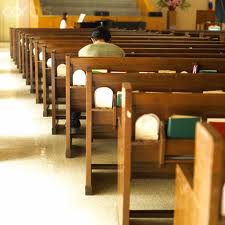
…empty churches.
We build big groups and count “decisions for Christ,” but the Great Commission is not to get kids to make decisions for Jesus but to make disciples for Him. We all want to make Christians for life, not just for high school. We have invested heavily in youth ministry with our lives specifically in order engage youth in the church. Why do we have such a low return on our investment?
What are we doing in our Youth Ministries that might be making people less likely to attend church as an adult?
What is the “pill” we have overdosed on? I believe it is “preference.” We have embraced the idea of market-driven youth ministry. Unfortunately, giving people what they “prefer” is a road, that once you go down it, has no end. Tim Elmore in his 2010 book entitled Generation iY calls this “the overindulged Generation.” They ask for more and more, and we give it to them. And more and more the power of God is substituted for market-driven experience. In an effort to give people something “attractive” and “relevant” we embraced novel new methods in youth ministry, that 20 years later are having a powerful shaping effect on the entire church. Here are the marks of being market-driven; Which are hallmarks of your ministry?
- Segregation. We bought into the idea that youth should be segregated from the family and the rest of the church. It started with youth rooms, and then we moved to “youth services.” We ghettoized our children! (After all, we are cooler than the older people in “big church”. And parents? Who wants their parents in their youth group?) Be honest: Have you ever thought you know more than your your student’s parents? Have you ever thought your youth group was cooler than “big church”?
- Big = effective. Big is (by definition) program driven: Less personal, lower commitment; a cultural and social thing as much as a spiritual thing. Are those the values that we actually hold?
- More programs attended = stronger disciples. The inventers of this idea, Willow Creek, in suburban Chicago, publically repudiated this several years ago. They discovered that there was no correlation between the number of meetings attended and people’s spiritual maturity. They learned the lesson. Will we?
- Christian replacementism. We developed a Christian version of everything the world offers: Christian bands, novels, schools, soccer leagues, t-shirts. We created the perfect Christian bubble.
- Cultural “relevance” over transformation.We imitated our culture’s most successful gathering places in an effort to be “relevant.” Reflect on the Sunday “experience” at most Big-box churches:
- Concert hall (worship)
- Comedy club (sermon)
- Coffee house (foyer)
And what about Transformation? Is that not missing from these models? Where is a sense of the holy?
6. Professionalization. If we do know an unbeliever, we don’t need to share Christ with them, we have pastors to do that. We invite them to something… to an “inviter” event… we invite them to our “Christian” subculture.
7. “McDonald’s-ization” vs. Contextualization: It is no longer our own vision and passion. We purchase it as a package from today’s biggest going mega-church. It is almost like a “franchise fee” from Saddleback or The Resurgence.
8. Attractional over missional. When our greatest value is butts in pews we embrace attractional models. Rather than embrace Paul’s Ephesians 4 model in which ministry gifts are given by God to “equip the saints” we have developed a top-down hierarchy aimed at filling buildings. This leaves us with Sunday “church” an experience for the unchurched, with God-centered worship of the Almighty relegated to the periphery and leading of the body of Christ to greater spiritual power and sanctification to untrained small group leaders.
Does not all of this work together as a package to leave us with churches full of empty people?
Here is an example: Your church. Does it look like this?
If you look closely, you will see the photo on the right is of a nightclub, rather than a church. Can you see what I mean about “relevance” and the clean Christian version of what the world offers? Your youth room is a pretty good indicator of what your church will look like 15 years from now. Because of the principle “What you win them with, you win them to,” your students today will expect their adult church to look like your youth room.
In summary, “Market Driven” youth ministry gave students a youth group that looks like them, does activities they prefer, sings songs they like, and preaches on subjects they are interested in. It is a ministry of preference. And, with their feet, young adults are saying…
…“Bye-bye.”
What might we do instead? The opposite of giving people what they want is to give them what they need. The beauty is that Christianity already knows how to do this.
Once upon a time our faith thrived in a non-Christian empire. It took less than 300 years for 11 scared dudes to take over the most powerful empire the world had ever seen. How did they do it? Where we have opted for a relevant, homogenously grouped, segregated, attractional professionalized model; the early church did it with a multi-ethnic, multi-social class, seeker INsensitive church. Worship was filled with sacrament and symbol. It engaged the believing community in the Christian narrative. This worship was so God-directed and insider-shaping that in the early church non-Christians were asked to leave the building before communion! With what effect? From that fellowship of the transformed, the church went out to the highways and byways loving and serving the least, last and lost. In that body of Christ, Christians shared their faith with Romans 1:16 boldness, served the poor with abandon, fed widows and took orphans into their homes. The world noticed. We went to them in love rather than invited them to our event.
The beauty of where we are today is that, unlike the girl in the hospital bed, our fatal pill could still be rejected. It is not too late. We can leave the culture-centered models we have been following for more Christ-centered ones. More ancient ones. More rooted ones. And the most beautiful thing is that students actually enjoy them.
So many have commented on this post in the last month that I did a follow-up: O Yeah! And other things I wish I would have said on “Cool Church.”
 the gospel side
In the Episcopal Church that I grew up in, children were pulled out of the service after the Gospel reading (some people wanted them to be pulled out before the readings entirely, but those who thought the children should hear the Gospel won out) for Sunday school. Whether they were brought back down for Communion or not was entirely up to their teacher. One result of this, even in the cases where they were brought back for Communion, is that they did not hear any of the priest’s prayers leading up to the Sacrament, and got no understanding of their own Church’s views on the Body of Christ.
Unfortunately, the opposite road is problematic as well. We see among some the view that the Liturgy or Mass is all the religious education that a child needs, and that education beyond that should happen entirely at the home. This results too often in lay people who do not know a thing about their faith. I once heard a story of a person of Greek ancestry who, although she didn’t know Greek, had always only heard the Divine Liturgy done in Greek. On one occasion, she was visiting a parish that did the Liturgy in English for the first time. The priest’s prayers at the anaphora were shocking to her; she had no idea about her own Church’s views on the Eucharist.
Now, that is not only a problem of language. For centuries, the Catholic Church did the Mass only in Latin, yet the faithful still knew their Church’s views on the Eucharist (I could be wrong about that). The problem is, in part, a lack of moderation. Yes, the Mass/Liturgy educates, and children should be present for the whole thing. But there’s also a need for us to educate children in the Church apart from the service, so that they will understand what is going on in the service. This can’t only happen at home, because often the parents don’t know anything more than their children about their faith. We need, in part, to ditch the idea that it’s a problem if it’s after noon and we’re still at Church. Why not wait until after the service is done, and have education (both for adults and for children) then? I’ve seen this done at some Churches, and it has seemed to work well. We also need to revive the model according to which at least some of our religious education happens in one-on-one relationships with clergy which are genuinely pastoral and confessional.
Hi Jeremy,
Good stuff there! It is almost as if you have read my follow-up posts on “Life after ‘Cool Church'” that are on my computer and waiting to be sent. 🙂
I agree with Samuel and Age. Attend a traditional Orthodox Christian service and see if it doesn’t feel like the home for which the soul has been searching.
Hi Melanie,
I have been to services in an Orthodox church twice and really appreciated them. I like Morning Prayer as a prelude to the Divine Liturgy, and “The Doors! The Doors! is just awesome. Some of the Greek cultural attachments (like the service being mostly in Greek) create a cultural barrier for those of us who are not Greek. It was odd that when the service of the catechumens started the church was 2/3 empty but was full by the time the Eucharist was consecrated…it seemed reminiscent of the trendy church I had been to in which people wandered in 10 minutes late with Starbucks. No place is perfect, but Orthodoxy has much to recommend it in my book.
I agree, but one aspect that was not discussed: the apathy of churches towards “30-somethings” who are the immediate future of the church. In the parish our family attends, there have been several “adults only” events where young children were not welcome, and no child care was provided. While the intent may not have been to drive young families away, it is exactly what such attitude is doing.
While I agree that teens are important, there is another generation between them and today’s church leaders — it is the Generation X’ers that will be the next to take over the reins, should there be any left. The Episcopal Church (of which I am member) has a major problem with listening to the 30-somethings, who seem to want more traditional services and theology, and not what is “hip” and “cool”.
Hi TJ,
Thanks for the comment. You obviously have a bonafide gripe with the leadership of your parish. I believe you are commenting on my post about “why mega-church works for 35 yr olds not 25 yr olds”. In that post I am not arguing that teens are more important than anyone else, but that the segregationist youth ministry sets up a selfish dynamic in a church. In the Episcopal Church we have the opposite dynamic at play: We have the selfish over 60 crowd that thinks the church exists for them. The evangelicals, to their credit, are remaking their churches, rewriting their music, and retooling their sermons because they are convinced that the Good News of Jesus is so good that they will go to any length to contextualize it. I do not believe that solution is wise- but they get kudos for motive and effort. We have the opposite problem. We are willing to go to NO lengths to accommodate others. Archbishop Temple told us 80 years ago that “the church is the one institution that exists for the benefit of those who are not yet members.” We would do well to remember that they next time we plan an adult only get together or a worship service that assumes that our Bach music is the only way we can communicate beauty.
Well, past being an X’er, I have children who are in that generation of people, I left the Catholic Church building in my 30’s for many of the reasons you mentioned. I would get the “tsk’ing” from older women behind me when my children would act up slightly, I would get told that I could come to church or mass at a certain time, but children were not allowed. What happened to “Suffer the little ones unto me” our church had no cry room, no babysitting service, nothing. My husband worked most Sundays and Saturdays so weekend mass didn’t work for us. IMHO the Catholic church is not family friendly, all the while, being pro life and pretending to be for families.
“Tsking” is never kind. Why are we so weird about church? Instead of welcoming people to our church, those of us in the mainline seem set on creating barriers. I have a young adult friend who visited an Episcopal church and was told by a lady, “Young woman, next time you come here wear more clothes!” She is a great young lady who loves God…and was dressed just like her other friends going to church. Not a great first impression, and, no, she didn’t go back. The evangelical big-boxes are very clear that they are there to welcome the new. They do a much better job than us in that regard.
As a teenager in the sixties I embraced the “Jesus Movement”. I was a musician in-the-making. “Rock-N-Roll Jesus became my thing. My dad, a Baptist minister, fought constantly about this. I just thought he was out of touch.
Over the ensuing years I discovered that path did not fulfilled my spiritual needs and returned to more traditional worship. Shortly before my dad died I asked why he had been so opposed to my youthful ambitions. He said, “Sacred music should appeal to the soul of the man and not the sole of his foot.”
Thank you for your message. My dad would be proud.
I am chuckling at the “soul” not the “foot.”
I am really not wedded to instrumentation. I would argue that the power is in the ancient liturgical shape, content and scriptural words and narrative – artfully adapted to speak to people in today’s culture. For some that would be an onramp, for some it would be their primary worship life.
Cathy, do you mean adults meeting in homes like a youth group to study the bible, pray, talk, ask questions or answer questions or? I’m not understanding what your asking
Liturgical service does nothing for me. been in it. for 20 years..you wont find it in the Bible, sorry Paul did not give an outline for Liturgical stuff that came 300 years later. Bach music?? Sucks! I hate the organ to me it is a damned from the pit of hell instrument that drowns out the people voices, I believe the string instruments were mentioned, of course the early church didn’t use instrument in there non liturgical worship. Why would Paul force gentiles to follow some sort of “Liturgy” when they were supposed to follow the Holy Spirit who will override any worship order since he is God!! and why are all the “Old Hymns” in minor somber keys??
So many people sit in the pews “informed by the Gospel, but not transformed” all they have to do is the Liturgy without thinking and I know many just goes through the motions. Worshiping with their mouths but there hearts are far apart.”
The church has lost it’s way once “Rome” got into it. This was not the church Jesus founded, Acts and Paul’s writing would in the NT does not support this man made “Liturgy” that makes God seem so far way and once again put the vile back up between God and man with the clergy laity gap.
Of course many pastor don’t believe in the word of God anymore, some not even in the Resurrection of Jesus. Yet God forbid we don’t do the Liturgy right” or God forbid I don’t hold the host just right and say the words right…I will not take my kids to a church that is stuck in the past and has no Spirit, since oh many of the mainline thinks the Spirit gifts ended 2,000 years ago. Really were is the proof God stopped working??
Hi David,
Thank you for commenting. Your motive is clearly for the health of the church, for people to know and grow in Christ and for the church to be led by Godly pastors. However, I have a few bones to pick with your comments: It seems that you are, like many, conflating “dead” and liturgy. The Spirit alone brings life. I have said many times in the comments that nothing is more dead than a dead liturgy. As you point out, in the liturgy clergy can fake it. The good thing is that the words save it from the clergy-which can’t be said when free-church traditions go dead.
…And are there not people sitting in free church pews that are “informed by the Gospel but not transformed”?
Here is my real point of contention:
It seems as if you have been reading Frank Viola’s Pagan Christianity. Frank Viola is remarkable and I recommend most of what he writes if you are not channeling him at this point. However he (and you) are just incorrect on the development of liturgy. The outline is in the New Testament (Eucharistic theology is seen in every NT writer-I can give you non-liturgical Bible scholars from Phoenix Seminary, a bastion of conservative theology, that will validate this one). Liturgy is seen in the Didache (maybe as early as 60 AD). The Word and Sacrament pattern of the liturgy is outlined in detail in Justin Martyr’s 1st Apology in order to answer the rumors that Christians were sacrificing babies in the Lord’s Supper. And the eucharistic Prayer of Hippolytus dates from 225. In it Hippolytus outlines the way the “old fellas” did it when he learned back in the 170’s. It is identical in outline to modern Eucharistic prayers used all over the world by Catholics, Orthodox and many Protestant denominations. So we KNOW that the outline of the liturgy was set and considered a universal standard by 150 with Justin. 150 is the same distance to the close of the canon of the NT (90-100 CE) than the close of the canon was to Jesus’ resurrection (30-33 CE)…but I’m pretty sure you don’t want to throw out the NT as a later, spurious addition to the faith.
Again, thank you for your passion for the health of the church, but I feel the need to help with the timeline. 🙂
Reblogged this on Signposts 02 and commented:
This is a great critique of where we are at currently in ‘church world’.
Your response is insightful and true!
Man has problems, God offers answers. Many years ago, when i was asking God about the fellowship i was attending, I was shown a vision of two trees. One was meagerly fruited and a few people gathered beneath its gnarled branches, looking at sparse, and rotten fruit, out of reach, while another tree appeared, this one abundant, heavy with fruit, yielding its fruit to the throng gathered beneath its branches, looking at the beautiful ripe fruit with eager anticipation and joy.
One is God’s intention, the other the all too prevalent “reality”. Another wision shown me about that time, was of a might Oak Tree – huge – and I knew the trunk was Catholicism, the branches the various denominations, branches and offshoots, while at the top of the tree was a tiny green shoot, reaching for the Sun. I was a “new believer” then looking for direction I was not getting at Church. I wanted to hear from God. I heard that this shoot was me, a budding believer, and that I should always stay “green and growing” and NEVER BECOME WOODEN – always be alive – wood is DEAD! It is the sap which giveth the Life of the Tree, or as you know it, the Tree of Life, which is in the MIDST of the GARDEN which is YOU. The tree of knowledge of good AND evil is the flesh, the outer man, the body which is dying. The INNER MAN, the hidden man of the heart, and your “nearest neighbor” who you are to love as yourself, which is Christ in you, which is your hope of glory, and your LIFE…
The way to this tree is guarded by a messenger with a SWORD and the message is, you ust be circumcised in heart to enter in to the kingdom realm, but it is the Pharisees with their burdensome and bogus rules which bar the way to the WAY OF LIFE. They tie up heavy burdens and grievous to be borne which they themselves will not carry – and expect others to do so – oh, and don’t forget to tithe and if you (edited by moderator) , well double tithe…the church is still selling indulgences – they just call it something more sophisticated
Many years after these visions, i was given to see the same :”Family Tree” of Christianity, as it began to blossom, like suddenly to bear fruit and fruit in a massive and overwhelming abundance – it was like LIFE broke out and the tree looking resplendent, and then there came from heaven a MIGHTY SHOUT, “COME UP HERE” and the mighty tree convulsed and released the fruit, and in each gorgeous flower there was a “spore” (I heard spore) and each spore was a soul&spirit in union, and they all were as One Body and One Mind and One Accord and the whole myriad mass of them were caught up to heaven to heaven to be with Jesus.
Then I heard, “Look again” and there was the mighty tree, but now reduced to a lifeless caricature with no leaves nor any fruit – it was utterly dead and LIFE-less. The Life of the Tree had left.
The Church has to die, so to be reborn as that Body, not made with hands, forever in the heavens. New Jerusalem will replace Old Jerusalem. There is a reason why many are leaving is not so much the lies that they are hearing out there, but the lie they were living in Babylon.
To archetype the Church as a beautiful young woman who has been fed freely available drugs for her pain is an interesting analogy given what Marx said about the drug like attributes of religion – and also that the companies which make, market and mooch their drugs have no regard as to what their clients do with the “remedies” they produce, as long as the bottom line is not threatened. The church is not a beautiful young woman who won’t accept her diagnosis, that is more an image of her vanity as a rebellious, murderous old whore riding the back of a dragon as she lays waste to her enemies ad feeds her children MacDonald’s. Of course she has to die, but it won’t be Paracetamol, it will be POWER-A-SEAT-ON-HIGH! The kids will come back, when they are compelled to, along with all those in the highways and byways.
Read your book – God will strike the shepherds and scatter the sheep, and His Army the Assyrians will cut loose an the whole thing will get crazy but out of it all, God will raise up a Gideon’s army of Ministers of Fire who will lead the people back to God but the multiplied millions, but first Babylon must fall, and her fall shall be great, and many will weep for her, but I will rejoice! It is really this simple – manifest Jesus in front of them and you have done all you can and need to, for this is the Truth, that LIGHT has come into the world, but that MEN prefer the darkness of their own opinions. The Great Apostasy is imply having your own opinion instead of the mind of Christ, and this is what Paul is talking about – by encouraging people to have their own opinion instead of the Mind of Christ, chaos and degeneration is the guaranteed outcome. The devil does not only attack from outside the church, but from within, and this is the more sinister and subtle. Introduce people to the real Jesus, help them to know Him, and the rest is all persecution, affliction, suffering for Christ, laying down your life for others, etc. Give them a “Bless Me Jesus Toy” and they will always be childish instead of childlike. The church ha dropped the ball simply because the devil wrote so many of your doctrines which makes the kids easy pickins’. And this is why GOD will judge the church.
Ian you have much to say. Near the end you write, “Give them the real Jesus.” I agree. The difficulty is that we have so much disagreement about that. God help us all as we seek that Jesus and allow him to conform us to his image -rather than the other way around.
Also, I did not run your other comment since it appears to be your translation of 1 Timothy- which is really off the topic of being a response to the original post.
Thanks for commenting.
amen, We come to be entertained ,follow mans rules, formalities, not what we are told to follow, Christ, not mans thinking. We hear the Christ Saying this do REMEMBER ME and they sang hymns and prayed, broke bread and drank the wine. those were the simbles He gave us. If We would go to church, sit down and prepare our hearts to worship him we wouldnt have time to tell some one what they were wearing wasnt correct style. She should have told that lady who made that comment,needed to be spoken to. if WE go to worship, remember Christ in what HE did for us He was spit upon, curcified , suffered on the cross, shed his blood to wash us white as snow and he rose again all for the sins of those that accept Him as their Lord. doesnt that set are hearts on worship and praising Him? We need our children with us. or rotate Sundays with your spouse Till The children will behave like they should. We are given GIFTS from the Holy Spirit everyone of us that believes. the gifts are allways written in plural. The church needs to learn the gifts are to be used in the church,but by mans rules are not. We make our own rules and thats what spoils the fruit. We count how many count heads, but forget those that are’nt there. Have you ever tried the ALPHA PROGRAM, it came out of the Angelian Church. May God bless you and our country. God Gave 10 comandments man couldnt follow them, so man made millions of rules and really confued us. co
Hi Ralph. I hear great things about Alpha. Thanks for inserting it into the conversation.
Ian, are you well? The young are fleeing the church b/c the church is an industry/business/farce that reasonable people see through. Nothing but a little man behind a screen scaring people with smoke and mirrors. Nobody has time for believing in outdated craziness. Education and science, and better social options, leave the church high and dry. Not even “the church” trying to stay hip will trump reason and logic. It just makes “the church” look even more desperate and silly.
Can we debate as reasonable people? The 2000 year old Christian church is a farce? Can we compare this religion to your religion? Churches have built scores of outstanding colleges and universities for centuries. If it weren’t for the Christian church, all of the knowledge of the Ancient civilizations would not have survived the dark ages. Christian schools are not failing, state-run schools are. About science: do you believe in the theory of relativity or the theory of quantum mechanics? Do you realize that both can’t be true? Even so, both theories are essential to the understanding of the universe and the micro-universe. State-run schools are teaching that man-made global warming is “settled science” even though the current models are based upon purposely altered data, and the old models have turned out to be wrong. Strangely enough, I agree with your conclusion. People are not motivated by squishy, pandering,x weak leaders in any institution, including the church.
Hi Sovereign John, Thank you for the comments. Christians have certainly contributed greatly to society, even if it is in vogue to ignore and dismiss those contributions. I suspect it has to do with so many of us being unthoughtful and bullying others when we were in vogue. It has been a short road down off of the influence ladder for us, but that doesn’t negate the fact that political freedom, scientific discovery and humanitarian movements have all been charges led by those motivated by the Creator and Redeemer’s love for them and the rest of creation.
Pingback: Great Article On Youth Ministry | MusicScribe
Thank you for affirming what I’ve been concerned about for a long time. At the risk of sounding like an old fogey, I’ll offer my opinion. It’s my feeling that what the youth really want is the Word; they don’t need it watered down. It just needs to be presented in an interesting (not gimmicky) fashion without judgment and with complete acceptance of their questions and problems. Although I like the melodies and some of the words of the new songs, sometimes I have to search to find mention of Christ, the Good News, the gospel, or the heavenly Father. The words could be words to a love song or else they’re what another old friend calls “7-Eleven” songs–seven words sung eleven times. I’ve worked with young people over 40 years and find them receptive to challenging messages presented in palatable bites. Your blog is encouraging.
Hi Sarah,
Thanks for joining the conversation. I too find that students want to connect with their creator. They are designed for life with God and find their hearts home in him.
I am at a conference and missed the high school group that meets in our living room, but my wife talked about how students were eagerly participating in prayer, in worship through song, in reporting on efforts to share faith with their peers, how supportive their community was with one another and their earnest attention at the Bible study led by a college leader. We are working our way through Genesis this fall and kids are very engaged.
So I agree with you completely: God’s Word, opened consistently, taught winsomely, and applied gracefully by a trusted adult friend is why students come.
To be honest, I don’t think that most adults are that different than the youth in our worship. We all just want to know what Christ is teaching us, love, prayer, guidance, acceptance, etc. It is just that you are involved with Youth Ministeries, and people are people young and old. It would be great teachings if there were people within the churches who “got and understood” this need.
Can you point me in the direction of a group such as this anywhere in the realm of
Christian churches who offers such things for “adult” Christians?
Hi Cathy. Maybe. Can you be a bit more specific in terms of what you are looking for?
When I went to Catholic School and HS and through the church, I never heard that the “catholic” God was a god of Love. It might have been fire and brimstone. As a young adult, I went to Baptist College, and the bible was opened up to me, and through that msg, I finally heard that God —no matter what denomination was a God of love and caring for his people. Over time, bringing up my own children, and teaching in a Catholic school, the msg didn’t fit what we were required to teach. It all seemed so hypocritical that I gave up on it. I have found more caring, concern and real believers in non-denominational churches in the last 10 years than any church I have been in. In James, it tells us not to judge people by their clothes, money, etc. To treat all
equally as Jesus would have done. Yet in the Catholic Churches I have been a member of they are only concerned about the amount of $$ you put in the collection plate, working or helping with events is not considered good enough, the priest looks over your shoulder when he “greets” you after Mass….to see who is behind you with more $$. I am looking for a church community who cares about their members money or not; who values the person not their wallet; who preaches as Jesus did with love and compassion. Right now, in my area,I do not believe this exists. Thank you
Hi Cathy,
It sounds as if you have had a positive experience of being loved and accepted in a non-denominational church. Good for them and good for you!
I do know people who joined the Catholic church and say nearly identical things – that the pastor gave them his personal cell phone number because they made a 7 figure gift, that the Catholic church helped them have real community, that the Catholic church taught them about God’s love and how it should be given to others in service. I think the message is that in different places we find different ethos’. The trick, for me, is to become such a vital part of the faith community I am a part of that I influence it for the positive: that because of my presence it would be more humane, more scriptural, more in love with God. And that I let others there have the same influence on me.
Are you in a rural area? Most towns of medium size have a variety of churches. I invite you to ours if you are ever in Phoenix. 🙂
“Even worse: 78% to 88% of those in youth programs today will leave church, most to never return. (Lifeway, 2010)” – Could you please provide specific information regarding the source for this information? I and several others would like to read it.
Thank you.
Hi Wes,
It was a Lifeway study. I found it online. That article was written for an urban youth worker’s institute training keynote address 4 yrs ago. Unfortunately all of my data was fried in a computer crash 2 1/2 yrs ago. Lifeway has some fascinating research. The most significant one was the deal in which they chatted the decline in ability of southern baptists to share their faith with others by generation. It has fallen in half every generation since the depression.
Thank you for the quick response – I have passed your comment along.
Blessings,
Wes
Thanks, Wes. Where are your people from?
We were having a discussion in a private Facebook group for pastors and church leaders I am apart of, and that statistic came up. I just noticed you mentioned the article that stat is taken from was written for an event 4 years ago. The citation says the 78 to 88% figure is from 2010 – should that instead be 2008?
Hi Wes. Like I say, article was from a hard copy if my seminar notes. I will have to check and see what I still have. The data is not exactly equivalent as it is from different sources, but he point is one that all youth pastors are acknowledging at this point. You might ask the mega-church folks in your group how many of their youth people have traded sr high for the jr high group. That is pretty fascinating to watch the sr people not want to be a part of sr high as that gets harder.
Ed Stetzer is the President of Lifeway Research. He has a unique web site called http://www.edstetzer.com. His twitter name is @edstetzer. He can talk through all their data backwards and forwards. He should be easy to find, and I would think that he would be happy to answer any questions you have.
I grew up in church. My dad was a pastor.
I went to christian college and ministry school even.
Now I dont even believe that the bible is true.
It feels like when I finally detoxed from the christian culture, I realized how weird it all is.
I srarted actually making friends with people who my parents tild me not too.
Girls who dressed inmodestly, boys who were gay, people who drank all the time.
The funny thing is, I fell in love with these people.
They are my best friends. They are honest amd real. They dont hide what they do. I can be kyself around them.
Not so around church people.
All they care about is if im doing what the bible says.
Also, the who story of salvation and the fall of man is (edited) up.
God, apparently creates man so he will be worshiped.
Then he places them in a garden and basically says, “dont think of a pink elephant.”
So of course, they think of a pink elephant.
So now they disobeyed and he blames them, not himself.
So everyone is doomed now.
Then later God destroys while cities because of gays and sexual problems.
Then later he decides to send Jesus to pay for the sins of the world.
So now Jesus paid. Its all good.
Well actually, its not until you repent and ask Jesus to forgive you. Come into your heart. Whatever.
So ultimately, God says accept me or burn.
The gospel is not love. It is fear, guilt and manipulation.
It seems to me, love would say, “hey I love you and require nothibg from you. ”
Gay? I love you
Buddist? I love you.
Why is it I can accept people who are different, offensive, or different rwligions.
Why can I, an imperfect person, love my friends without forcing them or guilting them into a relationship with me?
God…is so perfect…yet is so manipulative and selgish.
Now. I KNOW i dont talk to that God.
My God loves. That is it.
I dont give a (edited) if my friend is gay. As long as they are healthy and happy.
My God loves and accepts my gay friends even more than i do.
The Bible paints God like a sadistic evil being.
That is because, it was written by people.
Christianity is no different than any other relihion.
Christianity turns off peoples brains.
It makes idiots out of smart people.
That is why churches are failing .
People want a real relationship with God.
They want hope.
Jenn, This is hard to write. Most things you write could or are true. I believe GOD loves every one, including you. You look at the people that say Christians dont like or hate them for their life style. The difference between a sinner and a Christian is in accepting Christ, Gods gift to man to be forgiven of their sins by accepting Him as their Saviour. A Christian still sins but God has forgiven them, thats the only diference between a unbeliever and a Christian. We all fall short when it comes to being able to follow Gods commandments, only Christ was sinless, we are not. Once we are believers we should atempt to follow RULES.Thats our choice, God allows us to make that choice, the GIFT of God is eternal life and it’s free, a gift waiting for you to accept. I hope you understand how much He loves you no matter what your life style.
Hello Ralph,
Thank you for trying to bring clarity and grace.
blessings,
Matt
Hello Jenn,
Thank you for adding your voice to this dialogue. I hear much pain in your writing and affirm your desire to have answers that bring life and joy rather than hostility and condemnation. Christian sub-culture can be controlling, full of mixed messages and downright bizarre.
I can relate with your enjoyment of people who choose not to live a facade. It is the spirit of our age to value sincerity above all else. I would mention, however, that sincerity is a poor substitute for truth. I have a friend who is an ASU Philosophy professor. He tells me that he grades papers every day filled with incorrect answers sincerely given.
I hear in your statements the idea that religions are all the same and all destructive. I would, in the gentlest manner possible, ask you to think about that question objectively. Hospitals, ending slavery, literacy were all the products of Christians in this millennium. In the last were great advances in science, medicine and mathematics from Muslim scholars. Many scientific discoveries were made by religious people seeking to understand “how God did it.” I have several friends who hold prestigious east coast degrees in hard sciences who tell me that the percentage of religious people in the sciences is actually higher than in the culture at large in my home state of Arizona.
In spite of the bad behavior of individual Christians, churches, and institutions who are fearful that their world is spinning out of control, I do think actually that Christianity as given in the New Testament (rather than what you may have experienced in church and Christian schools) is unique from other religions. It alone leaves us all, regardless of issue, wealth, or position, on equal grounds before God. Love and redemption is offered as a gift given rather than a work to be earned, and salvation is offered to all freely and equally without regard to race, creed or orientation.
Christian treatment of the LGBT community has been very bad. Many churches are welcoming to LGBT persons, a growing number are affirming. Whether or not that is the proper response, is beyond the scope of a reply, but it is a change and it is a change wrought by people seeking to communicate God’s grace and hospitality to ALL humanity.
I wonder, Jenn, what basis you have for your statement of God’s love toward all people if you throw out the Scriptures as your authority? It seems to me that leaves individuals as the source of authority. History is replete with injustices committed by individuals who set themselves up as authority. That list is far more frightening than anything committed by Christians getting it wrong, as it describes every dictator and every pogrom.
You are in my prayers, prayers for a growing closeness with your family and friends and a life filled with love and God’s presence.
blessings,
Matt
Hmmm, there are multitudes of Christians and churches who hold the scriptures as their authority, and yet find ways in which to propagate moral therapeutic deism not only throughout themselves, but also to their young. Whether right or wrong, the folks going it alone are at least honest rather than the all too common hijacking of scriptures to ones own agenda. Both are in error, but one is in the light out in the open subject to examination and refute, the other is using the dim ways in which we see the scriptures to foster agendas in the darkness.
Furthermore, today’s world revolves around what have you done for me today… You might have been a great employee last year, but if you don’t meet goals this year, out the door you go. I tend to think if churches were building hospitals, building universities, building schools, going after global hunger and other social issues as the Christian church did in the past, there would be a lot less ammo for objections. The whole “see your good works and glorify your Father in heaven” thing is a huge witness… instead it seems the works of evil and hate crowd out even the best works of contemporary Christianity. (I’m not saying going full bore social justice is the answer, as its not, its just one facet of many as concerns Christian witness)
As a scientist/engineer I brisle at idiotic Christianity, it doesn’t have to be framed, much less taught that way. There are multitudes of us science and Christian folks who eye roll just as much as you (Jenn) do over some of the idiocy and anti-science views that are purported as Christian.
Bottom line, I tend to agree with much of what Jenn said. We’ve seriously screwed up the bride of Christ, we’ve managed to frame God as some type of evil abuser, we’ve replaced the Gospel with some type of pietistic puritanical white knuckle abstinence thing we can do on our own. These are big deal screwups… who but some really out there ascetic pharasaical control freaks would want such a religion?
Some bristling is probably a pretty good response. …especially as your call for walks that match talks was my blog post today.
It should be said that many evangelicals have begun to put significant time, money and energy into things like hunger, water and the plight of immigrants.
I don’t believe the term “Idiotic Christianity” should be in our vernacular in light of Matthew 5:22.
Would you like to be called an idiot?
Are perhaps misguided and even errant believers still the body of Christ?
Thank you for keeping us in a place of kindness in the comments!
You likely won’t see this as its buried on who knows how many pages down… but thank you! Idiotic was a dick move on my part thinking it was better than foolish.
I’m leery to use misguided or errant, as one could have near perfect theology, (assuming its possible) and still preach / live it out in a way that portrays it as too fragile to stand up to any scrutiny, and or put God in a tiny box.
By the same token, child like faith and the milk of the word is a powerful thing… and I would not want to discourage folks at that stage.
Alas, if a church preaches only milk, and or a belief system is so fragile it cannot be studied, much less deconstructed, it can serve as a stumbling block for many.
Bottom line, a better term might be anti-Berean in reference to Acts 17.
I like “anti-berean.”
I personally have struggled with calling people “idiots”.
Jenn, you’ve well explained that as humans we want to be accepted and loved without thinking about morality. It’s uncomfortable to decline an invitation by saying “I won’t do that. That is a sin against God” or at least “I can’t do that, it will go against my conscience”. We want to be polite and avoid any possibility of jeopardizing a friendship. When I decline an invite to go drinking at a bar/honkytonk/nightclub, the inviter quickly learns never to ask me again and our relationship will forever be only an acquaintance. They will avoid becoming good friends, and often avoid me. It makes me feel left out. It makes me struggle with my conscience. Life would be much easier if we all do “whatever is right in our own eyes” (Judges 21:25) We don’t want to believe “the eyes of the Lord are in every place” (Prov 15:3) because it’s so restricting.
What if you lived that same attitude when raising children? What if children never learned the restricting words such as discipline, self-control, apology, repentance, forgiveness which are real actions whether you are a kid in a teacher’s classroom or an adult in the workplace. God is the Father who gave us those words. He wants us to learn how to deal with fleshly desires and any temptation with discipline and self-control. We go thru life learning and growing on how to “live righteously and godly” (Titus 2:12). It takes effort to train our minds to think on things that are true, just, right (Philippians 4:8-9). God’s written Word teaches us to become mature, responsible adults who know right from wrong because one day each of us will have to give an account to God. (Rm 14:12, I Pet 4:5). And while earthly parents often make mistakes while training up a child, our earthly Father will be righteous, just, and fair in his dealings with us. He wants to hear that we need help. He will be patient and long-suffering through all of our trials and temptations we face.
My sentiments exactly, Christians have created God in their own image, as the Bible was written in the image of man. The church is failing because of its exclusive mentality. Who wants to worship a God that excludes any of His children? We live in the information age and younger people know that anything they have doubts about can be Googled. When they do Google for insight, they are amazed at the manipulations the church has espoused, when actually these are the man made ideals that young people find to be unbelievable, because of the sources or origins of these questionable scriptures do not bring unity to the world, but divides us into US and THEM. Who wants to worship a God that is biased, a bigot, a racist, a homophobe, an elitist? I don’t because I have learned and also believe that if God is not love, then there is no God. I know He is love and the peace that I find when I pray and meditate is a peace that passes all understanding. I don’t believe that Jesus died for our sins, I believe and scripture documents His words in the Great Commission, that we should love the Lord our God with all of our hearts, minds and souls, but Jesus also said, that we should love our neighbors as we love ourselves. I stand on those two great commandments and so should the church.
Hi Patrick,
Thanks for coming by. I appreciate that you find an onramp to God as you meditate. You might perhaps be conflating that since some in the church have behaved badly or taught scripture poorly that God is an elitist. The same scriptures that teach God is Love do teach that Jesus died for our sins. The Great Commission and the Great Commandment are umbilically linked. They are two sides of a coin. When you spend a lincoln penny the monument comes with it. I would rather seek to understand how the monument relates to the face than to say, “I don’t like buildings, I like faces, so I choose not to believe in the monument on the back.”
I appreciate that you let the text inform you. I would encourage you to continue in that regard. I try to do two things with scripture: 1) Seek to understand 2) Seek to give God more of my life through it. It speaks into my life. I give God my life through it. It isn’t a weapon to pummel others with, it is a book to surrender my life to God in a greater way with. The church is supposed to be a community of surrender and worship. Too often the radical community that Jesus’ followers started has become a tool for self and cultural preservation. That is a real shame. I would caution you in the way I caution many, not to conflate bad execution with a bad plan. I am in dialogue with a very sincere person positing a common argument that poorly done youth ministry means we should get rid of leaders for the young. You are essentially making a similarly common and quite trendy at this moment argument that “the enlightened have the world at the fingertips of our smart phone, so you can no longer dupe us!” It is an argument that essentially sets you up as prophet for the God of swirling internet knowledge. Sinse Christians have used scripture in a damaging way, you (and a select group of enlightened people) have a new interpretive insight that invalidates over 2000 years of Scriptural interpretation. Surely you see that smacks of the same arrogance you describe the church as having.
I think that you have much experience through your meditation that would be a gift to others in a church. So would your openness to hearing other’s spiritual experiences. I suspect that, as Proverbs describes, “iron sharpens iron” and you would garner something from those same narrow people that frustrate you as well.
Perhaps off topic, maybe not.
In reply to the reply Matt made to Jenn.
Regarding:
//”Christian treatment of the LGBT community has been very bad. Many churches are welcoming to LGBT persons, a growing number are affirming. Whether or not that is the proper response, is beyond the scope of a reply, but it is a change and it is a change wrought by people seeking to communicate God’s grace and hospitality to ALL humanity.”//
Matt, this is a specific case of the exact same general problem you articulated in your article. Why mince words? To paraphrase you: Stop giving them what they want and start giving them what they need.
Homosexuality is an abomination. Love the sinner, hate the sin. One without the other is exactly what you are talking about in your article. The church is defiling itself by refusing to separate the sin from the sinner. Or is this what the world calls bigotry now? By His grace, Blessings to you Matt.
Jenn, Unless you realize that there is life and death, the message will be pointless. Jesus loves you, but without hell who needs a savior? I pray that He draw you near.
,Ted L.
Hi Ted, I did not mean to avoid your comment, but on my phone I have not been able to find the original comment to which you are replying. In any case, my original post was already overly long and muddy water – containing far too many topics to want to expand it to sexuality. At this point in our culture sexuality is a subject of infinite curiosity, so I may weigh in on it at some point…or not since it is so polarizing as to make it nearly impossible for people (pretty much equally on both sides) to engage in without labeling others and straw-manning there convictions.
Hi Ted, I did actually hit the topic of “Love the sin, hate the sinner” in a post. Thought you might be interested in it: https://thegospelside.com/2013/05/16/be-your-own-god-in-one-easy-lesson/
Thanks
Pingback: What’s so uncool about cool churches? by Matt Marino | The Gospel Defender
I think much of the problem with some churches today is the heart. I don’t think it matters so much what style worship or building as whether it is authentic. We recently moved to a new town and are currently searching for our new church home. We have been having trouble with this and are discouraged. We have tried contemporary, “cool”, and traditional churches. So far, we have just seen emptiness. Yes, God’s word has been taught, but we have not seen or felt the joy of loving and serving our King demonstrated. I don’t have the answer, but am trusting God for it. We need to continue to pray for the churches of this country…and for the hearts of the leaders and congregation.
Hi Joan,
I too am mystified by lack of authenticity. Years ago Tony Campolo asked, “Do you love Jesus? Then someone please inform your face.” One would think that a community of the forgiven, meeting to remember and celebrate the great acts by which their forgiveness was one would be a place of profound humility and gratitude. If you are in Phoenix come visit us. We are remarkably unslick, but we make up for it in warmth, welcome and honesty.
Hi everyone,
I just read this article about austere services versus Disneyland services as a way to retain people in church buildings. Like Jenn, I also grew up as a Pastor’s kid and I found the most compelling part of Mattarino’s argument to be: “In that body of Christ, Christians shared their faith with Romans 1:16 boldness, served the poor with abandon, fed widows and took orphans into their homes. The world noticed.” I find great distinction between monetary contributions towards charity and the deliberate action this dude is talking about. In short, sharing one’s faith is entirely hollow if the actions of a person aren’t supporting the argument. We live in an empire and we have more than enough. Where are the poor? Where are the orphans? Are they working in substandard conditions in developing countries, producing the goods that we consume so quickly? Are they without help, widowed by the actions of our armies in the pursuit of control of the worlds oil supply? Are they on reservations suffering the trans-generational trauma of massacre and abuse from government mandated boarding schools? Where are the poor? Slaving away as illegal immigrant farm workers inside the US, victims of the CIA-backed death squads of the 1970’s, impoverished victims of the oppressive loan campaigns of the WTO?
To many of the “non-believers” (aka “people”) that I know the grand contradiction that most all see about Christianity is being anti-abortion but not anti-warPeople snort in disgust when they bring this up. What about Ted Luginbuhl’s strong opinion about the “abomination” of homosexuality? We eat the fat of the land – Indigenous Americans continue to live in dire poverty on reservations… what’s an abomination? (psst! Ted! What’s an abomination? How big is your bank account?) Will more orthodox-like services retain church-building populations? Or will perhaps action that is actually meaningful make people take notice…. imagine… Christians marching against the war…. Christians marching against Guantanamo… or even Christians admitting that Islam has value. (Ha! Never!)
Instead Christians fly the American flag inside of church buildings and leisurely drive home to eat big meals after their services and occasionally strike up the nerve to share their “get out of hell free card” with people they come across, with people they quietly look down on.
If the author is correct then perhaps church building populations can somehow be salvaged. And if the populations are sustained, then what will be done to salvage the wreckage of the hundreds of thousands of Iraqi civilians that have been mistakenly shot and killed by God’s petroleum army? Who gives a rat’s ass about them? Nobody as long as they’re well-fed. Speaking without action is so hollow.
Pardon the confrontational language up to this point. I did get excited for a moment about the concept of Christians serving the poor with abandon, feeding widows and taking orphans into their homes. As of yet we all still benefit daily from the heavy labor of the world’s poor. Those heathens sure do work hard so that we can have convenient access to cheap goods.
And like you said many years ago, the best sermons are ones directed at ones’ self. I better mark my words.
Joseph G.
Hello Joseph,
Thank you for bringing conviction to the conversation. Truly, the poor among us are a scandal. Last year 1/3 of our church’s giving went directly to the poor…and we didn’t begin to alleviate the suffering in a single neighborhood. I can tell you that our poor are not just on the reservations. I know dozens of kids for whom filling up on water on the weekends (when schools don’t feed) is a way of life.
Hi Joseph G.
I mostly agree with you.
Being pro-war and pro-life are absolutely contradictory, I agree. Christ’s command is to love people, not kill people. God’s army does not wage war the way the world does.
I agree that there is something wrong about American flags being flown in churches. is it possible to pledge allegiance to two kingdoms?
I absolutely agree that the only thing that matters is faith expressing itself through love. Speaking without action is hollow.
What is loving people without hating sin?
Ted, I am wishing for a “like” button on WordPress. Nice reply!
Can anyone tell me how this post is getting so much traffic today (like 1500 hits)? It is a pleasant curiosity. 🙂
Loving a person involves seeing the person, hearing the person. Hating people involves seeing “the sin” and forgetting there’s a person there with no possibility of listening to anything other than what our brains tell us is absolute evil. It can start like this: I love homosexuals! Why? Because I love people!
Yes, I agree, but there is more to it.
Is homosexuality a sin?
If it is then we must encourage our brethren to change their ways. For what right does the clay have over the potter. Nature, nurture. It doesn’t matter. It is in man’s nature to sin. Sin is our orientation but are we helpless?
How can we not hate sin once we recognize it?
Hi Ted,
I have become an Anglican for two primary reasons: one was theological method (Richard Hooker’s wedding cake) of Scripture first, then, if that is unclear, appealing to Tradition (the opinion of the gathered, undivided church) and finally applying Reason to apply the principles and wisdom gathered from those sources. The other is the idea of comprehensiveness, “the Elizabethan settlement,” that one could pray with those with whom they disagree. So, I do not find in Hooker’s wedding cake anything that for me indicates a cause for the church to redefine the traditional understanding of marriage AND I have a lower need than most (on either side) to break fellowship over the issue. In my context, I am the traditionalist who is friends with the non-traditionalists. That is a place that gets me in trouble with both sides…although more so with our progressive fundamentalists who cannot tolerate any deviation from the progressive party line at this time in the Episcopal Church’s history.
In 1 Timothy 4:3-5, Paul says this about CHRISTIANS:
3 For the time will come when they will not endure sound doctrine, but according to their own desires, because they have itching ears, they will heap up for themselves teachers; 4 and they will turn their ears away from the truth, and be turned aside to fables. 5 But you be watchful in all things, endure afflictions, do the work of an evangelist, fulfill your ministry.
Thank you, Jeffrey. I do think Paul would have a field day with our lack of doctrine. I am not sure most who name the name of Jesus have ever been taught ANY doctrine…other than “Jesus loves you” and prosperity-blessing. I am an Anglican: a catholic who has gone through the Reformation. I will always advocate for doctrine…especially the cardinal ones developed from the creeds and councils of the undivided church and developed by the Reformers. We are preaching through the Articles of Religion this summer (the precursor to the Westminster Confession for those from other traditions). However, doctrine wasn’t the topic of this post so I am uncertain to what you are referring with the quotation.
I see Jeffery’s point. I don’t think “doctrine” was his point; rather, believers squirming and setting up teachers to make God’s requirements of us more palatable, which usually means turning away from the truth.
I appreciate your article. We have had a similar problem with a subset in my own church with segregating themselves. It wasn’t obvious for a while, until that group’s leaders tried to elevate themselves over the authority of the pastor and elders. It could have gotten really bad, but God brought it to a halt before it did. We are very fortunate to have a Pastor who loves God and His Word, and does not rely on fancy programs to keep attendance up – he just considers himself a servant-leader.
Hi Lucy,
Maybe Jeffrey will weigh back in. I too have seen generally well-intended people get a bee in their bonnet and try to set up their own little fiefdom. It is very destructive-more so as it is in the name of “truth”. It sounds as if you have a great pastor. Thank God for the millions quietly serving away to point us to Jesus. A friend sent me this link yesterday written by someone he went to college with. You might want to send it to your pastor: http://marklovefurniture.com/blog/2013/07/06/eleven-things-you-might-not-understand-about-your-minister/
Blessings.
Paul is the problem, he was a lawyer, who never met Jesus and killed the early Christians, he was also a misogynist. His words are the most divisive in the New Testament. He was a lawyer, these are his opinions, not the words of Jesus.
To us maybe. In his context, my NT PhD friends all tell me he was pushing envelopes hugely.
Over the last 10 years or so, as the “emergent church” emerged and has been met with significant criticism from modernist Christian leaders, I felt that most of both the critics and the supporters of the movement missed what to me seemed very obvious: having spent their entire lives being trained to expect to be convinced that they should come to church because of the “cool programs” and trendy atmosphere, young adults were simply not going to show up to your typical Sunday morning amateurish worship team and listen to a preacher preach the obligations of being a disciple.
Therefore the emergent church, with it’s nightclub like atmosphere, cultural relevance, and compromised morality is the grown up church for young adults raised on the ministry of preference. The problem is that the church is cutting it’s own neck with this approach…because it fails to provide a meaningful answer for these questions:
1) If what is going on in the sanctuary is important enough for me to commit to once I can’t go to youth church anymore, whey do they pull me out of it every week?
2) What is so unappealing about the worship experience of adults that I can’t be expected to endure it for a an hour or so once a week without it being presented to me in a cool, trendy format?
3) What am I supposed to do for worship when I actually get mature enough to stop being attracted to the grown up version of kids church (because I’m not a kid anymore) and you have carefully trained me to avoid “boring, irrelevant” adult church
Hi Sam,
I think you are spot on with your comment “grown up church for young adults raised on the ministry of preference.” I think our motive was right “help people to know Jesus”, but our execution was pretty frightening. The professionalization of the evangelism was a giant part of this. Converting our churches into big stucco revival tents was the next step. Now no one has to share their faith (or even really live it). The laity now exists as a core of “inviters” to the big-tent for the preacher to do the show. In a lot of cases, the show is first rate. But, in an era when everything is a show, the only ones impressed are ourselves.
Thanks for commenting.
I think it’s interesting that most all the comments I’ve read all blame the church and relevance and over-saturation of seeker formats – and things like that. However, one of the biggest influences in our kids spiritual lives has not been mentioned – the role of the parents. Cathy hit the nail on the head in her post – Hypocrisy. Church and Christianity is not relevant to our youth today because mom and dad don’t live like a Christian at home. Our youth get drug to church by mom and dad and when they get home, it’s a secular life. There is no “faith” in their faith. There is no true modeling of living a true Christian life on the part of the parents. The attitudes emulated by the parents are no different than that of the world, rather than the attitude which was in Christ Jesus (Philp 2:5). Our youth see right through this plastic, hypocritical, paper thin faith of their parents and they don’t want anything to do with it. I can’t begin to tell you of the number of people that I work around on a regular basis who are “church people” but when we’re away from church, their language is no different than the “non-churched” group, and their attitudes and actions are no different, either. It’s no wonder the kids walk away – there’s nothing “real” to compel them to stay. We need to stop blaming our programs, and methods and music and go back to the home, where the Bible tells us that we are to train up our children in the way they should go (Prov 22:6, Deut 6:6-7) – not leave it up to the church to do it for us. We are reaping what we are sowing in the lives our our kids.
Hi David,
I actually appreciate that people in ministry have the humility to say, “We had a hand in the problem!” It is a level of humility those outside the faith often accuse us of not having.
You are surely wise in arguing for the biblical role of families. I had a conversation with a Mormon bishop once who had just come from visiting a local mega church. He was astounded that the church did nothing to equip families and that the church segregated the youth away from family and the other adults in the church.
I do think our programs are a problem: When we fail to equip parents, that is a programmatic failure. When we segregate our children, that is a programmatic failure. When our message to youth is a moralistic series of do’s and don’ts rather than the Good News of God’s love shed on Calvary, proved by Jesus walking from the tomb, offered freely to sinful humanity, available by faith to those who receive the Good News, then we failed again.
My kids (almost 19 1/2 and 17) both attend church, serve in the church, and are regularly “caught” doing personal devotions. My oldest works in the youth group. I suspect that the biggest reason for that is that we read the Scriptures, talked a lot about the goodness of God and they saw the fallenness of humanity in the lives of those we loved as we went to the local high school and as students came to our door. So they didn’t just hear it talked about, they saw us trying to serve in Jesus’ name as a lifestyle.
Thanks for weighing in. In the article I think I quoted Christian Smith’s “Soul Searching.” One of the things he said is that the religion of our youth is “moralistic, therapeutic, deism” and that the source of that religion is their parents. Perhaps if we had converted the parents they would have converted the children. 🙂
There are several interesting points that I agree with in this article. However, he is missing the #1 thing that causes youth to leave the church. Youth when they outgrow their youth groups do not see enough men between the ages of 18-40 in the congregation, this is the largest unreached people group in the church. They therefore associate church with the following groups, children, youth, women and older men. They do not feel church is a place for them. For example, in many African American churches 73% of the congregation are women. Seeing this they leave the church, this is equally true for young men and young women. If they have a healthy ongoing relationship with men who are in their 20’s and 30’s in the church they are far more likely to remain in church. I would refer to a small but very good book “Why men hate going to church.” This is a MUST READ book and is based upon the best church studies regarding these issues. Men don’t feel welcome in church for multiple reasons: 1) most of the worship is highly emotional in its content 2) the sermons are primarily focused upon issues regarding relationship matters 3) pastors preach for their core audience that is primarily women, and older couples 4) most pastors are likable individuals but do not come across as being very masculine in nature and therefore many men don’t respect them 5) most of the acts of service in the church are such things as being a greeter, helping out with the children, hospital visitation these are often perceived as feminine in nature for most men (according to the studies) 6) many men feel as if they have no part in the church and they are often expected to show up, be nice, worship, sit and listen, give money, and then go home. I am trying to get involved in my church but find it difficult to do, I don’t want to be a greeter nor help out in the “Car ministry” because I don’t know anything about repairing cars and I don’t find being a greeter a challenge for me. Another thing about church is that membership is given too easily, “It is great to have you with us welcome.” , people don’t appreciate things that are given too easily. I can also comment that I have been walking with God for over 20 years now, have a ministry call on my life, and nobody has ever inquired about my spiritual call or gifts within the church, the reality is that they don’t care. I have never been discipled by a pastor or by anyone within the church, so much for making disciples in obedience to the words of Jesus. I acknowledge that I am a “Spiritual Bastard Child of the church”, I was saved (born again) but never raised up (brought up in the faith). I have a spiritual gift, can’t find a means by which to exercise it in the church. It is for this reason that I am planning a trip to Mexico to do missions, to have a gift and not find an outlet for that gift is a sort of slow death. I have tried my best to not be bitter, but I find it difficult at times. I sometimes think of all the various ministry gifts that God has placed within the body and think of the loss of potential. The reality is that church is dying in the US, and it may not necessarily be a bad thing, those churches who don’t disciple, raise up the next generation of church leaders get what they deserve, the church has no one to blame but themselves. As for me I will find my way, I will find a way to use my spiritual gift, to bad I don’t feel important nor welcome in church to move in that calling, but God will make a way.
Interesting article but I don’t know that
I entirely agree with every point. As a minister I see the problem going a bit deeper than a type of service or type of church or even the segregation of different age groups within the church…. Although I am 100% for corporate worship( entire family worships together). However, I believe the problem is that the spirit of God is no longer moving in our church services….
Think back during the day of Pentecost in Acts…. People were on fire like never before…. They were hungry for God. The Holy Spirit made the diffence.
We are no longer hungry. Our pastors are spiritually drained and needing a fresh vision from God and our members are sitting like babies waiting to be fed. I see the lack of the operation of the spirit in our churches being the reason we are losing this age group. Another thought, regardless of what kind of church you attend in the U.S. (traditional or contemporary) those who attend and sit under the preaching don’t seek God and some don’t even open up their bible the rest of the week.
I propose that our churches wouldn’t be empty , regardless of the “type” of church someone attends, if the Spirit of God is freely flowing in services and people get a hunger to spend time with God out side of the church.
Hi Adam,
Thank you for weighing in. In a comment to another on my post from yesterday I just finished typing a response that strangely could have been to you: “I agree wholeheartedly that the Holy Spirit’s presence has no substitute. Neither education, Sacrament, serving others, “shiny happy faced greeters, nor too loud bands can make up for it.”
We do have a general lack of consensus as to how to best facilitate the flowing of the Spirit…and at what point does that facilitation move past “facilitation” into “manipulation.” Any thoughts?
Great point!! And to be honest I don’t have the answer… Unfortunately we are human… Men and Women of God that I look up to and are my spiritual mentors are still just human. The Holy Spirit is manipulated to often because of that simple fact…. We get in ourselves, so to speak, and intern smother the moving of the spirit or totally eradicate the spirit from our services/ministry all together. I think there is a fear of the Holy Spirit … Just the words “holy spirit” sound mystical …but in all actuality the word says the spirit came to convict, comfort, and to help believers( my translation haha) I think it is inevitable, when talking about facilitating the Holy Spirit in our services, that some will manipulate BUT by believing in the Trinity means I believe that the Holy Ghost is one and the same while still separate from the father and son. This means I have to have faith that God will smother the (old Pentecostal term) “wildfire” that is manipulation, so that his spirit can move freely in our services. Does that make sense? I hope this addresses the point… I’m not a very good writer haha
Adam, I think you hit on something important when you mentioned that people are no longer hungry for God. It’s a heart issue – there is too much other “stuff” that we have in our hearts and God is pushed out. People will “live” for God on Sunday morning for an hour or so, but when Godly principles contradict what their heart wants, God is ignored. I mentioned earlier that the kids see through the paper thin faith of their parents – and this is a big part of why they walk away – and I think this is why the parents have this paper thin faith – they’re not hungry for God. Add to that the programming failures that mattarino speaks of and we’ve effectively cut our legs off.
Have you read Christian Smith’s “Soul Searching”? It describes perfectly the theology of parents as “moralistic therapeutic deism.”
mattarino says:
October 11, 2012 at 4:39 am
Hi Melanie,
“I have been to services in an Orthodox church twice and really appreciated them. I like Morning Prayer as a prelude to the Divine Liturgy, and “The Doors! The Doors! is just awesome. Some of the Greek cultural attachments (like the service being mostly in Greek) create a cultural barrier for those of us who are not Greek. It was odd that when the service of the catechumens started the church was 2/3 empty but was full by the time the Eucharist was consecrated…it seemed reminiscent of the trendy church I had been to in which people wandered in 10 minutes late with Starbucks. No place is perfect, but Orthodoxy has much to recommend it in my book.”
I am an Orthodox Christian, and it amazes me that people seriously think that the word “Orthodox” could just as easily be substituted for the word “Greek”–as if we should rename ourselves as “Greek Christians” instead of “Orthodox Christians”. Being Greek has zero to do with being Orthodox, and being Orthodox has zero to do with being Greek! Orthodoxy is the second largest Christian denomination in the world (second to Roman Catholicism), and only a fraction of those people are of Greek descent or belong to a parish in the Greek Archdiocese. There are many parishes that primarily serve a particular ethnic community, but the majority of Orthodox Litirgies in America are said in English, and serve a wide variety of people of various ethnic backgrounds…just as varied as the ethnic backgrounds of the people of America! Next time, try dropping the word “Greek” from your search for a traditional Orthodox Christian Liturgy to attend, and I am sure you will have better luck in finding a parish you can more closely relate to. Try a church under the Antiochian Archdiocese or the OCA (Orthodox Church in America). All the same Church…just different dioceses and more varied ethnicities of people. 🙂
Hi Michelle,
Thanks for the invite! I have a friend who is an Antiochan priest in town. He is a deep, wise and thoughtful man. We used to do Young Life together. His church was pretty far and someone else recommended this one (they had just opened a nifty new building). I hope I didn’t come off as too critical. There was much to recommend the church: The pastor’s wife was very welcoming, the sermon was quite solid, and there were many families present. The service book was beautiful and printed in English, modern Greek and Koine (I could follow the koine). My family found the 2 1/2 hours difficult. Many others apparently do as well, since they skipped Morning Prayer and come about the time the sermon starts.
We have to be careful that we don’t equate “relevant” with the “watering down of the gospel”. Jesus and Paul were “relevant”. But they did not water down the truth of the Gospel. At our church we have the youth “segregated” for one of our services but we encourage them to serve during the other service in either children’s ministry, as a greeter, or in our coffee ministry etc. “Segregating” can be done in a way that does not exclude young people from the rest of the body. What do we want from our young people? Do want them “in church” or do we want them discipled and “becoming like Jesus”? I think both can exist together but which is the most important?
Hi Lyn. Thanks for weighing in. I would agree with you that you want them to have age appropriate groupings (youth), and serve in the church and (to add one) have a mission in the world,but that you ALSO want them IN the sanctuary with the assembled body of Christ worshipping at least 1 time per week.
Here is an illustration of the principle: A youth ministry guru/author friend was at a segregated and “relevant” African American church’s youth group as a consultant for a year. She made the senior pastor show up to the youth group one morning. When the speaker did the message, the senior pastor immediately noticed that no one “Amen”-ed the speaker. The senior pastor leaned over and said to my friend, “These kids don’t know what it means to be part of the Black church!” She said, “Yep, that is why they should be in the sanctuary.” The senior pastor changed the youth group schedule the following week. I have heard similar comments from a Mormon bishop that I reported in a post (https://thegospelside.com/2012/09/30/mormon-bishop-to-the-mega-church-thank-you/) It seems that everyone sees this as a problem except evangelicals.
I would say that the data (in my post) that suggests that kids in a youth program drop out of church in their 20’s at a significantly higher rate than students at churches with no youth program, indicates that “message” (which in my experience is usually more biblical and challenging in a church WITH a youth program than at one without one) alone is not the answer.
I think you can thank some of my evangelical colleagues on facebook for the renewed discussion on your 2012 post.
I have read a couple of replies that have intimated that the Emerging Church or Emergent Church (and some “insiders” say that there is a difference between to two terms) is responsible for the preoccupation with “coolness” in our ministry approaches, but my 22-year-old very post-modern son would disagree and in fairly explicit detail outline how the age-segregated, and preference-segregated approach to how we do church (in our frantic attempts to be — or to seem — relevant) is deeply rooted in 20th century modernism. To my 51-year-old eyes, he is right; and as I understand it, the Emerging/Emergent movement is a reaction against such.
In his book THE EMERGING CHURCH (2003, Zondervan), emergent pastor Dan Kimball made the bold decision to ask several other noted Christian leaders from a broad spectrum of perspectives (from Howard Hendricks to Brian McLaren) to offer side-bar commentary throughout the book. On page 33, Mark Oestreicher (formerly of Youth Specialties) offers this:
“Contrary to much of our current thinking about the importance of powerful youth ministries to the lifelong spiritual development of future adults, research proves otherwise: a teenager who attends a church’s worship service on a regular basis and does not attend youth group is more likely to continue to attend church worship services as an adult than a teen who is active in youth group but doesn’t attend worship services with other age groups.”
I would love to see the research to which Oestreicher refers, and wonder what the stats are for teens who attend both. But the implications of the data cited are clear … yet we keep taking the Tylenol.
Thank them for me! I really liked Kimball’s book! Marko might have been quoting the same stats I used in my article. I think that those numbers are a bit more complex than that, but it makes a great sound bite.
YES you are correct. Harder to understand is that He leads us in worship, to eternal life convinces us that we need the a Saviour.I believe if he lives in us we all have a part of the worship we attend.Its So hard for me to accept someone reading a prayer instead of letting the HOLY Spirit lead them in prayer . I would challange any true believer to minister the word of God by asking, praying, that the Holy Spirit would give them the word that that local church needs. Oh how surprised they would be.
Hi Ralph, are you arguing for an openness to Holy Spirit working in a Word of Wisdom being used in church or that all prayer must be free-form? I would join you in advocating people being open to spiritual gifts being expressed in public worship, but not at the expense of written prayer. I have heard remarkably heretical free-form prayers…prayers that people around me were marveling at the “Holy Spirit’s presence” in. I would point out that prayer is instructive-our praying and singing shape our believing. When someone utters prayers and songs that contain gross doctrinal errors (socinianism, ebionitism, prosperity, etc), we are now leading the church into all error. It is why the church has historically vetted prayers before using them in public…trusting that the Holy Spirit also works through men and the councils of men. Isn’t part of how the Holy Spirit convicts of sin, righteousness and judgment through the proclamation of the word? Would you argue that sermons also should not be prepared? There are some groups, such as the Apostolic Christian Church, with Mennonite roots that do that.
Of course it could just be because people are realizing more and more that Christianity was made up
Made up? Like people made up the resurrection or like people made up a religion to worship a guy who wouldn’t stay dead? Because I am with you on number two, but suspect you are only reading the trendy new cynics if you are positing the first.
The young are fleeing the church, not because of its methods, but its message. Christianity has ceased functioning as a spiritual guide and become instead a political action committee. By being fervently anti gay the church ostracizes homosexuals, their friends, and their families. It places it’s self in the same position as Southern churches of the civil war who used Paul’s “Epistle to Philemon” in defense of slavery. Indeed the church not only becomes irreverent, but, through its vociferous endorsement of bigotry, shameful to be associated with (a shame, I think, Pope Francis is on the verge of lifting from Catholicism). Many American churches shun science, and passionately lobby to have pseudo science taught in it’s stead. While Catholicism embraces evolution, evangelicals make the medieval Catholic churches mistake of rejecting the evidence based theory in favor of hare brained rapid fire “but it could have been this” guess work which has no evidential basis. The Church makes its self the enemy of enlightenment and builds it’s reputation as a refuge for the dumb. Once upon a time in America the Church was a shelter from the storm, its primary function was nourishment for the soul, but it also provided food for the hungry and shelter for those without roofs. When the church became involved in politics it was to speak against child labor, or in favor of social welfare programs. Then came Roe V. Wade, and with it the disparate branches of Christianity united to speak against personal choice. Abortion, that one issue trumps all, and so the young people flee. Not satisfied to try to steer the personal choice of the young away from abortion, the church joined into the fray of a fierce political fight siding with the party that loathes social welfare programs, the minimum wage, and in some cases child labor restrictions. The Church has not relented, does not relent, will not relent, and the young leave. Why? The young sees the church as a branch of the republican party, an organization that loves the fetus but is indifferent to the child. The church, in my hometown (which the young leave as readily as they do religion its self) is powerful, and it uses that power freely. Actively the church fights to maintain prohibition era laws, because for the church self sacrifice and personal abstinence should not be deemed a measure of piety but should, rather, be a strictly enforced social code. In order for the church to regain the young it must look at it’s own soul. When the church finds it’s self the friend of bigotry it must withdraw its affections, when the church finds its self the enemy of science it must offer its embrace, When the church finds its self fighting what it sees as sin through lobbying, and litigation, it must recuse its self and focus instead on sermon and homily. The church must not stand for laws that limit personal choice, but rather, peacefully and in faith, guide the choices of persons.
The young are fleeing the church b/c the church is an industry/business/farce that reasonable people see through. Nothing but a little man behind a screen scaring people with smoke and mirrors. Nobody has time for believing in outdated craziness. Education and science, and better social options, leave the church high and dry. Not even “the church” trying to stay hip will trump reason and logic. It just makes “the church” look even more desperate and silly.
It was actually not an urban legend. I was doing CPE at a hospital in Phoenix. I can assure you, this young lady had a day of feeling pretty good before she lapsed into an unconsciousness she did not come out of. The saddest part of the whole thing was that this girl was from a churched family whose church was in the middle of a preaching series on miracles. They kept the girl’s body on life support for days after she was declared brain dead hoping for the miracle that never came. It was a very tragic situation.
I would agree with you “Truth Hurts” although you aren’t using a name so it is hard to take you seriously as more than a troll. Education and science have spelled the end of the church since Ignatius and Justin argued against them in the second century. The church has many issues to be sure…and the appearance of trying way to hard to be hip is surely one of them. However, education, science and better social options haven’t been much of a problem. I have no idea if this is true or not, but a friend in a society for ordained scientists tell me that scientists attend church at a higher rate than the regular population.
Hello Paul,
Thanks for commenting. You have much in here that many would “Amen.” In fact, I may use your comment as the basis of another post if you don’t mind. What you are saying is the current theory. I am not sure that the objective data is in agreement, although all of the focus group information I have seen certainly is. It seems to me that historically the churches that have changed their message to be more accommodating (mine is one of them) have not done as well numerically as those who changed the method and kept the message.
Somewhere along the line we become what we count (if all that matters is butts in pews that has far-reaching effects).
I do agree with you that organized Christianity’s failure to model love and service and a message that is primarily about prosperity or individual morality instead of about walking with God, surrendering our life to someone bigger, more ancient, more infinite, more full of love and awesomeness has a terrible affect on people wanting to be a part of things.
Thanks for your response. Do feel free to use my comment as basis for a future post.
The girl had a 4 day old child and had taken too much Tylenol, and though cheery and healthy appearing, was dying of liver failure? If you were that poisoned you would not be happily chatting. That is an urban legend-see http://www.snopes.com. If you want to be taken seriously stop fibbing and check your facts. But then again you believe in imaginary people so never mind.
Truth Hurts, you have called Matt’s personal anecdote a mere urban legend and cited http://www.snopes.com as support for your assertion. I appreciate the work of those helping to debunk myths and urban legends (and often refer my mother-in-law to specific articles on the site so that she will not be in a panic over stupid stuff that well-meaning but gullible friends e-mail her). I searched http://www.snopes.com and found nothing to support your claim. If you can provide a link to a specific article on snopes that supports your claim, then perhaps your assertion can be taken seriously. Otherwise you are the one who is fibbing.
I would like you to consider that the phrase “Love the Sinner, Hate the sin” may be a bit over rated because even as long as I’ve served the Lord, I don’t have time to hate someone else’s sin lest I be the one sitting in judgement. I have enough on my plate hating my own sin. I believe that regardless of the style of service, if the church doesn’t understand the scandalous grace of God then we are going to continue to push others away because we judge. I see sins above mentioned and I assume these mentioned sins are rated as “bad” sins…we didn’t mention speeding. Someone who breaks the law by speeding is as guilty of sin as someone who performs a homosexual act. So, what is a better way (IMHO)…relationships…get to know people and establish trust, live out our faith, include the lost in our activities without judgement…the door will open to sharing the gospel…it generally doesn’t take long. Scandalous grace says God didn’t come to make bad people good, He can to make dead people live…even as Christians, we’re still just good evil people at the core. To the point of inclusion…YES…include the youth…have them serve, take offering, serve communion, play on the worship team, do skits…vote in business meetings. If it is truly their church too…train them to lead and training comes by repetition. Quite a few points here but the key is not in a bunch of extra-biblical rules or a worship war over style, it’s about a living grace lived out. Everything else, clothing, instruments, buildings, stuff…all that will burn up…God’s grace will build His kingdom that endures forever.
I just “Amen” your whole comment, Brian, in it’s entirety.
Completely. Line by line. Not verbal-plenary mind you, but two thumbs up, nonetheless.
Does the Holy Spirit of God lead the elect to apathy toward sin? You be the judge.
If another believer sins, rebuke that person; then if there is repentance, forgive.
These words were spoken by our Lord.
When you follow the desires of your sinful nature… anyone living that sort of life will not inherit the Kingdom of God.
The apostle Paul said that.
Living in sin is a glaring sign.
Whether it is homosexuality or lawlessness we need it out of our lives.
If you love your brother you will find the time to gently rebuke him.
I personally need the faithful wounds of a friend now and then (to paraphrase Proverbs)…or as Paul says, in Gal 6:1 “…if anyone is caught in any transgression, you who are spiritual should restore him in a spirit of gentleness. Keep watch on yourself, lest you too be tempted.” I have appreciated it when these times occur “in a spirit of gentleness” and according to Matthew 18, where people talk TO me rather than ABOUT me.
Mathew 18 is our blueprint to church discipline. Love the sinner, hate the sin.
Thats how we know our brothers love us is when they are willing to rebuke us lovingly. Thats how we know our parents love us, thats how we know God loves us.
Hi Brian,
My wife points out that being non-judgmental and removing our own logs before other’s splinters, is the way the church should live, but those in leadership must protect the flock from predators. Ted responded well that church discipline must, on occasion, be exercised in order to keep people safe. In fact, the most dysfunctional people are the ones who will be clambering “where is your forgiveness” while preying on the weak. I have experienced that first hand. It isn’t common, but there are those who depend on a culture of forgiveness to allow them to behave badly.
To W. Paul Carter……..What you are saying is the Church needs to change what it believes so it will be more attractive to young people. If it did that the origonal message would be lost. Jesus Christ died for the sin of man so that he can again form a relationship with the one who created man. That is the message. The message hasn’t changed it has just been picked over so that people will allow a different message to be heard. (comment edited by matt)
The Barna group also provides us with some interesting observations on how the modern “30 something” believers view the gay lifestyle in an article titled “America’s Change of Mind on Same-Sex Marriage and LGBTQ Rights”
Kinnaman is the co-author of the book unChristian (2007), which revealed the significant negative perceptions that Christians were anti-homosexual. In light of this as well as the implications of the current research, Kinnaman concludes, “In unChristian, the anti-homosexual perception was the ‘big’ one; the perception that overshadowed all else. This new study confirms how the Christian community responds to the LGBTQ community (lesbian, gay, bisexual, transgender and queer) is, in many ways, the defining social and moral issue of the day. Many churches and Christian leaders are going to rise or fall based on how they address it.
“Facing these matters must include, but not be limited to, questions of marriage, the role of the state in sanctioning marriage, a theology of the body, the ethics of sexuality and friendship, sin and brokenness, human flourishing, and so on. The Christian response to these issues has to be rooted in a deeply relational ethic—that sexuality is a relational and interconnected aspect of our humanity. That relationships matter, including those between people who disagree. Our research on younger Christians shows many leave the church over questions on these complex issues. And unless they are given a robust and compelling vision for why they need to hold to those views—and how to embrace them in a humble-yet-livable way—we expect even more disaffection between young adults and the Church in the years come.”
Previously in this article Kinnaman wrote:
“A striking difference emerged in this survey both in 2003 and 2013: Both among the national average and the Christian population, views on same-sex relationships vary significantly by age. Across the board, twenty- and thirty-something Americans are more likely than Americans 40 and over to support legal changes favoring the LGBTQ community (65% compared to 46%), to view same-sex relationships as morally acceptable (47% compared to 30%), and disagree that marriage is defined as one man and one woman (61% compared to 46%).” end quotes…
So, from these observations it is clear that many of the youth of our modern culture are clearly uncertain that the leadership of their Churches can be trusted to provide them with accurate biblical information to guide their lives as they transition from children to adults. The youth ministry “entertainment” industry of the Church appears to largely have failed to capture the hearts and trust of their youth.
So, I’m largely in agreement with the article Wesley has posted here. Having left the traditional/institutional Church as the forum of expression for Jesus’ and the apostles’ intentions for the Church I am deeply concerned at the cultural shifts taking place in our country and Europe. I firmly believe that if the leadership of the modern Church don’t own the errors of their biblical interpretation of the Church and its leadership, structure, and form we are going to watch the greatest spiritual falling away the West has ever seen.
Hi Tom,
Thank you for your response.
Caveat to readers who are not Tom: I am not responding to the rightness or wrongness of LGBTQ relationships. I am responding to Tom’s argument. Please do not go off on me because I failed to take your position (or what you are convinced is “God’s position”) in the sex wars.
Tom, You lay out well the change in opinion by generation. However, then, you say, “if the leadership of the modern Church don’t own the errors of their biblical interpretation of the Church…we are going to watch the greatest spiritual falling away the West has ever seen.” I must point out that nowhere do you make an argument about biblical interpretation at all, but merely about the changing perceptions by generation cohort.
You have jumped on the bandwagon of “if the church doesn’t change its stance on gay people it will be empty.” Dannika Kannash’s blog post “an open letter to the church” sums this argument up well. For those who have not read it, it is a variation on the theme, “the church needs to change or it will lose us!” I have heard that argument many times. However, I have never seen numbers (and I am a numbers guy) that demonstrates growth because of LGBTQ affirmation. In my Episcopal Church, some individual churches have grown by deciding to become either the most liberal or most conservative thing in the area, but I do not know of any data that shows significant, sustained growth caused by embracing “go political” strategies on either end of the spectrum. Richard Schnase, in a book written on a research project on growing churches, listed 7 factors connected to church growth: 1. Radical Hospitality 2. Passionate Worship 3. Intentional Faith Development 4. Risk-taking Mission 5. Extravagant Generosity. Those things are shown to have a connection to growth. I am an Episcopal priest, Tom. We are, as you are probably aware, a denomination that has by and large landed on the pro-gay side of the sexuality conversation. Even more so is the UCC. If you take a look at our Average Sunday Attendance, we have not reaped a benefit from embracing a same-sex affirming stance. In fact, we have lost 20% of our ASA over the decade of our affirmation. The UCC, which walked this path first and farthest, has faired even worse.
So I am picking two bones: One with your statement on “biblical interpretation”, which you don’t address, and the other with Kinnaman and the rest (McLaren, Bell, Held-Evans, etc) who make the case from focus group interviews and theological conviction that being LGBTQ affirming is a key to church growth. I just don’t know of any of those churches. Contrary to popular opinion, I know of churches that are growing that are LGBTQ affirming and churches that are growing that are not. Each of those growing churches is doing all of Schnase’s 7 factors.
All of that to say, I just need more to embrace your argument.
Sorry for the delay in getting back to your questions for me on my posting. Let me begin by saying that in quoting Kinnaman and addressing the subject of the reaction of 30 somethings to the way the Church is handling Gay issues, I wasn’t quoting these points to support either Gay acceptance or rejection in the Church. I was simply using that issue to describe one factor that seems to be pushing young people out of the Church as a reaction to the way their Church leadership are handling the issue of Gays in the Church. My biggest concern isn’t with the Gay issue but at how serious a matter it is that the younger set is losing confidence in their Church leadership and in their leadership’s ability to accurately interpret Scripture and make accurate applications to their lives. I’m addressing the broader question of “What is it that is causing young people to exit the Church in distrust of their Church leadership?”
To this question I have some suggestions of reasons for this phenomenon. I think the Gay issue is simply one symptom of a much broader concern – namely, “something” or “somethings” have caused the 30 somethings to conclude that their Church leadership are not accurately interpreting Scripture and not leading the Church in a way that they think reflects the true heart of God. So when and where did they lose confidence in their leadership? Over the Gay issue? I doubt it. I suggest that it far predates this issue. The Gay issue merely manifests what has been brewing in the youth of the Church for many years.
For years I have been thinking and writing on the failure of the Church, from 150 AD onwards, as relates to the form of the Church and the function of leadership in the Church. In a nutshell I’ve concluded that both Jesus and the Apostles never intended for Church to become a building, business, or institution, and that leadership was never allowed to control the personal or corporate lives of their flock nor even the functioning of the body when gathered as the Church. Their role was to be that of godly example, clear teaching, and spiritual influence. When the Church leagued with the State and became a place and business the leadership took on roles of control and manipulation that took their leadership to places that usurped Jesus’ headship and damaged the whole concept of the Church.
When Luther, Calvin, et al, attempted to right the errors of the Church they made many improvements but left the above mentioned errors intact. As time has gone by the Church has continued to develop its business side, with slick marketing, and worldly focuses on growth mania. I maintain that with the many moral failures of this last generation’s Church leadership, and the slow awareness that is coming to the Church that Church was never to be a business or an institution and that leadership are not entitled to control the flock, that the young of the flock are waking up to the hypocrisies of leadership who are far more into leadership for security and significance issues than in truly serving Christ and the best interests of the Church. They are sick of this hypocrisy and are expressing it with their feet as they exit the Church.
I believe it is God’s time to slowly dismantle the modern concept of the Church and its leadership, and restore it to a simple home or small group setting where Jesus is the focus, His leadership is the primary control factor, and buildings, salaries, and institutions of the Church fade away.
Now, there you go, I’m sure you will find plenty to disagree with in my comments but at least they clarify my original intent for my previous comments.
Hi Tom,
Thanks for taking the time. It actually clarifies much. I am interested in your date of 150CE, however. Most folks put the time of the transition as post-Constantinian, rather than second century. What are your reasons for basing your conclusions on that date?
thanks,
Matt
In answer to your question regarding the early date of 150 CE for the beginning of the institutionalization of the Church, beginning with Clement of Rome, moving through Ignatius, Polycarp and onward we begin to see a significantly different type of Church leadership developing. While Jesus’ original hand picked apostles lived their style of leadership and communication was consistent with one another and reflected a leadership by example rather than a heavy handed approach. We don’t see an emphasis on “their” authority or “their” commands or “their” control of local churches. But, with Clement we begin to see a marked difference of leadership style that I believe represents the beginning of a detour from Jesus’ headship to the beginning of the reign of men over His Church.
Secondly, beginning with Clement and then seen in Ignatius and Polycarp we see the development of regional leadership control over several churches. A heavy handed type of control, in which they developed rules/laws of involvement with the Church that represents a spirit or attitude that is entirely different than that of the apostles. They appear to be reacting to the spread of heresies in the body of Christ and because of the danger of those heresies their style of leadership began to move towards “control” rather than relying up the clear teaching of God’s Word and trusting His Spirit to form His Church. They began to form His Church, and the form it began to take on is very different from that of the apostles. These men are full of themselves. They are powerful preachers, revered and feared by the people, and I believe it went to their heads. Their ability to refute the heretics became legendary and along with it they developed an over blown sense of their own significance.
It was these developments that soon led to the regional control and then the papacy. As far as I’m concerned the single greatest slap in the face of Christ, and that which permanently changed the nature of His Church was the papacy. I think it is absolutely amazing that the early Church tolerated it and failed to see how it was the effective end of the headship of Christ over His Church and the solidification of the reign of men. The doctrines of the elders, the doctrines of men, and a man centered Church soon developed and by 150 CE the Church looked as different from what the original apostles developed as night and day. It went from the simple house church with loving elder/servants who taught, served, and encouraged the small gatherings they oversaw to powerful regional leaders who developed complex concepts of acceptable involvement with the Church and a new pathway into leadership, all of which was wrong…terribly wrong…and the reformers did very little to right these wrongs.
To this day a notion of local Church leadership couldn’t be further from that of Christ and His apostles own teaching. You simply cannot find the modern pastoral model in the New Testament, and when men declare that the New Testament doesn’t lay out a strict model to be adhered to throughout Church history, as if there were some inherent permission for flexibility in the development of it, I believe this thinking is what ultimately led men to steal Jesus’ Church from Him and replace it with a Church of their own making. I’m not suggesting Jesus is some weak sister who is standing in the wings wringing his hands and weeping. Nothing could be further from the truth. I believe He has allowed men to do with His Church what they have done so as to allow a clear evidence of the failure of a Church stolen from its Lord. It is not the same Church. It can’t be the same powerful Church that Jesus once directly headed. It is of necessity itself a weak sister to the real thing. Jesus is capable of directly leading His Church when men don’t usurp His authority and develop their own. The Church has belonged and always will belong to the Lord and in our day it appears to me that these errors are running their course and whether we are looking at the Catholic Church, the Protestant Church, or the many independent Charismatic and offshoot churches, the whole thing reeks of the rule of man and the foolishness of a Church that is defined in a manner that supports the need men have for security and significance apart from finding it solely in Christ Himself. It is a weak and sick Church and always will be until the headship of it returns to its rightful owner – Christ.
Hi Tom,
We have a pretty different view of the early Fathers. I see all of what you describe. I just see it as happening later…400+ish.
Some good points in this article. I think the move to re-intergenerationalize churches is a direct comparison to this. I do worry that some churches take these kinds of missives as more of an “excuse to do Church the way we’ve always done it” even though they are not-intergenerational either.
The best irony for me is that the article was followed by an advertisement for Cruzan Rum.
Consumerism and monetization is difficult to escape, it seems, even on a blog.
Hi David,
A rum ad? That’s pretty funny. Somehow there are ads on my blog. I wish someone would send me a check for them! I am part of a denomination that tends to do a version of intergenerational that is often just an excuse not to invest in leadership for its young people-so I agree with your assessment, David!
As a college grad student who grew up in a fairly traditional church, but with a strong teen youth program and separate “youth room”, I think the biggest problem facing an 18 year old is not that they don’t have a personal relationship with Jesus or that they’re teenage church experience was too flashy, but that they are thrown into a pack of wolves with no refuge when they enter college. What I mean by this is that a secular college campus is literally a war zone for your soul. As a body, the church needs to direct their attention to helping college aged people – these that are experiencing living on their own, making huge life decisions, establishing their roots and character – and provide a place that relates to them where they are in their lives now. It’s not always the case that college students are not attracted to a traditional church, but they need a network community that understand the chaos of what they are going through right now.
My college experience regarding church was good. I attended a “mega-church” regularly on Sundays and got involved in a small group with them. I chose this church because I already knew a lot of people from a campus ministry I also attended who went, and I could chose to go Saturday night, 3 different times on Sunday morning, or Sunday night, depending on my school workload, events, trips, etc. My campus ministry was widely popular across campus, even among non-Christians, because they knew of the fun, despite being alcohol-free, parties they threw, and the reputation of these people for being caring and generous. Because there was a community for me in college, I now attend a small traditional church regularly in the town where I am for grad school. I also intend on staying in the church for the rest of my life, wherever I may be. But two of the strong factors that have led me here were my high school youth group and college ministry experience.
I will say that I probably would not have made time in college for church or the campus ministry if I hadn’t had that strong bond with my youth group during high school. It was so crucial to my faith as a teenager, having best friends my age that understood all the pressures we faced daily, and we provided a support system for each other, away from the over-bearing eyes of adults. So what if the music was loud and we liked lights and slideshows in the background? It brought people in to a loving community where they felt wanted. It wasn’t about counting the numbers – it was about loving people and sharing Jesus with them. Even if they have strayed since then, the seed is there. They’ve been to church multiple times in their past, heard the gospel, and felt the warm embrace from a Christian community.
I don’t think there’s anything wrong with traditional churches or worship. I don’t think there’s anything wrong with “mega churches” and their style of worship. God does not look at the outward appearance, but the heart. David did not conduct himself in a traditional manner, but danced before the Lord. His heart was right with God, and that is what matters.
Hi Darcy,
Thank you for sharing. I am a huge proponent of youth ministry and college/young adult ministry. I have spent my career with those groups. So, I very much appreciate your relaying your great experience with both!
If I had to pick three things that are most critical to having an adult faith they would be: 1) Parents with a real faith they share with their children. 2) A genuine conversion to God 3) Discipleship that gives students a grounding in loving the things Christians have loved for 2000 years: community, Word, Sacrament, prayer, serving, walking humbly with your God. From your response you, at least, received the last three.
I am not saying that youth ministry is bad, or that mega churches are bad. Having an age appropriate grouping is a great thing, especially if it gives one a supportive peer group and Christian leaders. In addition being large is not bad: A church usually doesn’t become big by being uncaring. I am saying that the data indicates that segregating our youth away from adults and creating a church culture that is a virtual youth group for adults is not creating a faith that is retaining the majority of our youth. Small isn’t good for small’s sake.
Thanks again for sharing, Darcy. And thank you for your commitment to making your small church a healthy place for other’s children to grow up through your prayers, worship, service and sacrifice.
I have not read all of the comments, and I’m sure this seems like a never-ending thread, but my own experience as a youth in a small, traditional, uncool church left quite a bit of baggage, too. My parents were not church attendees, so that didn’t factor into the equation for me. What I was taught by my very well-meaning youth workers and pastor was a works-based gospel, pretty commonplace where I grew up. Every church camp, youth retreat, Bible study, etc. gave the same message: Do this to be a good Christian, don’t do this and tell others not to do it, either. If you mess up, try harder. God is pleased when you obey, but if you mess up, well you need to try harder. It’s okay to be “uncool at school” because we know the truth, so hold your head up high and don’t get caught up with the sinners. We were fed the lie that living a life of faith was about being a “better Christian.” I lived that lie for 24 years, until it nearly choked the life out of me. I don’t know all the aspects of the problem of youth leaving the church or the solutions to every one, but I do know in my experience, the people who were doing the teaching had a fundamental misunderstanding of grace and their own role in the gospel. People walked away from it because it is/was a false gospel. These teachers are very well-meaning, as was I, but I was in chains and didn’t know it. Until those chains were ripped off I had no idea how blind and trapped I was. God has been gracious, but I’d be lying if I said I didn’t have some serious anger over all the years wasted in living a lie. I feel angry and hurt when those same teachers now shun or look down on me. I’ve had to unlearn so much, and I’m sure it is hurtful to them as they may see their efforts going to waste. They tried really hard to get the lessons across, so I can’t fault them for effort. At it’s basic level, though, for me, the program wasn’t the problem. It was the message. I suspect that I’m not alone.
Yipes! Heather, I apologize for us. That sounds horrible. The gospel is supposed to be about what God has done for us, not what we have done for God. There is no such thing as a “good Christian.” By definition, we are a group saying “throw us a bone, we are a mess and need your help.” You have had a lot to unlearn! I really hope you are working in youth ministry-kids could really use your experience.
Heather, I think you have shared a common experience that gives great insight into the confusion many people face about Christianity. None of us will ever be “good enough” and yet all of us will always be loved by our Gracious God. It’s not what we do, it’s who He is.
Amen, Heather!
I would agree and add, that doing right is an indication of our faith. It should give us comfort that when we examine ourselves and can see that we want what God wants that we have made our election sure. Sometimes we grieve the Spirit and Lord willing I pray our brothers gently bring us back to the fold.
Following the commands are not the requirements. It is the evidence.
This reply was supposed to be to the reply of Matt to Heather Nelson and i cant figure out how to move it.
There’s a whole lot of straw man in these comments and in the article.
I went to a Roman Catholic church and got the whole impersonal religious experience that did nothing in the way of discipling me and connecting me deeper to God. Then in my teen years I became a part of a church that used rock music led by true worshippers that moved me in powerful ways into the presence of God, and they challenged me into deeper surrender to God and ongoing discipleship with their teaching and use of the scripture.
Just because a church uses LED lights and guitars for worship doesn’t mean they aren’t presenting the gospel and challenging people to deeper discipleship. I’ve seen, attended, and worked at plenty of churches that were traditional in their worship and preaching and did nothing but tickle people’s ears with safe and hollow sermons, and perform empty religious rituals that effected zero change in the lives of the people in our culture.
In fact the traditions many of you are praising were once the new and cutting-edge attempts at reaching a culture disconnected from the gospel. The hymns were tunes sung in bars, the robes were copies of styles worn in the culture, the stained glass windows and candles were the medieval equivalent of today’s stage lights, and the structured prayers and sermons were reflections of a rigidly structured society that the people of the time were comfortable with. In fact we incorporated their pagan religions into our own, shaping our holidays and even giving worship and prayer to the idols of Mary and the Apostles.
Yeah, our “traditions” aren’t very traditional. They’ve changed plenty of times to reflect the societies they’re in.
We’re arguing about style here, and style doesn’t matter. What matters is the substance, that’s what’s timeless. The gospel, making disciples, the authority of the bible, loving and serving everyone, worshiping the one true God. What comes to mind is Paul saying, “To the Jews I became like a Jew, to win the Jews. . . I have become all things to all people so that by all possible means I might save some. I do all this for the sake of the gospel, that I may share in its blessings.”
And to the 21st century Americans I became like a 21st century American, so that I might save some.
Laserbees,
You win the award for the name that made me laugh the loudest.
You might also win the award for bringing in a straw man the fastest. Certainly a liturgical service can be dry and dead, lacking spiritual fervor and the presence of the Holy Spirit. Certainly many liturgical churches preach hollow sermons: I once was at a church that gave me a 6 minute sermon preaching length. I would agree with you that there is nothing more dead than a dead liturgy. However, I personally have found nothing more alive than a Spirit filled liturgical service following the ancient pattern of Word and Sacrament, but that is just me and one person’s opinion.
Style actually does matter. To quote a conservative talk show host who, frankly I find too angry to enjoy, “Words mean things.” Actions mean things as well. So what we do in church matters.
Whether or not someone uses a guitar (disclosure: we use guitars and djimbe’s at the church plant I am a part of) and LED lights is, indeed, irrelevant. The issue I raised was about the effect of the 90’s youth ministry model on the church as the senior pastor moved the youth room into the sanctuary. The data, not me, is at this point overwhelming. It says that our current ministry models are not retaining the current generation when they enter their 20’s. I suggest some reasons for that in the cool church post, some more in https://thegospelside.com/2012/10/03/is-the-way-we-are-doing-youth-ministry-emptying-the-church/ and some more in https://thegospelside.com/2012/10/11/why-the-big-box-church-works-for-the-over-35-but-not-the-under-25/.
I also suggest some different paradigms in several other posts.
At issue here is who is the worship of God for? Is it for the unchurched? If so, then we are doing the right thing. If the biblical model of church, and the model of church until the seeker movement, was that church was to strengthen the believer with the expectation that EVERY follower of Jesus would walk, talk and serve in the world, then we are doing the exact wrong thing. So the question really is about ministry models. If the church’s ministry is about “equipping saints to do the work of ministry” (Eph 4 model), then the big-box, reach the unchurched with a moralistic topical message (which, btw, isn’t the Good News of forgiveness offered freely through the cross/rez) is dead wrong. If the model is that the Christians role is to be an inviter and driver of the unchurched while the professional does the “real ministry,” then we are spot on, aren’t we?
I am so sorry to read most of the above replies. Your article certainly provides many insights into the plight of the “modern” church. I am 70 years old and have watched the church go from relevant to irrelevant in just my lifetime. I finally left the organized church myself two years ago and have been attending a Messianic Jewish synagogue for those two years. i am most happy to report that the young people in the Messianic congregations seem to develop a close relationship with Messiah. When the youth attend Bar Mitzpah and Bat Mitzpah classes for two years, they are rigorously schooled in Torah (Old Covenant), Prophets, Brit Hadeshah (New Covenant), language studies in Hebrew and much more. At fourteen or fifteen they complete their studies and graduate. They are called upon to conduct an entire service, start to end, partly in Hebrew and partly in English. The Rabbi does present the sermon, but the youth are more capable at fourteen or fifteen in handling a service than most deacons I have known over the years. After that, the youth seem to grow ever more zealous in their worship and fellowship, through high school and even through college. Perhaps the answer is as simple as the possibility that the “time of the gentiles” is drawing to a close and the blinders are beginning to be removed from the eyes of the Jews. Be that as it may, I have personally observed great boredom and worldliness in the churches I have attended over my lifetime, but I am seeing great joy and godliness in the synagogue I now attend. It is an amazing contrast over what I have been accustomed to seeing. As a matter of fact it has been a challenge for me to enter into the great joy of every service- I have been way too “serious” for way too long! Perhaps what the church needs most today is to reconnect with its Jewish roots. After all, our Messiah was and still is Jewish!
Dr. Bobby,
I would love to come experience your Messianic synagogue. Where are you located?
it’s a helpful lesson!
Mattarino, I am a music evangelist with a huge heart for this issue but I believe that the issue goes much deeper than youth programs, youth pastors, etc I believe that the issue begins at HOME and then it spills over into the church. While I have no personal issue with a Youth Pastor or Youth Program at the church, I have read God’s Word cover to cover and nowhere in there does it reference a Youth Pastor or a Youth Program as the primary discipler of children…that is my job. That is the job of every dad in our land and we are failing miserably. I want a Youth Pastor that will walk alongside me and be one of the elders that Paul describes in the New Testament that will help engrain in my child the values, morals, biblical views and heart for Christ that I teach. But nowhere in God’s Word does it tell me to abdicate my responsibility – or calling from God – to ask any Youth Pastor, Leader, Volunteer, etc. to disciple my kids; and this is where we are failing. Too many times, parents are using the local church youth program and the youth pastor as a free baby-sitting service at least two to three times per week.
As I stand before congregations and minister in song and word, there is a major gap of attendees between 18-55 – they are almost non-existent; there is an over-abundance of women in the congregation – at times almost two women for every man present; and we spend more time trying to entertain vs. teach, train and disciple.
A very sobering statistic from a survey I heard recently is that over 15 million teenage kids in the US said that their father has had little to no significant impact in their lives. That’s roughly 66% of the last US Census population of children ages 11-17. I have to believe that not all of those children are being raised in one-parent, fatherless homes. Many of those kids are neglected by a physically present father due to work, hobbies, desire for more money, status, position, sports, women, drugs, etc. and we are paying the price as a nation.
While it may not be THE answer, I believe that one of the biggest answers to this problem is that fathers need to stand up and be counted…earn their keep and do what God has called us to do…be fathers! The church needs to stop thinking that they can do a better job than dads and instead of trying to teach kids how to be Christians, maybe we need to start teaching fathers how to be Godly men. There was a time in my life when the older men in the church called me as a young man to be a better man, to learn what it meant to be a man of God and to live that way. They held me accountable and gave me living, breathing examples of what a true man-of-God looked like and what it meant to lead your house as a man of God. Today, with our kids across the street in the children and youth buildings and class rooms and not a part of the normal church setting, we are raising young adults that can’t even sit through a one-hour service and focus their attention on God’s teachings. Sure we understand the “know I am God” portion, but we have raised kids and young adults that have no idea how to “BE STILL.” We are robbing our wives and our children of the unbelievable blessings that God has waiting for them that will be delivered by a man of God in their house that does not exist.
Godly children are not a given or a promise; a successful marriage is not a promise; but both are possible if we lead our houses as the men that God has called us to be. We set the tone in our house; we set the temperature for God. Are we hot, cold or lukewarm…and we know what Christ said he wants to do with lukewarm Christians. Whatever we are, so are our children and our wife. Leading our wives and children is not an easy task and it is not a task for someone that is ill-prepared. How often are you reading God’s word? What other men are in your life that challenge you to be a better man of God (iron sharpening iron)? What are you putting into your heart (music, movies, books, TV)? God’s word tells us in Luke 6 that out of the overflow of the heart, the mouth speaks. How much of your time daily are you soaking up the bible? Listening to music that glorifies and edifies God? How many nights a week are you sitting at the table and having dinner as a family and leading your family in a biblically sound devotion? How many hours are you planted in front of the TV watching some R-rated sitcom or show that will only rob you of your time with your family and your calling as a God-ordained leader of your house? How much time have you spent on the internet vs. taking your kids on a one-on-one date – boys or girls?
If someone goes through these questions and doesn’t like the answers, then we need to check our egos at the door and ask for help. We can no longer be too lazy and assume someone else is going to do this job. We cannot be too proud to ask for guidance out of fear that we may appear to not have it all together. We need to turn to a pastor, elder or other person in our church that can be our mentor.
I grew up on a farm and the simple rule of the farm was this – there is no easy way to a successful harvest! If you wait too late to plant because you were lazy then you will not eat that winter. If you don’t feed your cattle during the thin months then their offspring will be weak and possibly die and your herd will ultimately die off as well. This is a hard job and it is only for those willing to do the hard things.
We are in a war, make no mistake about it and we are not arming or teaching our children how to defend themselves in this war. We are sending out ill-prepared and unarmed warriors to the slaughter and we are paying the price. And you ask, what is that price? Well, if we consider that by laying aside what God has called us to do and that is to “train up a child in the way he should go,” (Prov. 22) we are removing God from His throne and replacing Him with other Gods; we are
not leading by example and ensuring that our kids understand the importance of assembling of
the saints (Heb. 10); also, we are appointing other men to lead and disciple our children, a calling that God has clearly placed on our shoulders and finally, we have not maintained the importance of God’s Day. While I understand that times have changed and schedules dictate that we are flexible in our scheduling, we have forsaken God’s command of The Sabbath. If we look at these four clear violations of scripture and God’s calling, it can be argued that we have committed the same sins that another man God called out to lead his house committed – Jeroboam.
King Jeroboam saw himself as an innovator, much like many of today’s church leaders that we as dads have bought into. Jeroboam was an early-leader of the “let’s do it different to appeal to the masses” gospel. His changes to God’s plan can be read in detail in 1 Kings 12. But in all of this, God had harsh words and an even harsher judgment for his lack of leadership. In the end, Jeroboam’s family and all its roots were wiped from the earth. God’s message to Jeroboam through the prophet Ahijah to Jeroboam’s wife was not a pretty picture…”you have done evil above all who were before you and have gone and made for yourself other gods and metal images, provoking me to anger, and have cast me behind your back, therefore behold, I will bring harm upon the house of Jeroboam and will cut off from Jeroboam every male, both bond and free in Israel, and will burn up the house of Jeroboam, as a man burns up dung until it is all gone. Anyone belonging to Jeroboam who dies in the city the dogs shall eat, and anyone who dies in the open country the birds of the heavens shall eat, for the Lord has spoken it.”
Twenty-three times from the 13th chapter of 1 Kings through the 23rd chapter of 2 Kings, we see the name of Jeroboam and it’s not in a pretty light. Each reference ends with “he…made Israel sin.” I believe our judgment will be very similar to Jeroboam if we do not correct the path we are on. Just as Jeroboam caused the nation of Israel to sin and he was held accountable for this act, I believe we are causing our children to sin by not raising them up in the manner that God has instructed us to do, and we will ultimately be held accountable for this sin.
The time has come for us to take a stand. The time has come for what I call a Travis-moment, ala Col. William Travis at the Alamo. It’s time to draw a line in the sand and decide which side you will stand on…”As for me and my house, we will serve the Lord.”
What I did fail to mention in my comment above, was one very large silver lining.
There is one church movement where I see a large group of young adults! I am a Christian Country/Country Gospel evangelist and about 60% of my ministry is centered within the Cowboy Church movement. It is in this movement where I see a large number of youth, young adults and 20-30 somethings present and in church leadership. I also see a large number of men leading the church in both pastoral, lay and volunteer roles.
I don’t think that it’s any accident that in this movement that is led by men who have a high value on what it means to be a man of God, we are seeing a resurgence of the church. It is an environment where a high value is placed on teaching men how to lead their families and lead the church; it is an environment where a high value is placed on iron sharpening iron.
My daily prayer is that the growth of the Cowboy Church does not cause it to look outside of its walls for other growth initiatives that the rest of the world says must be done, i.e. youth groups, youth pastors, separate worship facilities, separate services, etc.
I have been to a couple of “Cowboy Church” services. It seems like the parachurch to me…which I was spiritually nurtured in. Does the Cowboy Church follow the rodeo?
John, I appreciate your passion on this issue. Jon Nielson summed this up well a few weeks ago on the Gospel Coalition blog: http://thegospelcoalition.org/blogs/tgc/2011/07/29/why-youth-stay-in-church-when-they-grow-up/
He said that youth who stay in church do so when they are: 1) Converted 2) Discipled 3) Have parents that preach/live the faith at home. There are a couple of great resources out there for this: D6 and Vibrantfaith@home. Two great organizations. I am associated with Vibrant Faith and have friends that write books and do seminars for the other.
Certainly the youth ministry is a support rather than a replacement for the home. And certainly equipping families is a goal of great youth ministry. Steve Wright wrote about this in Rethink a few years ago. Great little book. It is part of the Episcopal Diocese of Arizona’s youth ministry vision.
Here’s the solution to the problem. What are the two greatest commandments? Of course you know them. How do you DO the first commandment of loving God? By DOING the second commandment of loving others.
How do you love others? Go look at the report card in Matthew 25 at the great judgment. Jesus says nothing about “saving” souls. Instead, he says you should do those things you already know about that consist wholly of loving other humans (humans, not God): feed the hungry, clothe the naked, etc. It might be summed up in the idea that we are to help those who are needy in the basics of humanity.
And you can go to the first of Paul’s letters to the Corinthians to find out that when you feed the hungry, etc, that one should love with patience, kindness, etc (look it up if you don’t know the rest).
Jesus repeatedly says that it — this human life — is all about loving others, that if you’re not loving others you’re not loving God; that if you love God, you DO love others. For those who love others, it is enough. For those who do not love others, there is nothing you can do to gain favor in the sight of God — you are not of God — no matter how many times you go to church, raise your hands in worship, memorize Bible verses, tithe, or even evangelize the “lost.” Did you catch that last part? All those other “things” have their place and value, but only (ONLY) if preceded by loving others. Do you understand that?
People are not looking for anything other than being loved AND an opportunity to practice loving others, but they don’t know how. And that’s where the church fits in — to teach others how to love others. I went to church for most of 40 years and rarely heard anything about loving others, let alone was I taught how. Now I’m in my 50s and I’m learning like a child. I should be well seasoned at it by now, but I’m not. But I’m learning, thank God.
To practice the love of others is the bottom line of this religion we call Christianity. Because you DO the first greatest commandment by DOING the second. In other words, one can love God ONLY by loving others.
It is that simple. And that hard. Love one another.
Hi Steve,
Thank you for sharing your experience. I actually wrote another post this morning in which I was thinking about your comment and the comments of others. I am sad that we are so busy telling people what not to do that we have neglected to tell people what God has done and helped them to live in grateful surrender to the Lord of all life.
Thank you. The commandS are a command.
I’m afraid churches are now man-centered. We can’t “convert” people. That is God’s work.
I hope we go back to the true work of Christians which is to share the good news and leave all our sinful agenda’s behind.
HI David, thank you for posting. I am, however, a bit confused. I don’t notice anyone saying that humans convert. I think it is assumed by most who are commenting that conversion is the work of the Holy Spirit not human words or wills.
Thank you for your insight. I was commenting about the ministry of preference. The way i see it people rely on their own plan to attract more people into their churches wherein they lose sight of the main goal of every church. In a way, by relying in their plans by trying to please the people’s preferences and not from God, they are trying to “convert” the people.
Ahh. Now I see where you are going. Thanks for straightening me out. I think you are right. Most pastors have it pretty hard. Their boards are saying, “church x is breathing down our neck and that pastor preaches better than you, have you seen how great the children’s program and fog machine are at blank? Btw, we still have community in our name can we change out churches name to !Fire!?” They have to be exceedingly grounded to avoid the preference driven stuff…or do what about 30 folks I know have done, go join something a bit more ancient and prayerful.
This is why I converted to the Orthodox Church. There is no such thing as a separate service for different age groups. The Church has never bowed to the whims of any particular culture in it’s 2000 year history. Quite the opposite is true. “You don’t change the church. The Church changes you!”
When you walk into an Orthodox church, there’s no mistaking it for any other purpose. The smell of incense permeates. The icons all around help to direct your thoughts to the worship. The music is not like anything heard on the radio. (Christian radio seems so trite and shallow in comparison.)
My 7 year old once said of a Protestant children’s church she visited with a friend, “I don’t want to go back. They pray to God like he’s a baby and can’t understand. Why? HE’S GOD!”.
Very funny, Jennifer. I have a friend who quit a prominent children’s position saying that he couldn’t bring himself to go back, that he ran a Nickleodian show with a Bible verse. I do not want to besmirch the thousands of well-meaning godly people leading Children’s church ministries and struggling to make the Gospel accessible. We are in a church that might be more like yours: we struggle to put the food where the chickens can get at it. Blessings to you in your home in Orthodoxy.
After reading all these opinions where do you stand. The church has many examples of how we should come together. Lords day is the first day of the week, they took their collections, they sang hymns, broke the bread, drank the wine, had sermons people fell a sleep in. had missionaries,held meetings taught from the words of GOD.etc. THEN CAME MAN and added stained glass, icons pastors that ruled the church, Christ is the head of the church even today.Then Came our rules and many of them are not bibical. No wonder there is so much confusion among us. BUT GOD KNOWS THE HEART . HE HAS A Goal for his church, for the end times, for Isreal and thats all in his control. LOOK UP, HE IS COMING FOR HIS CHURCH, just be ready for that time. Mean while praise ,worship the Lord. GOD WILL NEVER FORSAKE HIS CHURCH but we have.by not following HIS simple rules.
Hi Ralph, my opinion is the words of Jesus in Matthew 16: “I will build my church and the gates of hell will not prevail against it.” Where we have built it, not just with stained glass and icons, but with sound systems and laser shows, they will pass away. Thanks for asking.
YES THE PROBLEM IS the stained glass, the icons . The Lord hanging on the cross, the weeping statues, the beads, the saints, and many more, they are really idols. We need to follow the bible teachings not mans ideas. JUST think of the baby born to the future British royality all the celebrating. Yet on Sunday to be there to praise, worship give thanks to “THE KING OF KINGS” ,the one that promissed where 2 or 3 are gather to my name there I am in their midst.What honor to be where He is.We need to put HIM in first place and get flashing lights out of worship. The Lord knows us and our hearts. I dont have aproblem with flashing lights etc in a presentation of the gospel but not in the assembly of the saints.
Hi Ralph,
Do you really think stained glass is THE problem? Originally those were made to proclaim in picture the Gospel to a non-literate population. For most today they are background music, you might notice them…maybe…a bit. Are you a classical “strip the church of all but the pulpit” Puritan or are you reacting to the over-blown stuff (like weeping statues and general kitsch in many Roman Catholic churches? Are all images of Jesus and the Father problematic for you?
i guesswhat turne me off was when we were looking for a local church one i went to I was shown the most beatiful Stained glass but could not find anyone to talk to about the Lord. Christ is risen why is he displayed still on the cross.I just believe we should look to the Lord not all these man made objects that distract from the real thing. I think one of the greatest magazine is a small one called GRACE AND TRUTH Christian MaGAZINE. They have bible study, question and answers etc. A place to learn truth. They are on line. Im not a Puritan, I just believe we need to believe what is written,
Hi Ralph, That would be have been a pretty bizarre experience to be looking for a church as a spiritual community and get a cultural tour of a building. I will check out the magazine. I hope you didn’t take the “Puritan” reference as pejorative. The Puritans made many important contributions but they were iconoclastic in their view of architecture and worship.
yep. I love taking Jesus (church) to people because most people are not going to show up in a church building. especially the people we work with. let me know if you are interested in taking church to people in dallas
Hi Vicki. Thanks for commenting. Are you asking me personally? Because I live in Phoenix. I’m sure some people reading the blog live in Dallas, Perhaps they will reply!
If I ever pass through I would love to be among the saints in Dallas:)
Pingback: Weekly Roundup – 8/9 | Youth Apologetics Network - Train Today, Defend Tomorrow
I don’t think style of worship really matters. I don’t think the version of the Bible you read matters. I don’t think the quality of your sound system, they type of music matter either. What DOES matter, and is irrelevant of someone’s age, is that the Church is making disciples. Period. The article does make that point plain. One point that I did not see made is that when you are making disciples and those people happen to be children or teens, you are investing in God’s overall church, not necessarily your own. I live in a rural city of 1900ish people. The vast majority of our kids will not stay here. They will spread to the ends of the earth. Our children and youth program counts on that. We want to prepare them so that when they do go out, they are ready for the world and to make an impact for Christ where they end up settling down.
There are times when it is appropriate to separate. Our kids love their Sunday school and youth group. But they also worship in the same sanctuary at the same time as the adults. Teens spend some Sunday school mornings with the littles and other with the adults. We give them opportunities to discover and practice their spiritual gifts. And we try to teach them to love.
It says a lot that the church in first world countries is falling apart while the church in 3rd world countries is growing my leaps and bounds.
Hi Sharon, you are singing my song. We started with age appropriate groupings and that morphed along the way in many places (with big budgets) to total segregation. We can do age-appropriate AND multi-generational…especially in worship.
Mattarino, I enjoyed and was challenged by your article. I have found that younger folks may actually be looking for historical elements of worship. I teach in a Baptist college and structured a liturgical style service, using responsive readings from the Passover, the Psalms, The Nicean Creed, and readings from the New Testament. The students enjoyed it and one said he actually had to stay awake through Chapel. The keys are in declaring Christ and Him crucified and building disciples. I have worshipped in a variety of contexts and denominations. I used to play the guitar for Mass at a Jesuit University and even used a Keith Green song in that context. I have found that worship lives in what God is doing in the heart of the individual. The elements of the worship are secondary in the experience of worship We need to be teaching youth to know Christ first and disciple the conforming of their hearts to the heart of God through the Holy Spirit. They need to see the reality of God in the expressions of our faith if it is to be believed. They will not inherently trust a book, not even The Book, but they will trust the effect and come to love The Book as they see the Savior it declares alive in our lives.
Hi Andrew,
Thank you for commenting. My surprise came a few years ago when the Southern Baptist University with the Assemblies campus minister asked me to come speak. When they had responsive readings, a chanted Psalm and candles I asked them if I was in the right place. Life begets life, whether Keith Green or the Creed. And death, well… Who wants that. Liturgy, because of the depth of word and symbol is rich when culturally contextualized and done artfully. When done poorly and rote it can be punishment of the worst sort. It sounds as if you are doing a really great service to students helping them to have John 4:24 worship that works itself out in the lives of students. For the parents of college students everywhere, “Thank you!”
You have given voice to the unease I have felt over the last several years.
How so, Dan?
I minister to a small church in a medium sized town in the South. For several years, I’ve watched the growth of several churches (both mega- and smaller) in our region. Our congregation does not have the financial or personnel resources to provide a contemporary worship service. Many of our members somehow feel that this is a failure on our part. It never occurred to me that perhaps we have remained true to what real worship and ministry is–that the traditions of our worship were actually meeting the needs of our people.
After reading your article, I did a mental survey of the young people who have left our congregation (for various reasons) and I was surprised to discover that the vast majority of them are active in other churches. Your article helped me to understand that the size of a congregation or the style of its ministries to young people are not as important as remaining true to the Scriptures and fulfilling the ministries the Lord has laid upon us.
I was uneasy about the trends I saw developing around me, but it was hard to verbalize what I was feeling. I didn’t want to say a lot about the situation, for fear of appearing to be critical and condemning. You have given some sound, Biblical reasons for our congregation to stay the course and continue to minister effectively to the relatively small numbers of people who come our way.
Hello Teacher Dan, As someone who has friends in small churches in medium sized towns in the south, thank you for your faithfulness to the Gospel.
Any church whose people are all in a church has done well! The data says that is not common.
“Style” is always a question for me: How to be faithful and helpful. How to put the food where the chickens can get at it without pre-chewing it for them. I do want to flex for the younger member. I want to put my like’s aside for spiritual health of those who are younger in the faith (Paul’s meat sacrificed to idols thing). But I want to do it in a way that doesn’t weaken core values and Scriptural content. The application is always tricky. There are always some (young and old) who want to do things the “way we have always done them.”
I affirm your faithfulness to the ministries God has given you and finding ways to love and serve those who are within the reach of your congregations love.
I appreciated your article, but the big elephant in the room has not been addressed. Can we find anything in SCRIPTURE that supports YOUTH MINISTRY and YOUTH PASTORS? I know it is a big money-making business (Youth Curriculum etc), but when did this age segregation start? How did the puritans and reformers “do” church? It may surprise many of your readers that G. Stanley Hall and Darwin were the apostles of youth ministry. What ever happened to following the apostle Peter and the apostle Paul? Youth ministry? Maybe we should look at it again through the lens of Scripture
Hi Brian,
Yeah, I’ve heard that. You do realize that someone is making a pretty good living on pitching that idea that youth ministry is unbiblical, don’t you?
Actually what Jesus and the disciples was exactly youth ministry: A small group of teen-aged young men with their mentor who hung around the fire being discipled for three years. So I would say that the primary advocate of age appropriate discipleship wasn’t Darwin and Hall but Jesus with the disciples and then Paul with Timothy. They had a higher bar than much of today’s youth ministry: Jesus idea of youth ministry was youth who DO ministry. He sent them out on preaching tours, had them present at significant moments (like the transfiguration), taught them how to pray and then expected them to stay awake with him while he prayed. So Brian I can agree that much youth ministry is overly compromised with our culture, afraid of rejection, and results in poorly done discipleship (lack of integration into the larger church, weak teaching of scripture, weak teaching of prayer and serving and evangelism) …but not of that means that we should leave people unled.
So Scriptural? We don’t have a job titled “youth minister” but we don’t have one titled “music minister” either. Are you advocating we get rid of them? Or custodian…but none of us wants our potties not cleaned. Or for that matter they didn’t have toilets in church in the NT. Maybe we should save a few bucks on plumbing. Sorry to be snarky, but when we only do what Scripture explicitly states we have some real limitations…like losing the Trinity.
That is why the model of Scripture, tradition and reason (like a wedding cake is helpful).
So again, I don’t want to be snarky at all, but this is a common idea that I just cannot buy as a Scriptural argument. I am a loud, annoying and vocal critic of the way youth ministry is done. But I really want people equipping parents, discipling students and building the next generation of Christian leaders. Don’t you?
Thanks for responding with and in grace. Never heard of Jesus being a youth leader… interesting
Hi Brian, Thank you for caring enough to be engaged in thinking about these things. How we pass on the faith might be the critical task of the church in this decade as it becomes increasingly more unpopular to be a follower of Jesus. I think that group has lots of things right. I just think that attacking the concept of leading the young is potentially very damaging. It will leave the evangelical world where much of the mainline is: failing to invest in the young and watching them leave. The evangelical world doesn’t have what we in the mainline had (a vibrant evangelicalism to connect to when they left). When they leave you, the data says they tend to end up at Starbucks. I actually think the heart of the issue is a very weak ecclesiology in evangelicalism. The Mormon Bishop in my Mormon Bishop post figured that out (although he had a host of other baggage) as have the many Orthodox, Anglican and Catholic people who have commented. Like being at a hockey game in the old stadium in Phoenix where you would get seats behind pillars, it is always hard to see what we don’t see. 🙂
This is so true! I have always had a problem with the separated youth group, and an even bigger one with the different content of the services. However, I had it better than most, the main discrepancies being that we sang a few “kids” songs like “The Word of God is Like Itty-Bitty Seeds” or something and maybe one hymn if we were lucky, and were given the same “follow God”-with-no-specifics message. Even though it wasn’t a night-club-like setting, it was tepid water. It seemed as if everything was dumbed down for the youth, because we couldn’t understand anything deeper. I think so many people believe that youth are too world-focused and distracted to really care and understand what is in the Bible: the real meat of the Word. This is just incorrect. They don’t care because we don’t give them anything real and deep and vital to care about. My church now has another youth pastor who has the youth lead in prayer, song, and even preaching (and yes, I mean preaching) sometimes. They sing hymns (songs with a little depth), and actually study the Bible. I think that we need to first of all give the youth some credit, and start helping them learn the Bible, and understand that they can understand deep truths, not just generalities and the shallowest parts of Christianity. Help them learn how to deal with the world, and let them actually do it. Organize visitation or get a booth at the fair for them to pass tracts out of. Let the youth be part of the church, let them work in it, let them be challenged, and watch them respond. If you expect nothing from your youth, that is what you will get.
Awesome! Thank you for sharing the strengthening of your church’s programs. Courageous leadership is sure valuable, isn’t it!
This has been very interesting reading. I just wanted to add my 2 cents worth. The first 9 years of my childhood were in the Episcopal Church. I have two cousins that are retired priests. After that my family began attending Non-Denominational, Charismatic type churches. I spent a lot of my youth in church or Bible Studies, partly because I was the only child of overprotective parents. However, I also had a love of studying the Bible from a young age. Not always something that makes you popular in high school, of course.
Fast forward many years. I am the mother of two sons in their 20s. My husband and I have been married for 26 years. We have always attended church, and have often been very involved. My husband and I are both in law enforcement. I have always like that he can be that strong Alpha male role model that has been lacking in some churches. My oldest son does not regularly attend church at the moment for a variety of reasons. The first of which is time. He works in the restaurant industry and trying to find a church with a service that fits is schedule is difficult. Then there is the fact that after a year at a Christian university he really became upset at the hypocrisy he was seeing. For him you have to live what you say you believe and if you have rules, they have to have a valid reason. My younger son, is very active in a couple of different on campus Christian groups, and goes to church every Sunday. His friends come from those groups. Two different kids, raised the same way. I would say personality has something to do with it too.
I also have become involved in working in a performance group that includes mostly young people in their late teens and twenties (then there are us “aunties”). Most of these kids are unchurched. What these kids want, and they will tell you this, is love and acceptance. It is my goal to be Christ’s love to them, that maybe (hopefully) through me they might see God’s love. The world needs to see that we love and care for people. God is love!
Blessings!
You reinforce segregation when you use language like “the youth group of today is the church of tomorrow”. Actually, they are part of the church today, (unless I’m missing the part which tells me what age you become part of the church?) treat them like they belong now, and they’ll probably stick around. For the record … preference isn’t just something that has infiltrated youth culture … older people have their ‘preference’, perhaps their preference was the very reason youth were segregated in the first place.
Hi Sammy,
Certainly you are correct on all counts. I was speaking from the perspective of someone who was in the sanctuary while the youth are all in the youth room. In that paradigm they are not seen and not heard. Part of the reason the segregation has happened in the big-box churches is that EVERYONE has wanted it that way: pastor, board, music minister, parents, youth pastor and students. It is a hard thing to resist. I have an article that is supposed to be published in The Living Church Magazine next month that describes exactly what you are talking about.
Thanks for bringing your voice to the conversation!
Reblogged this on C-ite and commented:
Great article on today’s Christian youth “subculture.”