Unintended Consequences: How the “relevant” church and segregating youth is killing Christianity.
I recently spent six-months doing a rotation as a hospital chaplain. One day I received a page (Yes, hospitals actually still use pagers). Chaplains are generally called to the rooms of people who look ill: People gray with kidney disease, or yellow with liver failure, discouraged amputees, nervous cancer patients. In this room, however, was a strikingly attractive 23 year-old young lady sitting up cheerfully in the hospital bed, holding her infant daughter and chatting with family and friends.
Confused, I stepped outside and asked her nurse, “Why did I get paged to her room?”
“Oh, she looks fabulous. She also feels great and is asking to go home,” the nurse said.
“…And you are calling me because?” I asked in confusion.
The nurse looked me directly in the eye and said: “Because we will be disconnecting her from life support in three days and you will be doing her funeral in four.”
The young lady had taken too much Tylenol. She looked and acted fine. She even felt fine, but she was in full-blown liver failure. She was dying and couldn’t bring herself to accept the diagnosis.
Today I have the sense that we are at the same place in the church. The church may look healthy on the outside, but it has swallowed the fatal pills. The evidence is stacking up: the church is dying and, for the most part, we are refusing the diagnosis.
What evidence? Take a gander at these two shocking items:
1. 20-30 year olds attend church at 1/2 the rate of their parents and ¼ the rate of their grandparents. Think about the implication for those of us in youth ministry: Thousands of us have invested our lives in reproducing faith in the next generation and the group we were tasked with reaching left the church when they left us.
2. 61% of churched high school students graduate and never go back! (Time Magazine, 2009) Even worse: 78% to 88% of those in youth programs today will leave church, most to never return. (Lifeway, 2010) Please read those last two statistics again. Ask yourself why attending a church with nothing seems to be more effective at retaining youth than our youth programs.
We look at our youth group now and we feel good. But the youth group of today is the church of tomorrow, and study after study after study suggests that what we are building for the future is…
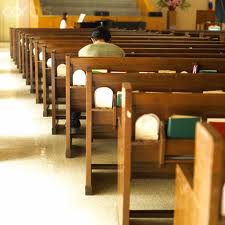
…empty churches.
We build big groups and count “decisions for Christ,” but the Great Commission is not to get kids to make decisions for Jesus but to make disciples for Him. We all want to make Christians for life, not just for high school. We have invested heavily in youth ministry with our lives specifically in order engage youth in the church. Why do we have such a low return on our investment?
What are we doing in our Youth Ministries that might be making people less likely to attend church as an adult?
What is the “pill” we have overdosed on? I believe it is “preference.” We have embraced the idea of market-driven youth ministry. Unfortunately, giving people what they “prefer” is a road, that once you go down it, has no end. Tim Elmore in his 2010 book entitled Generation iY calls this “the overindulged Generation.” They ask for more and more, and we give it to them. And more and more the power of God is substituted for market-driven experience. In an effort to give people something “attractive” and “relevant” we embraced novel new methods in youth ministry, that 20 years later are having a powerful shaping effect on the entire church. Here are the marks of being market-driven; Which are hallmarks of your ministry?
- Segregation. We bought into the idea that youth should be segregated from the family and the rest of the church. It started with youth rooms, and then we moved to “youth services.” We ghettoized our children! (After all, we are cooler than the older people in “big church”. And parents? Who wants their parents in their youth group?) Be honest: Have you ever thought you know more than your your student’s parents? Have you ever thought your youth group was cooler than “big church”?
- Big = effective. Big is (by definition) program driven: Less personal, lower commitment; a cultural and social thing as much as a spiritual thing. Are those the values that we actually hold?
- More programs attended = stronger disciples. The inventers of this idea, Willow Creek, in suburban Chicago, publically repudiated this several years ago. They discovered that there was no correlation between the number of meetings attended and people’s spiritual maturity. They learned the lesson. Will we?
- Christian replacementism. We developed a Christian version of everything the world offers: Christian bands, novels, schools, soccer leagues, t-shirts. We created the perfect Christian bubble.
- Cultural “relevance” over transformation.We imitated our culture’s most successful gathering places in an effort to be “relevant.” Reflect on the Sunday “experience” at most Big-box churches:
- Concert hall (worship)
- Comedy club (sermon)
- Coffee house (foyer)
And what about Transformation? Is that not missing from these models? Where is a sense of the holy?
6. Professionalization. If we do know an unbeliever, we don’t need to share Christ with them, we have pastors to do that. We invite them to something… to an “inviter” event… we invite them to our “Christian” subculture.
7. “McDonald’s-ization” vs. Contextualization: It is no longer our own vision and passion. We purchase it as a package from today’s biggest going mega-church. It is almost like a “franchise fee” from Saddleback or The Resurgence.
8. Attractional over missional. When our greatest value is butts in pews we embrace attractional models. Rather than embrace Paul’s Ephesians 4 model in which ministry gifts are given by God to “equip the saints” we have developed a top-down hierarchy aimed at filling buildings. This leaves us with Sunday “church” an experience for the unchurched, with God-centered worship of the Almighty relegated to the periphery and leading of the body of Christ to greater spiritual power and sanctification to untrained small group leaders.
Does not all of this work together as a package to leave us with churches full of empty people?
Here is an example: Your church. Does it look like this?
If you look closely, you will see the photo on the right is of a nightclub, rather than a church. Can you see what I mean about “relevance” and the clean Christian version of what the world offers? Your youth room is a pretty good indicator of what your church will look like 15 years from now. Because of the principle “What you win them with, you win them to,” your students today will expect their adult church to look like your youth room.
In summary, “Market Driven” youth ministry gave students a youth group that looks like them, does activities they prefer, sings songs they like, and preaches on subjects they are interested in. It is a ministry of preference. And, with their feet, young adults are saying…
…“Bye-bye.”
What might we do instead? The opposite of giving people what they want is to give them what they need. The beauty is that Christianity already knows how to do this.
Once upon a time our faith thrived in a non-Christian empire. It took less than 300 years for 11 scared dudes to take over the most powerful empire the world had ever seen. How did they do it? Where we have opted for a relevant, homogenously grouped, segregated, attractional professionalized model; the early church did it with a multi-ethnic, multi-social class, seeker INsensitive church. Worship was filled with sacrament and symbol. It engaged the believing community in the Christian narrative. This worship was so God-directed and insider-shaping that in the early church non-Christians were asked to leave the building before communion! With what effect? From that fellowship of the transformed, the church went out to the highways and byways loving and serving the least, last and lost. In that body of Christ, Christians shared their faith with Romans 1:16 boldness, served the poor with abandon, fed widows and took orphans into their homes. The world noticed. We went to them in love rather than invited them to our event.
The beauty of where we are today is that, unlike the girl in the hospital bed, our fatal pill could still be rejected. It is not too late. We can leave the culture-centered models we have been following for more Christ-centered ones. More ancient ones. More rooted ones. And the most beautiful thing is that students actually enjoy them.
So many have commented on this post in the last month that I did a follow-up: O Yeah! And other things I wish I would have said on “Cool Church.”
 the gospel side
You say u want to go back to the ancient ways of ” bringing in the sheep”, but to do that you would have to systematicly condemn & destroy everyone that did not follow your faith. It was called the Dark Ages. That can never happen again. Our personal, as well as, cosmic knowledge is far too vast to continue following any bronze age interpretation of our universe.
Hi Glenn,
Thanks for coming by and commenting. The “Dark Ages”, as I am sure you are aware, is a term that historians no longer use. The early Medieval period of which you speak was a post-Constantinian age of established church and church/state overlap. We are rapidly heading out of the last vestiges of that era. I am saying that the church is in a position culturally that is much more like the pre-Constantinian world in which Christians were seen as a bizarre narrow cult of people obsessed with caring for the poor and downtrodden.
Can I ask a question in a non-snarky way? (It is hard to hear emotion in type.) Are you over 50? Most under 50 no longer have hope in our “cosmic knowledge.” Do you really trust in our vast change in cosmic knowledge? If our “cosmic knowledge: was the issue the educated wouldn’t continue to live as immorally as the uneducated. It isn’t the uneducated raiding retirement funds and plundering the corporations that provide jobs. It isn’t the uneducated that torture prisoners or look at our phone records. It isn’t the uneducated that are tearing apart Canada for oil sand. These are the intelligent and enlightened. It doesn’t matter if you disagree with one or two of the specifics, the point is that knowledge and education have done very, very, very little to solve mans inhumanity to man. We need a savior. One who is truly good. Good below all the way through and through. It doesn’t take condemnation and destruction to “bring in the sheep” in fact, it isn’t about bringing in anyone. It is about taking the Good News to those who need a good word. It is much more about walking with a savior who loved and served, played with children and made wine at weddings. Who healed lepers inner and outer pain. A touch from him trumps any amount of coercion enlightened humanity can muster.
Matt, you forgot to tell Glenn that in the 20th century alone, people in a hurry to implement a “scientific” worldview KILLED roughly 170,000,000 people over the wrong views of politics and the state. That’s far more than were killed, exiled, jailed, or otherwise ruined for the wrong kind of Christianity or none at all in the 1500 years between the conversion of Constantine and Ruggles v. New York (1811 case in which a state supreme court upheld imprisoning someone for blasphemy against Jesus Christ). You noted the environmental cost of evolutionary materialism, but since Glenn brings up the so-called “Dark Ages”, the century in which I was born was a far darker one in terms of human cost.
If it isn’t about “bringing in anyone” then why do you frame the entire problem in terms of church attendance? I don’t think Glenn’s argument has to do with scientific vs. pre-scientific thinking, but rather your focus on “converting” people from non-attenders to attenders (or retaining those who attend). Why?
Are those who attend church less likely to ruin the environment? Or to raid retirement funds? To torture prisoners? To condemn gays?
You say that “knowledge and education has done very very little to solve mans inhumanity to man”. I would argue that church attendance has done quite a bit less!
Hi Ralph, I am hopelessly behind in comments. These come in chronologically rather than attached to the comment, so I really don’t remember original conversation. I will keep myself to your final sentence “I would argue church attendance has done quite a bit less.” You should check out Christian Smith’s “Soul Searching.” It is a book summarizing the National Survey on Youth and Religion, the largest research project ever done on the religious beliefs of American teens. One of the findings was that high commitment to religious attendance was linked to healthier life choices on every metric they checked: truancy, participation in extracurricular activity, grades, attendance, drug use, sexual activity, violence, crime and others. So, on one hand I have the daily newspaper filled with the misdeeds of the educated. On the other, a major research project saying that, for teenagers, regular church attendance is a major predictor of every single metric for productive living. I am not arguing for a lack of education, merely that knowledge does not produce moral superiority. I work with many poor and poorly educated people in our church plant that literally give others the shirts off their backs and share their food. I watch better educated people preying on their lack of knowledge of the system weekly.
You’re very kind in your reply, Matt.
First, ancient ways, the broze age and the “dark ages” are three separate time periods.
Second, despite how the scientific community characterizes Christianity, we are not anti-science (“cosmic knowledge”). Adversely, there is a stronger agenda today of the contemporary religion of progress and science attempting to condemn and destroy those who don’t follow their message (cf., militant academic atheism).
Third, the level of contemporary academic snobbery displayed here is much akin to the truth-snobbery of the middle ages. I’m surprised that someone who frowns on such an attitude would adopt a similar one for his cause today.
The ancient ways are not good because they are old. They are good because they were well conceived, and proven effective. Good theory, proved in the “lab” of real life. Sounds almost like science.
BH
Hi Bill, I hope I am sorry if I am coming off as an academic snob. I am a reflective practitioner-in no way an academic. I don’t have nearly the horsepower upstairs to pull it off. 🙂 I am merely someone who has spent a lot of time in the trenches and tries to figure out how the dots connect. I have spent most of my adult life in an organization that is ecumenical and evangelistic in it’s task. So that tends to give me a perspective that is larger than any one of the streams of Christian tradition-although I am now firmly ensconced in the Anglican stream.
I think you are right-I am advocating for something that is affirmed by the scientific method: I am advocating repeating what has worked in similar circumstances…not because of the age of the activity but because of a similar context.
Thanks!
Lay person’s POV here. Want to know why the church is struggling? Look at its public persona. We make headlines only when we’re getting together a boycott ot picketing someone because they’re gay, think evolution is plausible, having an abortion, watching a movie with witches in it, or reading some “smutty” book. Instead of focusing on building disciples and ministering, as you cite, we are turning off our youth by caring more about socio-political issues and dogma. Why would people want to be associated with such a group? Building “hip” churches is absolutely fine and effective, IF you use that attractiveness to share true, Biblical teachings, develop servants and disciples, and do everything possible to meet attendees’ and community needs, both physically and spiritually. Get ’em in, teach ’em right (with scripture, not smiley, soft, Osteenisms), and take care of ’em as individuals. You can absoluely do that on the street. You can also do it in a rockin’ church with a roller-coaster in the youth building.
Hi Randy,
I want to ride the roller coaster in the youth building. That is even cooler than holographic Andy Stanley. 🙂
The worse part is that we chase the headlines. We are the ones calling the news. We are addicted to the attention.
Randy, thank you for your insight. To clarify, when you say that we care more about socio-political issues and dogma, would you consider this to include using facebook to inform others about events that are currently damaging to our country, or that expose evil for what it is? Every day on facebook I post at least one link to a current event, if the story is written in a professional, just-the-facts manner. I don’t enter any personal viewpoint or comment, just the link with possibly an excerpt from the article. I cannot get beyond the fact that in order for evil to prosper, it takes a good person to do nothing. But, is this to what you are referring in the negative? It would take a lot of will power to not bring these issues to light, but do you see my bringing these issues to light as turning away our youth? I see so many youth (really up to age 30 or so) that seem completely complacent, and that is when I become fearful for the future of this once great country.
Could you please elaborate on your statement? Thanks so much.
Thanks, Sheryl.
Another “layperson” point of view (actually, a pastor’s wife). Growing up, the mean girls were also convinced that non-believers, i.e. anyone who didn’t attend THEIR church, would burn in hell. I’ve met many along the way who were harmed by these “thumpers.” I didn’t realize that still happened to youth until my twelve year old told me about the “super Christians” at his school who bullied others, just as I was bullied. THIS is what is killing the churches…it is the person who evangelizes with fear and damnation…why would I want to join something that condemns everyone who is not a believer as defined by a narrow, non-Christian, perspective.
Wow! I didn’t know that was still around. In our neck of the woods Christian kids are really, really sensitive to others. They do NOT want to be “that guy.”
Damaged by believers,
You are so right. That’s what pushed me away from faith by the time I was in college (well, that plus some personal stuff). By that time, I knew some people who were gay, but a lot of the self-proclaimed Christian kids I knew thought GLBT people were sinners who needed to be “saved,” at best. This bullying, Bible-thumping, absolutist mindset is what is killing Christianity… notice I said “Christianity,” not “the churches,” because plenty of fundamentalist, evangelical megachurches are doing fine, as far as I can tell. But that’s another story.
I agree with Randy. Our current culture of Christianity as depicted in the media and in politics always seems to have an agenda, which usually results in pointing fingers and less about compassion and living our own lives in a prayerful, reflective, spiritually-transformed way. But I think what was the biggest turn-off for me was the persecution of individuals who didn’t fit into the typical model by leaders. The final straw for me in one of my churches was related to book censorship and the actual intervention of a pastor into a couple’s divorce situation that involved talking to the children and making comments about one of the parents that was inappropriate for the pastor’s role.
What I also found was that sometimes church could be suffocating and yet so impersonal. Too many people keeping tabs on how you dress, what you say, how many times you attend church, what services you were attending and judging the level of Christianity based on church attendance and “involvement” in various activities/responsibilities. I agree that Christianity’s “sub-culture” can be pervasive and people have little interest in knowing you on a personal level outside of “church events.” I had been extremely active in church sometimes 7 days a week and when I left on quite good terms only 2-3 people bothered to stay in touch with me and that was only via social media, not at all in order to have personal interaction with me. Our interactions in a church need to be more personal and not (as social media) only take place superficially in a particular environment. I felt extremely sad that I had spent 6 years of my life so involved in a church and yet made so few real and lasting friendships–much less than I thought. And that I had believed that so many people were my friends when in reality they were only my friends when I was within those particular church doors. Once I stopped being “useful” to their church activities, I was abandoned.
I was also astonished that the church’s inability to be globally aware except on the level of missionaries needing to “reach out” to other countries. I attended a church where I was asked ignorant questions about the country I live in, and noticed that there was a missionary group going to Costa Rica to “teach the youth pastors how to do youth ministry” when Costa Rica has some of the most organized and wide-spread youth ministry organizations in all of Latin America! The idea is that we’re going to “teach them a thing or two” when the reality is that the short-term missions are having very low impact and can actually be quite condescending to the ministries that are already there. All of these things really bothered me.
So yes, I would say that I’m a little gun-shy. And I am much less trusting of those fellow believers who act as though they care when I am at church but do not lift a finger to truly know me or spend time with me and my family outside of church walls. I feel that the church pretends to have compassion for the flaws/difficulties of others, but doesn’t really provide any kind of unconditional love for its attendees.
Hi Anna,
I could go back through your comment with a fine-tooth comb to try to find a single word that I disagree with, but why? Great comments. Lots of people have your experience. God help us. Thank you!
Thanks for stirring things up with this post!
It seems we have fallen into what missionaries sometimes refer to as “over-contextualization” and as such are losing are true Christ given mission.
I am assuming your are serving an Episcopal diocese. Is that right?
Thanks again for thinking out loud for the rest of us to learn from.
Keep creating…questions worth asking,
Mike
Thank you for commenting, Mike. I am the youth/young adults/youth camp person for the diocese of Arizona and am vicar of a church plant in the spare time. I appreciate your stopping in. Are you an Episcopalian?
Good question Matt! My wife works for the Iowa Diocese and serves the bishop here.
We worship at St. Andrews in Urbandale, Iowa.
Because of my seminary training, Dallas Theological Seminary grad, TH. M. 81, I am asked to preach and help in ministry development. I’m thankful for the opportunity to serve with my gifts in the Episcopal churches here in Iowa!
Cool! I looked at Dallas once upon a time. Thank you for using your gifts. I am sure both you and your wife are appreciated there. Keep the faith!
That today’s church has problems cannot be denied, but it’s nothing new! Thus, I now take the liberty to share a witty poem from the scrapbook of my late grandfather. The source or poet is unknown, as is the date, but my guess is that it was written sometime in the late 1800s.
Going to Church
To church some folks
Go just to hear
The pastor’s jokes
That sound so quear.
Some only go
To walk the aisle
And gaily sho
the latest staisle
Some go from fright;
Some for the beaux;
Some to incight
A pleasant deaux.
Some for a hymn
Some for a psalm
Some for a whymn,
and some for pshalm.
Some go from pique
Some go to cry,
And some to sique
a home on hy.
Some go to guard
Themselves from guile;
Some think it’s hard to walk a muile.
Some go to weigh
Their sins, and cough;
Some go to preigh,
And some to scough.
Some go who ache
As sinners should
And some to mache
Their business gould.
Some go to laugh;
Some to malign,
And some to quagh
Communion wign.
Some listen through
The preacher’s word;
Some in a pough,
Sing like a bord.
Some go to grieve;
Some go to doubt;
Some go to lieve
Ere church is oubt.
Some go to view
The costly choir;
But very few
for fear of foir.
There is nothing new under the sun….
Indeed, Mrs. Loomis!
I grew up in church and raised my children in church, but fundamentalism crept in like cancer and destroyed the entire denomination. You mention music and traditional music over youth centered. To me it was replacing meat and potatoes with cotton candy to brainwash the young on Rapture doctrine and theocracy. After awhile most of the people vomit up the garbage leading to the decline in numbers, but those zombie Christians manipulated into believing this doctrine vote disproportionately against their own self-interests, act as attack dogs against anyone that thinks differently, and have infested our political system and judiciary with storm troopers tyrannizing women, gays, unions, the middle class all from the Steward Brothers that founded Biola College in early 1900’s sending out free commentaries to pastors known as “The Fundamentals” where fundamentalism comes from and now the Koch brothers who are orchestrating the destruction of our economy and ecology with unregulated greed.
I now belong to a home church and we are helping other home churches because the traditional churches left their calling and mission by worshiping mammon rather than God. It is this home church, which is a growing trend that will restore the missionary spirit of reaching out to the poor and downtrodden and disciplining it’s members.
Hi Patrick,
Thank you for sharing your experience. I am certain the home church is a blessing to you. I have watched this as well. In my world it isn’t just right wing fundamentalists. In the Episcopal Church we have had right and left wing retreats to the corners. I can tell you from experience that the left wing version is just as interested in purity and purging the ranks of those viewed as insufficiently supportive of the agenda.
I suspect that the institution is more impoverished that your Jesus focussed group is not part of it. Too bad you guys couldn’t find a way to be a church within a church in order to bring the leavening of your perspective.
In our Anglicanism we had a strong ethos of “we don’t agree on a doctrinal statement, we agree to pray together.” It has been very, very difficult to maintain as the religious and political world chose sides and refused to allow people not to join the fights.
Excuse me, Patrick, but have you ever even READ “The Fundamentals”? It is a series of well-written and reasoned essays in defense of key biblical doctrines. Many of the writers were graduates of Ivy League schools, and some of them had even taught at Ivy League schools. You use your overblown rhetoric, cultural stereotypes, and wacky conspiracy theories, and then you whine about how the church is mistreating you? (edited by Matt for kindness)
Ken is right. The Fundamentals were well-written, often brilliant and written by very, very bright guys. But, Ken, they are not what fundamentalism morphed into in denominational dog fights. Whether the fundamentalists or progressives won in your denomination’s culture war, both sides have used many of the same techniques. I can tell you having watched this in the Southern Baptist, Methodist, Presbyterian and Episcopal Church, that there were and are conspiracies. It is a sad, pathetic truth. People in backrooms made plans and deals and took decades to implement their visions…usually leaving a trail of wounded people in their wake.
I’m sorry, but I’m always skeptical of conspiracy theories. In my opinion, they’re nothing but a convenient scapegoat, and the term “fundamentalist” has become little more than a straw man.
Hi Ken,
Chuck Colson did teach us that conspiracies tend to come to light: Watergate was his proof of the resurrection. In this case I can assure you that many, many of those who have been caught in either a Fundamentalist or Progressive takeover of a church, seminary or denomination either joined the ranks or were wounded profoundly. Have you read Rene Girard on scapegoat theory? Humans in groups tend to pick scapegoats when under pressure and vote those scapegoats off the island. Right now Progressives scapegoat Fundamentalists. Fundamentalists return the favor. I have been on the receiving ends of those pogroms. I can tell you they are really mean. I have friends who have lost jobs in churches, youth ministries and seminaries because they were either the conservative or liberal scapegoat. In our church, we just scapegoated an entire diocese (20,000 people) and drove them from our denomination after they had worked out an agreement to settle the differences. No one could risk having a different voice at the table!
I think you may be confusing the term Fundamentalism with Legalism. There is a clear and significant difference. I was taught that the Church has five fundamentals:
1. God in three persons: God, Jesus, and the Holy spirit
2. Jesus was born of the virgin Mary
3. Jesus was perfect, led a perfect life, was God/man on earth
4. Was crucified as a sacrifice for our sins, buried, and rose again
5. That Jesus will return to rule the quick and the dead
anything else is theology and doctrines, as Christians we can argue over these doctrines just like Peter and Paul argued over ministering to us non-jews, or over eating meat on fridays. It’s the fundamentals that truly matter. The fact that pre-trib rapture is a fundamental belief in most modern churches proves the point of the article. That the church is trying to be “relevant” by giving the people what they want. Jesus never promised us worldly wealth and an easy life. He offered us salvation and rest in him. When the tribulation comes, all the pre-trib rapture, get out of jail free christians will fall away from the church. The rest of us will face persecution, starvation and execution as our reward. May God give me the strength in those times.
Hi Robert, You had me until the last sentence. An end times definition beyond “Jesus will return” is not one of the fundamentals. Rick Warren wrote a great piece in which he said he no longer calls himself a fundamentalist because the word has been redefined to mean “someone who doesn’t listen.”
I think the only people over contextualizing are the people who are judging other churches…at least they are going and exposed to the word. Pray that God will awaken their hearts! The message, good news is being preached!
One of the criticisms I’ve had of churches for 20 years now is that some churches are more like entertainment centers than worship centers. In short people attend for the wrong reason. I’m not anti fellowship but that should be what we do after the service not instead of a real service. I recently heard someone on Facebook talk about going to a service lead by a group of guys with guitars and drums. He stated that most people just stood around listening instead of being a part of the service. My comment was maybe that’s what they see it as, entertainment. Ask yourself this question, how did the early church do it? That’s all we need to know because as the author pointed out, 11 dudes took over the earth… I will add to that, one major reason the early church grew was because of persecution. There’s an old saying in the Army “there are no atheists in a fox hole”, the Navy says “no atheists in a life raft”. With persecution comes hard times and people turn to God. Without the persecution I think Christianity would have been much less successful.
Hi Jerry,
Wasn’t it Augustine who said, “The blood of the martyrs is the seed of the church”? The entertainment model does seem to be passive beyond the raising of hands.
No, it was Tertullian that said “the blood of the Marty’s is the seed of the Church” in his work Apologeticus. Augustine was helping with the blood shed.
Thank you!
No, Terullian said “the blood of the martyrs is the seed of the Church” in his work Apologeticus.
Thank you for bringing me back to speed.
I believe We will never bring everyone into becoming believers, members of the church, the body of Christ, Man needs first realize his need of God, Christ as his Saviour otherwise how can they even make comments about the bible. We, as believers will always have many opinions how things should be run. We need to go where we feel the truth is followed. ONE thing for sure there is only ONE church and that is which ever believer belongs to The BODY of CHRIST. So sometimes we need to say let us agre to disagree.
Reblogged this on The Adventure Continues and commented:
It’s true. There are people out there searching for truth–the truth we have, the truth of the gospel–and the watered-down version we’ve been giving people doesn’t cut it. But there’s hope, because people are figuring this out. This guy figured it out.
It’s not just youth. It starts with all the little ones. The dying churches I have experienced used to be vibrant, sent many missionaries out into the world, and had many involved members. They tend to start the dying process once they no longer welcome the children in the “adult” services. Age segregation tends to be more “club” like rather than community and by segregating the children at such an early age, it becomes a value we teach our children an a basis for our relationship with them. We will bring the children to church to learn about Jesus but we cannot share and spend this sacred time of worship and prayer with Jesus with them. So we leave you to the baby sitters and the teachers who try but in the end they don’t have the influence and reach nor are they less invested in your future than any parent should be. Then when the children grow up, we are surprised when our children leave and don’t come back when they were never made to feel at home in the first place.
“Cry rooms” have always been a puzzle, in some ways: when your babies start crying, take them there. On the other hand, the sounds of crying babies signify YOUTH and LIFE in the church. Problem is, at 1 of the churches I attend, there “ain’t” many babies there TO cry, so the cry room has turned into either a dressing room for brides, or a room with a window where introverts can sit away from “the roar of the greasepaint, the smell of the crowd”–lol–
That is the start of it, isn’t it. Thanks. I never connected that dot.
I attended an episcopal church and stopped going because no child care was available. The silence and sacred ceremony of the service was deafened by my crying child. Worse yet, people in general are so judgmental when it comes to children–they’re trying to worship to and while they might not say “shhhh!” or give mean looks, they clearly look over at you and it can be quite embarrassing. I have experienced reactions similar to those who have to suffer through a plane ride or a movie with a crying infant. Lots of loud sighs, eye-rolling, staring, and tight-lipped endurance.
Not to mention that it’s impossible for me to actually hear and understanding the sermon when I’m attending to a toddler who just wants to run around and play. Children cannot sit still developmentally for the length of a service, and while the argument that families should stay unified going to church is theoretically a good one, it really places a tremendous burden on moms to force their children to participate appropriately. People make comments like “he/she just needs discipline” with this condescending note in their voice that implies I don’t discipline my child. I end up leaving the service in tears and furious since it took me two hours just to bathe and ready my kids to leave the house only to result in a simple “appearance” at church without much substance. In a louder, more contemporary service, my child’s fidgeting is less noticeable and I don’t feel like a bug under a microscope. However, as mentioned, there is value to a more formal service.
I think we definitely need to examine the role of children in services, but we also need to have more tolerance and understanding of child development and a child’s needs if we are going to do that.
Hi Anna,
I have been in those services when the poor mom was mortified at the noise. I always make sure to point out that what a blessing it is that Jesus’ favorite people came to church. I am really talking more about not having youth in the service. We do a pull-out for the sermon. Kids sing with us, then they leave to study the passage we are studying with the adults. They do an age-appropriate message and activity and then come back at the passing of the peace. In a 75 minute service they are in the sanctuary for 55 minutes of it. It isn’t perfect, but our young people have stayed connected.
You could not be more wrong! I would never agree to watering down the gospel. However your stats prove you are wrong! The definition of insanity!?!? So if we don’t adapt “methods” we will keep having those percentages. The great commission isn’t about going to church! I’m grateful God doesn’t paint with broad strokes like you! Enjoy life in your bubble
Hi Ryan, I am not sure who you are replying to or what statistical data points you are referring to. I would be glad to dialogue with a bit more information.
Contemporary doesn’t mean “Attractional over missional.” At our church, (which is all I can comment towards due to the fact that I can’t speak for other churches I haven’t been to), our student ministry raises the bar of knowing God’s Word. I just spoke last week about being a follower of Jesus (Mathew 16:24 “If any of you wants to be my follower, you must turn from your selfish ways, take up your cross, and follow me.”). Just because we have lights and a smoke machine, it doesn’t mean we are creating “empty people.” Chuck Swindoll spoke at Catalyst back in 2009. He said something that spoke to me in volumes… He said something along the lines of “The message of the cross must NEVER change, but the methods in which we present that message HAVE to.” We must raise the standard high and people will accept the challenge (“And I, if I be lifted up from the earth, will draw all men unto me” John 12:32). We see this in Acts and we also see it today. We must be very careful to not accuse a local body of believers, that is growing in number, to be shallow or “a ministry of preference.” The Acts 2 church grew by 3,000 that same day by methods that were different than the temple. The method that was different was the message of truth without strings attached. It didn’t require perfection before receiving. It became more than traditions or just going to church. It was the Spirit of God moving amongst the people and a disciple being faithful to the point of being different than the norm. Jesus Himself was a accused of being contemporary by the Pharisees because He did things different from the norm or the law. He followed the Father and was obedient, even to the point of death on a cross. Our job as churches (as a body of followers) is to be about the business of seeing the lost saved. Whatever the methods, the location, or the age group, we must raise Jesus high!! I do realize that there have been churches that have not done things right, but to put a blanket statement over a certain style of churches is not fair to ones that are being faithful in the process of helping families raise up disciples. Thanks again for posting this article. It solidified some things in me about what the church has been called to!
Very well said. I, also, cannot comment on other churches. My church has a very powerful youth program. What I love about it is that their service is on Wednesday evenings, so they are encouraged to attend the adult worship service on Sunday, and they do. During the second (or first) service they attend their connection group (Bible Study). What I find is missing is engaging the graduates from youth into some sort of ministry where they can feel useful. This, however should not get in the way of them attending service or Connection Group.
Hi Steve, Thanks for commenting. I made a really long reply to you. Mainly because you hit on things that I hear a lot of. So, sorry if this is torture to read. 🙂
It sounds like many great things are going on in your church. I want to encourage your holy boldness to want more to know Christ and grow to maturity in him.
I do not mean to imply that big is bad. Big might be bad, if, for instance, something damaging is being taught-like prosperity. But big might be really good: more coming to faith, more growing in faith and love for Jesus going viral. That is a great thing. It is what all of us in youth ministry pray for.
Attractional over missional is really about the locus of evangelism. Does evangelism happen primarily when people bring the unchurched to the sanctuary for the senior pastor to do the work of evangelism, or is the sanctuary used primarily to equip the saints, each of whom are expected and equip to share the Good News of God in Christ every where they go the other 6 1/2 days of the week. Attractioal by definition is about “come.” Missional is about “go.”
I have several friends who went to Pastor Swindoll’s church. It was several years ago. They said that it was very solid but not by any means “hipster Christianity”. On the issue of change, I agree with him: the message is eternal, the delivery method is not. However, the assembling of Christians in worship of the Lord, celebrating the Lord’s Supper on the Lord’s Day was NEVER contemplated as an “experience” for the unchurched. In fact, in the early church the unbaptized where sent home before communion. The evidence is that for centuries they were not even allowed to stay and watch. The Orthodox have remnants of this in their liturgy to this day!
I have a few questions for all of us who are youth ministry types:
1) Are you tracking which evangelism experiences have the most return on investment? Maybe more kids make professions of faith at camp, but how do they follow through 1 year later vs say meeting Jesus in a 1:1 meeting or after coming to a discipleship meeting? (Tracking the data on this made me realize that we were spending most of our time and energy on the evangelism things that produced the least follow-through in students.
2) Do you have a plan to equip parents? (Because our job is to be their spiritual support, not their replacements)
3) How are you equipping them to be youth who DO ministry rather than receive ministry? What do they run and lead?
4) Are you engaging them in the life of the larger church? Are they in the sanctuary with little kids and old people? How are they taking their place in the councils of the church?
5) What is your “Sticky Faith” plan to see them grow when they move on? I am sure you are thinking about these things, but when we ask each other these things we remember to do what we know.
I am sorry if it sounded as if I made a blanket indictment of anything modern. In that post I am critiquing three things: 1) Attractional as a model for the Sunday worship service, which turns the gathering of Christians into a revival tent leaving us with a truncated discipleship.(btw, I have no problems with revival tents, unless they replace the worship of the true and living God.) 2) Segregating children out of church and 3) Young adults realizing as a result that they are being pandered to and growing fatigued with it when they grow up and leaving the church.
I know very few youth ministers who cheapen the gospel message. You are obviously in the group of people working with passion and diligence to “present everyone complete in Christ.” However the data on what happens to our students when they leave us is really, really sobering. I used a comment in the post, “What you win them with you win them to.” In that vein, how does the fog help? What will sustain students? Their love for the program and show? We know it won’t. But when we get them there with show rather than by teaching them to love doing the things they will do as adults as they walk around in their everyday life, we leave them with the idea that, despite our skinny jeans and latte’s, the faith isn’t relevant to their actual world.
Wonderfully put! I remember as a youth trying to follow Christ I never wanted to bring friends to church, they knew what to expect and weren’t coming. Now I always an inviting people to church, come as you are, just come and see! It opens people to see and hear the good news. That is only a small part of being a Christ follower…
Reblogged this on Wonderings of aSacredRebel: on Jesus Christ, Community, Bible Study, Devotions, and daily life….
A very thought-provoking article. I’ve been involved with leading bible study for a 20-something age group for a while now. It’s been a roller coaster ride. The challenge has been to get the group engaged and excited about their faith and their local church. Church seems to be an event to attend if nothing else kept them busy this week or they’re not too tired. Little invested by them with little return on the small investment. Frustrating because there is no easy answer to this problem you describe.
Thank you for articulating this so well, especially the bits about worshipping RELEVANCE and taking a sort of marketing approach. Hope I’m not misinterpreting what you have written.
Coincidentally, I just began rereading Galatians in my daily Bible reading, so the following is fresh in mind: “I am astonished that you are so quickly deserting the one who called you in the grace of Christ and are turning to a different gospel— not that there is another gospel, but there are some who are confusing you and want to pervert the gospel of Christ. But even if we or an angel from heaven should proclaim to you a gospel contrary to what we proclaimed to you, let that one be accursed! As we have said before, so now I repeat, if anyone proclaims to you a gospel contrary to what you received, let that one be accursed!
Am I now seeking human approval, or God’s approval? Or am I trying to please people? If I were still pleasing people, I would not be a servant of Christ.” Galatians 1:6-12
Of course, Paul was writing to a different set of people in different circumstances, but I think some of the same principles apply. We have to trust the message of Christ and its proven record of endurance, despite human foibles. I have a feeling, if Paul were rewriting to address current conditions, he might’ve rewritten it as you have, above.
Thank you, Gretchen. Hard not to like Galatians!
Good Word.
I agree with your assessment. I have been in pastoral ministry now for forty years and I have watched this evolution with a great deal of skepticism. Along the way I was introduced to the Eastern Orthodox Church. They have no concern about being “relevent”, no segregation of children and youth in worship and no “seeker-sensitive” worship. And yet people are being drawn to it, often after a long term of dissatisfaction with the fluff and shallowness of Western Christianity. I believe we can learn much from them, but we probably won’t…there’s another program right around the next corner.
Wow! That is a powerful word, Forrest. The Orthodox do have zero need to be liked.
And we do have a huge need to do the next program to bring people in.
It is a big part of my move into the Anglican waters. When talking about sexuality issues a priest said, “This might be a big-fat mistake. We will know in a hundred years.” When I said, “It might be a pretty high price to pay,” the priest said, “We have been a church for 2000 years and had our logo on the door for 500. We aren’t going anywhere.” It was a level of confidence in Christ and his church that I had never seen.
Just a thought here. I wonder how much of the problem is the rising mindset of consumerism in America instead of the style of the church? Parents are leaving the whole process of religious training for their kids to the weekend stop at their home church. Then once their kids are in youth group, the consumerist would correlate steady attendance in all of the youth programs with their child’s spiritual development. More time at church/programming = spiritual growth. Now, of course that’s wrong. Would it be possible that “seeker friendly” churches attract more consumer driven attendees which in turn create teens that are going to leave the church b/c no effective teaching/training/spiritual guidance is happening at home? My frustration is not rooted in the style of the church, it’s rooted in the lack of parenting.
What is destroying the worship houses of every religion?
The internet.
Children and young adults are no longer “locked in” to the religion or the world view their parents indoctrinate them with.
There are answers to questions that religious leaders would likely only answer in a way that was conducive to ‘maintaining the faith’ in the light of reason.
There’s a way for the doubters to communicate ideas, to share the pain of non-belief in the face of living in a devout and unwelcoming home.
There is a way for people to learn about science like never before.
I’m saying the reason any religion is failing is not from the way a worship structure is enforced, or perpetuated, but the fact that a much more reasonable alternative exists, and it’s there for anyone to find.
Hmmn. I cannot really comment on “parental indoctrination”, Joe. 90% of my ministry has been around the unchurched for whom the parents are indoctrinated and brought to faith by the children. They all use the internet…they use it to share their faith.
Do you think that science is in opposition to religion? I for one do not. They answer different questions. Science, by definition answers questions of “how” things happened and “when” they happened. Religion answers “who” made them happen and “why” did they happen. Apples and oranges.
You should meet some of the folks in the society of ordained scientists. A very interesting and intelligent crowd.
“90% of my ministry has been around the unchurched for whom the parents are indoctrinated and brought to faith by the children.”
First, indoctrination is defined as, “Teaching someone to accept doctrines uncritically.” Indoctrination is much more suited to a child, as ideas are inserted into their mind prior to the development of critical thought.
You might find it hard to believe an adult would be naïve enough to believe in Thor. I feel the same way about every deity – if I had a child, I would support them if they chose religion, but you would lump me in with the faithful for attending church gatherings.
I also find your numbers a little iffy.
“1. 20-30 year olds attend church at 1/2 the rate of their parents and ¼ the rate of their grandparents. “
“2. 61% of churched high school students graduate and never go back! Even worse: 78% to 88% of those in youth programs today will leave church, most to never return.”
So what is 90% really consisting of here? Are these indoctrinating children in grades K-8? Grades 9-12?
So if 100% of the people in your ministry have children, let’s say 50% have younger children, and 50% have older children. So 25% of the 20-30 group go away, Only 19% of the 18 year olds stay after high school – that leaves 44% when you don’t include the claim that 78%-88% of those in youth programs will leave church …
… so if 78%-88% of the children in youth programs leave, do the parents go with them? I mean it’s almost claiming in the worst case scenario that roughly 90% of children leave church because of youth groups. So like are we working with 12%-22% being the ones that bring their parents to church and stay?
I feel like you are very opposed to youth group organizations, and cherry picked the most alarmist statistics you could locate.
If your 90% is after subtracting all of the above, then you really have some problems. I don’t think it’s youth groups.
Thank you for your time, though. It’s good to talk about these things sometimes.
mAYBE THE YOUNG FOLKS THINK “HOW GREAT THOU ART” HOPING FOR A GOOD LIFE AND AS YOU AGE YOU GO TO CHURCH MORE THINKING “NEARER TO THE MY GOD”.
That is really funny. I’m still smiling.
Hi Joe,
Thanks for asking questions. One big issue is that the church embraced methods that have a long-term negative affect and did it with relatively uncritically.
The numbers were from Pew, Time, Barna and Lifeway. I can give you links to the data if you want to look at them in more depth. The data was taken from church youth.
I am a 30 year youth ministry veteran who loves youth ministry. I also see what happens in churches when they realize what happens when the pied piper isn’t going to save the day…or even worse, when they do. When it goes wrong the church gets frustrated and starts cutting leadership for young people…and, in this day and age, we need as many safe and healthy adults with children as we can possibly muster, especially in urban environments with high rates of single parenting.
Most of my ministry was in YL. Young Life is a ministry to unchurched students. So the “join” mechanism is the selection of the student rather than being told to attend by a parent. That is usually a bit unique among youth ministers who do attractional things to get students to come to their events. YL leaders go to students and meet with them in their world.
I agree with 99% of what is written and have implemented things in our student ministry and church as a whole to align us with a more biblical view of discipleship. The only thing I wouldn’t agree with is the idea that the “next generation” is the “church of tomorrow.” We behave as if our students and children that call themselves believers and have placed their trust in Christ and have been baptized as the church of today. We have pre-teens and teenagers serving in almost every ministry of our church. They are in student community groups that are led by an adult assigned with the task of making disciples and partnering with parents. We believe that they are the church of today b/c there is no age at which a disciple is called to be “the church.” They already are the church, so we treat them as such!
Way to go, Jeremy! It sounds like a great youth ministry. I am hoping that you are keeping data on this before and after. We need data on what happens to attendance, spiritual commitments, and long-term retention rates when we change methodologies. Can you give your church and city so that people near you could come see what you are doing?
Worship that speaks to multiple generations will transcend the culture (any culture) in which it exists. It’s that simple. Furthermore, let’s hope the discourse of the coming generations avoids the use of dangling prepositions and inaccurate use of the word. “substitute….” Clear communication also should be timeless.
Amen on worship…and now I want to send all of my stuff to my sophomore English teacher to have her proofread for grammar. 🙂
An hour ago I was emailed an edited version of an article I am working on for a magazine and had a big comeuppance when I saw how much red ink was on the draft that came back from the editor.
Fascinating article. I am the mother of 5 young sons, ages 8 and below. Many people have been cross with me and my husband because we keep our sons in the main services, rather than sending them out for all the children’s programs. (Ex. Children’s Church, Awana’s, and the nursery ministry) We always felt that it was important, first, to teach them to tolerated the preaching of the Word. (Even the 15 month old baby knows how to sit quietly in service…he doesn’t always like to, but he knows how and knows that he ought to.) And while at home, we strive to show them our love of the Word of God, through morning Bible reading and evening devotions and prayers. I’ve gotten so much flack for this over the years. Honestly, we believe that our children need something more than an entertainment filled Christianity. They need a reverence for God Almighty. I just don’t think the “roller coaster” in the sanctuary for VBS shares the sanctity of the sanctuary or lifts up their little hearts to think on heavenly things. I don’t believe fun is sin, but I do think that there is a time to be serious about important matters. Just my thoughts, but I am glad to see that someone else has mentioned it.
God bless you, Meli. There is actually a movement afoot of parents who have a higher expectation for the discipleship of their children. The fact that 22,000 people hit this article today is an indicator that it is touching a nerve of some sort. A bunch of youth ministry people have been saying this for years with no one listening. 🙂
Also interestingly, you mention in comments elsewhere that you are a youth leader and that you do use these types of programs, but not during the service. I really like that idea. If the children met on some other night or time, I would totally go for it. I hadn’t really considered that an option, but it is a good one. Thanks for planting the idea.
So glad to read this. We have 5 children as well & also keep them in the service. We do not agree with age segregation so with that our son, almost 12 will not attend a youth group but instead family nights. I encourage you to stand your ground. I am sure you receive opposition from others as we do.
Hi Jamie,
I did catch a lot of grief when that article originally dropped 11 months ago. In the time since, people have begun to change their minds in profound ways. I even have the hiring committee at a local mega church asking me to facilitate clarifying their vision before hiring the next youth pastor…someone who will focus on equipping parents, partner to do ecumenical evangelism in the schools and focus on discipleship and intergenerational ministry in the church.
I really do love what a great youth program can give: peer groups encouraging one another to love and good deeds, 1:1 mentoring from trusted, trained and background checked adult Christians and those leaders helping them learn to serve and share their faith in the community. I just don’t want those to happen when the body of Christ is assembled for the worship of Almighty God. I like the family night idea!
The “problem” is that you’re trying to sell fiction, and people are getting wise to it. And it’s about time.
Really? What part of the Christian story are you positing is the fiction? That Jesus lived and died? Or that he was resurrected? As I recall the Pew data this year showed religiosity and belief increasing. It was involvement in the institutional church that was not going well.
The Gospel is truth, if it is preached accurately. Every word of the bible is God inspired truth, and no one has ever been able to refute it. Not believing, now that’s another story.
What I don’t understand is why the modern church has such a disdain for family ministry. Just try to start a family Sunday School or bring your children to church with you or to an adult class and see what happens when you disciple your family at church. And why is family constantly ignored with discipleship classes? Churches require you to 1-get saved, 2-learn a little doctrine (maybe), 3-get connected in a small group (that families most likely cannot attend together) and then 4-serve in the church 5-and then community. Why is family always left out? Do you know what the church is afraid of family ministry? Why is learning to disciple your own family never one of the objectives of the modern church? Do you know?
Hi Beth,
Thank you! I saw what you were saying while my kids were growing up. There is a movement afoot to change this. Two organizations: Vibrantfaith (moderate) and D6 (conservative) work on this. Both are very good. I actually have an article coming out in The Living Church Magazine where I outline why the evangelical church does what it does (segregate) and the mainline does what it does (fail to invest). I will post it as a couple of blog entries after it is published. If you follow my blog it should pop up in a month or so.
Maybe part of the fear of family ministry is that there will no longer be much of a need for seminaries once the local church learns how to make leaders on their own. Imagine a church whose pastors, bishops and elders actually grew up and were discipled in that church!
A professional discipler should be able to make seminaries obsolete. I mean if the professional cant make disciples then what exactly is his profession? What is discipleship? Did Christ send his disciples off to be discipled by an out of state rabi? No. Seminaries if doing what they are supposed to do should quickly make themselves obsolete. What exactly is the point of seminary again?
The Holy Spirit of God is no respecter of men. Brothers, teach the young men in your care to be your fully equipped replacement needing nothing else and then you will have made a disciple.
It is also a bummer to take people away from their ministry by mailing ten out of state for 3 years. Local seminary has been a great option for many.
But even local seminary, Is it taking itself out of the equation? I mean are they training men to train others to completeness? Or are they trying to remain necessary? Do you believe seminary is a necessary, indispensable component of any aspect of church business? In yet other words: Does seminary hold the key to understanding? If wisdom is that which leads to life, why do we need seminary? Why should I listen to anybody that is not willing or ABLE to share EVERYTHING. Why does the church look at the seminary as indispensable? How can you expect anyone to take you seriously if you do? Maybe the churches should trade the pastors for bus drivers and bus the congregation to the seminaries on Sunday mornings so that they might be infused with the same knowledge of those that exercise authority over them. Basically you are saying : I want to train you to be qualified to do any job in the church but the one I do…. That seems to me as a very discrete form of oppression.
With all due respect, Ted.
Hi Ted,
“Necessary” is an interesting concept. I am in a tradition now that practically speaking mandates seminary. I however, do not have a seminary degree (because of the 10 year rule). I have a M.Ed. and a pile of hours and a B.A. in Bible. In my re-ordination into the Episcopal Church, it was decided that seminary was non-normative and I was a bit of the posterchild for that. Still, on my own time and dime, I am pursuing a seminary degree as it is sharpening me to be in a place where I am opening Scripture and seeking training to exposit it more faithfully and communicate it with more passion and clarity. I know gifted, called people who have no training. I know ungifted and called people with training. So training is no substitute for calling. And it is no substitute for gifting. It is a substitute for being untrained. And that is of great value.
I do appreciate short immersions and local seminary. It is more cost effective and allows people to bloom where they are planted. In addition, it tends to create people called to places and ministries rather than careers. I know that comment will generate plenty of heat from many great ministers of the gospel, but honestly, I have seen that.
That sounds reasonable to me Matt :). I would agree that seminary may not be useless as long as it can admit it is not necessary. This is what I am trying to say. I am useless unless I can admit I am not “necessary”. We require but one high priest in the order of Melchizedek. And no man comes to the Father but by Him. The eye of the needle is Jesus Christ of Nazareth. Institutions as a rule are not up front with the fact that they are not nececary.
The job of a priest is not to be a mediator between God and humans but to point others to the Great High Priest and only Mediator. Thanks, Ted.
Praise God, that’s why I plan to be a pastor of a family-integreted Church one day. I agree Beth, it is a shame what the modern “church” is doing to the family. But we also have to remember that those who don’t think like we do have been washed by the Blog of Christ and are our brethren in this this world. What we need to do is equip the fathers and/or heads-of-households and that is what I tried to do with the “Father’s Roundtable” Blog.
Thanks, Brian. We are all, indeed, one family.
This question is a little off topic but you brought it up in your blog…
RE: “This worship was so God-directed and insider-shaping that in the early church non-Christians were asked to leave the building before communion!”
The term “early church” is a broad statement. I admit this was not the point you were expounding on. But I need to ask…Is that the model we should follow? Because some in the early church did something does not make it scriptural. When Jesus conducted the first communion, there was a non-believer at his table, but Jesus did not excuse him; on the contrary He served him. This is the example I look to when the topic of open, closed, or close communion comes up. I believe we should warn people what the Bible says about it, but this example shows me we are not to “police” the communion table. Not being a theologian, I always reserve the right to be wrong! I’d like to hear your thoughts.
Hi Dave,
The communion question is a great one that has a lot to it, more than I can go into here. Christ Church New Haven, an Episcopal Church from a progressive Anglo Catholic perspective published a resource page on the subject last year. Here is the link: http://www.christchurchnh.org/communion-and-baptism-resource/
A big part of how one views this is their view of what the Lord’s Supper is and what it does. A Catholic/Transub person would say tend to say, “no way” an evangelical and progressive for whom it is about welcome would tend to say, “All come!” I am a real-presence Lutheran on a good day and a spiritual presence Calvinist on a bad one (or vice-versa). I tend to say that as part of the church catholic in the Reformed tradition, that it is really the family meal of Jesus’ followers, but that we are ALWAYS adopting and would love for them to come, see me about the adoption process: baptism.
The scriptural argument for me, Dave, is not the whole argument. Generally, I have found the theological framework that Anglicans seek to follow: Scripture, tradition and reason safe and helpful. The wording of your question makes me assume that you are an Episcopalian, so this is for those outside of our immediate family: You will hear Episcopalians talk of a “3-legged stool” of Scripture, tradition and reason. I think that is a shame, since the person who developed the idea of Scripture, tradition and reason as a theological method, Richard Hooker, was definitely NOT of the opinion that they were of equal important. He described it more like a wedding cake: Scripture is the base. Where scripture is unambiguous, it carries the day. Where scripture has interpretive room, tradition is accessed. For Anglicans “tradition” refers to the decisions of the undivided church of the first 5 centuries. In fact, one Archbishop of Canterbury, Lancelot Andrews, said “by tradition we mean One canon, two testaments, 3 creeds, 4 councils in 5 hundred years.” Reason then applies the lessons from Scripture and tradition to current circumstances.
So to be explicitly Scriptural is not my standard. Something could be a solution used by the early church that is compatible, rather than practiced in the New Testament. Things that are described (like slavery) and things that are prescribed (like not eating meat sacrificed to idols) for example are different. As are things that are cultural accommodations (like the meat) versus moral obligations (not gossipping, for instance). So Anglicans, at our best, are quite scriptural (reading it every year in the Daily Office) and every three years in Sunday worship, but we tend not to have a flat take on Scripture.
So, sorry Dave, I answered a whole different question. 🙂
I personally, follow the canons by announcing that all baptized Christians are welcome to the table, but I am not checking baptism records at the rail.
I loved your article and am so sad to say it is true. The church resembles the world a little more everyday and we have lost the sense of awe, of holy and the authentic. In addition to your very clear message, I would add that in our worship music and styles may be the definitive catalyst of our wayward actions. I am confident in this however, these issues are becoming more of a topic within churches, their clergy, and their congregations. We don’t need a cool God, or cool churches. We need a Redeemer and we need to learn how to relate God’s narrative to a world where people are seeking him. Considering the issues of our society and the condition of the planet, we have a desperate need for an Almighty God who will rescue us from ourselves. Kylie eleison.
Hi Nyle, Very, very well said. Thank you.
Can you explain what you mean by “the church”? What you mean by “we”? A statement like “We build big groups and count ‘decisions for Christ'” is a discourse specific to some protestants. You also say, “We bought into the idea that youth should be segregated from the family and the rest of the church. It started with youth rooms, and then we moved to “youth services.” We ghettoized our children!” This is descriptive of some protestants, perhaps, but not Catholics, who don’t have separate masses for young people. When you say “we” you are suggesting that all Christian denominations handle these issues in the same way.
Hi Randy,
Good question! I am speaking to the lion’s share of full-time youth ministry people in the US, who are large church evangelicals. Some Catholics do have youth masses, or at least used to a few years ago as part of Life Teen programs, but generally you are right, the Roman Catholic church has been much less segregationist, and, in Phoenix at least, has many parishes doing a good job evangelizing it’s own students-much better on average than our local Mainline Protestant churches. Much of this happened under the leadership of a particularly good diocesan youth officer, Bill Marcotte, who assembled a great team of young adult youth workers.
We must be concerned about our youth.We have bible studies with lectures,why not let very body ask questions and take part in the lession.This is always better than sitting through a lecture. One of the successes of the ALPHA program is learn, listen and participate .Then every one can ask questions they have them answered In a small group people open up more..We all want MEGA churches but I believe head counts dont count. Its how many return next week. JUST A THOUGHT, We always talk about GODS love as a cure for every thing and it can be. Whats important is GOD is himself LOVE.If we faithfully pray for our youth we have God on our side. How many of us pray daily for our children, our familys. to follow Him,to serve Him? How many of us Pray for our youth and their needs in church? Ask and you shall receive, Then wait for the answer from GOD.Then expect whats best for you. In Psalms 139 HE knows you before your born and he knows the number of days you will live. He is in control, the KING of KINGS.
I see articles about this fairly often. As one of those youths who left the church/faith a few years ago when I was entering college, I can offer my perspective, if you’d like it. I can’t speak for everyone, obviously, but I can speak for myself and for some of my friends who share similar stories.
We grew up in religious households and in a culture where questioning the Bible was something that you just didn’t do. We were raised to always hold it as ineffable. It was what we built all our beliefs on. It was complete and perfect. To express doubt about the authenticity of it would get you laughed out of youth group as every other kid jumped in to tell you why you’re wrong, reciting the same verses and explanations for why evolution isn’t real, why the Bible is the perfect and complete word of God, why Scripture doesn’t have any holes, and how any misunderstanding is due to human inability to comprehend the divine.
But the simple truth is that some of us do question things. We had always had doubts that would not go away, no matter how many times we reread the Bible with additional supplementary commentary. Things like why we consider Paul’s letters to be part of the Perfect Word of God, or why Revelations was included when the Bible was assembled in the AD 400s, but some of the books in the apocrypha weren’t. Or doubts about the explanations given for the fossil record, Noah’s flood, and the natural history of the universe as described by those “arrogant academics”. And when we finally got out of the culture where questioning things was looked down upon, and when we realized that other people had the same doubts that we’d had… well, we finally allowed ourselves to admit that we DID have these doubts. And that felt both horrible… and oddly refreshing. Because we still claimed to believe in Jesus and the Bible and Christianity, and admitting doubt in Christianity is to dance with the devil. But… it felt nice to not feel like we were lying to ourselves anymore. And over time, the more we studied evolution, natural history, archaeology, and other things with an objective mind, without immediately running back to “but we know this isn’t true because of THIS explanation,” the more we felt that some of the criticisms of modern Christian doctrine do actually seem to have some merit. And when we were told that we’re falling astray because we’ve been swayed by Satan, and we just don’t understand or don’t have enough faith, we felt that the people saying these things were kind of missing the point. We liked not lying to ourselves about our doubts. We were told that we “just didn’t understand”, that there were logical answers to our questions that led back to doctrine and Jesus. That we just needed the right catechisms and the right explanations. But we’d heard these explanations all our lives, and some of them honestly didn’t seem that logical and sure-proof any more. And eventually, we got tired of fighting it.
The bottom line, for me and the ones like me, is that we just don’t believe what the other members of the church believe anymore. We don’t believe that the Bible is the perfect word of God. We see too much possibility for error to claim to believe that it was assembled, or even written, perfectly. We don’t see reason to believe that every one of the books of the Bible were divinely inspired. We don’t believe that Paul’s writings should be considered the Word of God. Many of us (myself included) believe in evolution. Some of us can see the possibility of some version of intelligent design having merit, but the God that uses natural selection (read: starvation, predation, competition) to kill off those less fit to survive and propagate is a markedly different God than the benevolent Creator of modern Christianity.
And most of all, we don’t believe that Christians have a monopoly on goodwill, despite what we were told growing up. A lot of the “arrogant atheists” and “pagan Hindus” turned out to be really nice people to volunteer at the soup kitchen with. And we all know that a lot of Christians are not so Christ-like, though we don’t hold it against them. If there’s Scripture that we can feel drawn to, accurate or not, it’s Matthew 25:31-46, the story of the sheep and the goats. We don’t believe that knowledge of God and Jesus and the Word is necessary for salvation, if salvation is necessary at all. If there is a God and an afterlife and a judgment, we believe that he probably looks at every heart individually, and cares more about the state of your heart than whether you believed in the right knowledge. And yes, I know the scriptures telling me that belief in Jesus is necessary, and that salvation is necessary. I’ve been told them since I was 3. But when those scriptures are in question, they hold a lot less weight in our hearts.
And that is my testimony. I hope it’s somehow useful to you.
Hi James, Thank you for sharing your experience. It sounds like a really frustrating thing to be told “don’t have any doubts, take everything on faith”…even things the Bible doesn’t ask you to take on faith – Like for example, how old the earth is and what processes God used to get ‘er done. The most grievous part of this is the fear of being found out in the unspeakable doubts. I wish someone had told you that doubt and questions are core-tasks of young adulthood. You are actually supposed to have doubts, articulate them and work to integrate them into your own adult worldview.
Personally, I will have a pretty high view of the Bible to you, but be a heretic to many of the more conservative readers here. I think you are spot on with some points, wrong on a few, and none of us can really know on some this side of heaven.
I think you are right that many atheists and Hindus (and everyone else) are very nice people and that some Christians are fearful and angry. Some of the Bible (for example, much of the Old Testament) is shrouded in mystery. We don’t know who wrote it or when. Most of it doesn’t claim authorship. We don’t know how many authors and editors worked on the books. None of that is really critical for the Old Testament, as it is primarily concerned with the content of the law and the story of God’s faithfulness to his people, Israel. The New Testament is a different bird altogether. It claims specific authors and eyewitness authority. The Muratorian fragment from the late 100’s is an indication that the New Testament was fairly well collected and agreed upon far earlier than you are giving it credit for. I think that fact alone is not given fair weight in your argument. There is a difference between saying, “I have questions about a text” and “I am going to play Luby’s cafeteria and assume that my 5″x7” head is smarter than the wisdom of scripture that has worked for millions for 2000 years. One is an honest doubt. The other sounds to me like arrogance similar in its level to that which frustrated you when you had questions.
I understand being drawn to some scriptures more than others. I too have passages that speak more to me.
I will pray for you in your process of “working out your salvation.” Please return the favor and pray for me in mine.
Thanks so very much for your article/opinion. I really needed to hear it and I know many others did also. God bless you.
Thank you, Nancy. I appreciate the encouraging words.
Great post. Thanks for sharing.
Thanks!
Maybe they aren’t returning because they aren’t as easily brainwashed these days. The Internet is a great educational tool allowing kids to see through the church’s bs at a younger age. I thought my youth group night club look was ridiculous 14 years ago, now mega churches like “Elevation” in Charlotte, NC are all the rage. They care more about their matching shirts for every event being made out of American Apparel over Hanes. Anyway, I’m glad numbers are shrinking, and it is too late to turn it around. Your best bet is to pray for a major worldwide disaster to bring in the congregation of the future.
Hi Ian,
I am glad you think the nightclub is ridiculous, but very sad that you feel as if you were brainwashed as part of your experience with the church. However, as I am sure you suspect, I do not pray for disaster. I do pray for people to love others in real, tangible and self-sacrificing ways because of God’s love for them. Like you, I suspect, I would rather have the world see Jesus in the way they are cared for and valued rather than because of our matching brand-name apparel.
I appreciated your article. You are correct in your observations of youth ministry. However you left out two important items. ( I know you can’t say everything in one article.) 1. Young adults are also leaving the church because they have been deeply hurt by the hypocrisy of the adults in the church. 2. They see how the people in the church tear down their pastor. They then conclude this thing called Christianity does not work. Look how the people treat one another. I am deeply disappointed that my adult children have walked away from the faith. What they were taught at home was very different from what the saw in the church.
Hi Dan,
It would be very painful to watch my children walk from the church. My heart goes out to you.
the author forgot the absolute rejection of scientific and historical data. this isn’t helping christians. and the truth will just continue to pull people out of church. there was never a jesus christ, and the whole thing is a myth. when people know this, they stop going to church and start living their life
Hi Ellis,
I to am surprised that people view science and history as enemies of faith. Galileo anyone? Thanks!
Excellent post. Excellent, excellent post. I shall read more. Pax tecum.
thank you!
Several of my friends shared and recommended this article. I wanted to read it. However, I couldn’t get past your opening couple of paragraphs because you used a real person’s medical and life crisis as an “edgy” opener. She’s a real person, not a metaphor for the church. As a fellow hospital chaplain, I have a real problem with your decision to do this. You may not have technically violated HIPPA, but you betrayed the sacred trust put in you by the hospital staff, patients, and families. Not to mention the (already shaky) reputation of spiritual care givers. Not to mention your readers.
Hi Whitney,
You are correct in calling me out. I thought I had protected confidentiality. Honestly, since I am not a big name blogger with national distribution and books and widely published I did not think this would generate the kind of traffic it has. Thank you.
My own experience is that churches are too politicized and judgemental. It’s about power and control instead of helping others, caring for their neighbors and people around the world, being open minded and accepting of people who are different than themselves. Jesus taught to love one another. Then accept gays you hypocrites. Too many Christians do not truly follow the word of God. The pew of older ladies in the back who gossip and judge all who enter; the minister who tries to be cool, has no message in his sermon, steals from the church, and quits just as the majority start to figure him out; the people who keep track when you’re not there–“oh we missed you last week” in a judgemental tone. No thanks. I work 80 hours a week. Sunday is sometimes the one day I can actually rest, but not often. My health and happiness are more important than sitting in a church pew feeling pressured to live up to someone else’s ideals. Maybe it’s time to trust that what we learned as kids stuck and we’re leading a new path wherein we’re good people who actually live the Christian values and care for others next door and around the world and accept our brothers and sisters whether they believe or not, unlike many who sit in your pews. Too many hypocrites for my liking.
Hello Sally. I want to apologize for the ladies in back and the political, judgmental folk. I want to invite you to a progressive church that believes in being un-judgmental. I want to point out that in 30 years of ecumenical youth ministry and hundreds and hundreds of pastoral colleagues I know only one who stole from the church…many fewer than I know who stole from their non-church employers. I want to offer you the encouragement of a community in which many members also work multiple jobs.
Someone will respond and tell me that you are making excuses and that I shouldn’t invite anyone to “one of those liberal churches,” but my heart tells me that anyone who would read 1500 words circulating around facebook about an activity she doesn’t engage in must, at some level, hope that a church would have some encouragement, true friendship and a place of peace for her. So I am inviting. 🙂
“61% of churched high school students graduate and never go back! (Time Magazine, 2009) Even worse: 78% to 88% of those in youth programs today will leave church, most to never return. (Lifeway, 2010)”
First principles – What is “Lifeway”?
From going to their front page, it is clear to me that whatever else it is Lifeway is firstly a STORE. Right to left on the very top of the page reads “Shop”, “Events” (where you buy products/seminars/camps), and Articles.
Well, at least there are in depth articles right? Think again – these are the front page links
How Do You Resolve Conflict?
6 Steps to a New Beginning After Job Loss
Reality Parenting
Back-to-School Survival Guide for Moms
What is the common denominator for all of these articles? That their audiences are dedicated narcissists. None of these topics even get outside the bubble of the readers family, let alone into the church community, and I’ll bet my (edited) that no article on theology on there, because then they’d have to take a stance that might alienate their target demo.
II
So now that we know that part of the evidence for your thesis comes from Christian Amazon.com, we can ask. “What does Lifeway want to be true?”
If you want to sell, scare people. One of the most common (and insane) tropes I encountered in church was that somehow that Christianity was somehow under attack in America. Certainly the idea that future generations are turning away from your faith is scary, it might mean that the Christian demographic might one day enjoy a less-than-overwhelming privilege than it does today. Lifeway repackages this for the over-35 crowd as “61% of your kids are bailing on church!”
Is this statistic true, or is Lifeway making it up? They’re probably right, but it’s not that interesting if they are.The real and neglected story 99% of the Lifeway crowd (i.e. the parents and grandparents) have bailed on church. I (edited) you not, try asking anybody in your church what the doctrinal differences between you and the Catholics are, or what your church history is, or why some text are in the bible and another text isn’t, and they will have no clue. Look at the sermons. Are they teaching history and biblical context? Or are they telling you how to get out of your $7k credit card debt through “financial stewardship” programs making you feel better about yourself by being a “good neighbor” by fixing somebody’s flat tire?
III
The kids are leaving the church for the coffee shop because they’re the same damn thing, only in the coffee shop doesn’t tell you to not have sex till your 24 and married, and the parents let them because, they don’t know why they’re there anyway.
You can’t really blame these parents, they just want what all good parents want – for their kids not to smoke pot at 13 and to play on the safe side of the train tracks. So they throw them in bible day care and hope some of it sticks long enough for them to make unscathed to 18, when 63% go to college, meet nice people who are gay/atheists/Muslim, call (edited) on the whole thing and join the peace corps. I assume the other 37% keep on living in Mom and Dad’s hometown.
Hello Christian,
Lifeway is the publishing arm of the Southern Baptists. They fund research like many other companies. I quoted Time, Newsweek and Pew in the article also.
I actually agree with most of your points (outside of your assumption that since Lifeway sells books and curriculum that they cannot fund unbiased research). I agree that it is a bit paranoid to say that Christianity is under attack. I agree that churches are teaching things like money management vs theology. I agree that they are leaving for the coffee shop and that many parents only want their kids in church because they are hoping that a little religion will keep them from risky behaviors. I also agree that because of these things and others, many students are not staying engaged in the church and, for some, their faith. So I find myself mostly agreeing with you when you seem to be intending to be oppositional.
Please though, next time refrain from using profanity. It is a lot of work to edit it out.
Interesting article with even more interesting responses.
Your earlier response to @Steve White, specifically:
“4) Are you engaging them in the life of the larger church? Are they in the sanctuary with little kids and old people? How are they taking their place in the councils of the church?” might be the most simple solution of all to the root question/issue. When was the last time you actually ASKED the young folks what/how/when they want their religion?? If they were truly engaged – and truly HEARD – I believe most ministers might be shocked to learn how educated the young folks really have become!
@Reason states: “Children and young adults are no longer “locked in” to the religion or the world view their parents indoctrinate them with.” He also defines indoctrination as “Teaching someone to accept doctrines uncritically.” then comments “I’m saying the reason any religion is failing is not from the way a worship structure is enforced, or perpetuated, but the fact that a much more reasonable alternative exists, and it’s there for anyone to find.”
Whoop! There it is! You can no longer present (with or without the fancy lights and fog machines) ANY fundamentalist, dogmatic or rigid idea of spirituality to our young and not expect then to question that idea. They have become far too aware of their own spiritual reality (evolved)
for that approach. That goes for ANY religion.
Want to know what they “need”? Ask them. Sounds like @Jeremy Martin has it right.
Finally, you had me with you (mostly) up to your response to @James’ post with “The other sounds to me like arrogance similar in its level to that which frustrated you when you had questions.” THIS is why young people leave your “church”. You point a finger at a view YOU perceive to be wrong in the context of YOUR personal belief system, yet offer nothing other than, “Bless your heart. I’ll pray for ya,”
IMHO, THAT, sir, seems to me to be a lot closer to true arrogance than James’ personal viewpoint. I’d be out of your church in a heartbeat. Not a slam at you personally, Matt. Just pointing out something I’ve seen far too often in my 50+ years on this planet.
Spirit’s blessings to you and yours.
We get into habitsby believing every Rule we have is bibica. We must listen and respond , not with thats how its alway been, but be preparedto give the answer from the bible.Poeple dont care about rules , they want what does the bible say.
Thanks Matt. I resonate a lot with what you said and recently read an article by Mark Yaconelli that alludes to some of the things you said: http://www.patheos.com/Topics/Passing-on-the-Faith/Less-Talk-More-Action-Mark-Yaconelli-08-02-2013.html
Mark points to things that matter to youth and involving them in some of those things. Thanks for this.
Thanks, Robbie. I will check it out.
Thank you for bringing things in focus. I not only attended a church similar to those that you are talking about, I was a children’s minister there. The last year that I was there something seemed “not right”. Your article clarified what that was.
Hi Roy. Thanks for commenting. I have had a friend who said, “Great people but I had to quit. I was doing a Nickleodean show with a Bible verse.”
First of all, let me thank you for your insight. I am 26 years old and currently studying Biblical Studies in order to become involved in church ministry. I think you hit on some important things, but let me also speak from my own experiences growing up in the church.
I would love to see young adults sitting with their parents/family in church services. However, I believe that having a small group/Sunday school before or after service with a pastor and students would also be beneficial. That way, children who go to school together can get to know one another and talk about issues that pertain to young people specifically, such as peer pressure, fitting in, etc. Parents should also be encouraged to sit down with children and discuss the word of God/ what is being studied that week, since it is their job to train them (the children) up in the way they should go. The only time my parents ever mentioned their faith to me was when we prayed together at meals. This seems to be a common practice among the older generation, who were taught not to talk about spiritual topics or, like my mom and dad, were raised in families in which their parents were/are not Christians and therefore, have/had no Christian parenting model.
I’ve been able to travel to many different churches and the key seems to be to teach children how to have a relationship with God and to instill what His character is like in them.
Lastly, let me touch on something that I don’t believe you’ve addressed. I walk into many churches that tell people not to: go to the movies, play cards, dance. I find all of these practices fine, but they may not be for someone else. No matter where you stand, there is an important, underlying message to be taken away: Teach your children how to have a Biblical Worldview. In this way, he/she can make correct choices regarding these and other topics and he/she will live them out as an adult. If you feel that your child is immature, outlaw the practices, but if your child is responsible, Godly and their doing something doesn’t violate anyones conscious, either let him or her do what they would like, or tell him/her that when he/she is old enough, he/she can do whatever they are asking to on their own. In other words, are you not allowing her to say, go to the movies because you don’t want her to see boys in secret, or because you don’t trust her to view material that is appropriate/Godly? If she knows better than doing such things, she will demonstrate maturity in her other activity choices and you will know that you can let her make her own decisions. Going to the movies, etc isn’t bad in and of itself. I wish I’d stop hearing that certain things are always evil. When this is said, I feel that others are putting my opinions down and that church unity gets put on the back burner because, for example, ‘the Pentecostals are dancing before the Lord. We feel uncomfortable around them because Pastor said dancing is evil/shouldn’t be done. Therefore, lets not associate with them.’ (This is something that hasn’t been spoken out loud, but I do think that I’ve gotten this message in the past.)
Hello Heather, I am with you on giving people a framework for decision making rather than a checklist of do’s and don’ts. Blessings to you in your studies. Thanks for commenting.
I stopped reading about 3/4ths of the way. Yea… all those excuses. You know why people stop going? Because 1. Most of the (edited) you people preach is just wrong. I hear SO much crap that is directly proved WRONG by science. 2. Most Christians/Churches are a bunch of bigoted homophobic (edited) 3. Churches are the biggest hypocrits going.
The youth have access to information these days, they can read and discuss things with their peers, not rely solely on family and brainwashing by the church. They see how much a pile of crap most of it is. They find how the church tears down their LGBT friends disgusting. We’ve seen what “religion” does to so many people, how much of a dark, “evil” force it really is.
It just blows my mind someone writes an article like this and it could be summed up pretty easy: “QUIT BEING SUCH A BIG BAG OF (edited) TO EVERYBODY”.
Nah, that couldn’t be it! It must be an organization problem!
At least I get to laugh as I watch the institutions I despise fall apart.
If even 25% of Christians acted like the man they supposedly worship, people like me wouldn’t exist.
Hello FL,
I am very sorry that people claiming the name of Jesus have caused you pain and frustration. Surely being rude to people is a problem lots of us have. I would own the hypocrite label, though. Church IS specifically a place for jacked up people to gather for support, love and encouragement as we seek God and to be transformed by God. Again, I am sincerely sorry for the pain caused you by those in our tribe. Blessings to you.
p.s. Next time please refrain from using words I need to edit in order to keep the blog family friendly. It really is a lot of work and slows down the repost time.
I am a worship leader and head of the youth music programs at Community Lutheran Church in Las Vegas, NV. These programs include a children’s choir, youth praise band, and other special music events like Vacation Bible School and Christmas Musical.
I agree that feeding to heavily into the indulgence of mainstream culture in order to attract more young people is innately a losing battle. More begets more begets the want for even more. My only contention with your very enlightening article is your presumption to “give people what they need over what they want”. How are we to know exactly, what young people “need”? We can do our best but no matter how well we think we are doing we are still only giving people what “we think” they need. Therefore, all the people and churches who are providing these bombastic worship experiences are already giving young people what “they think” the youth need.
I don’t have the answers but still doing my best to provide spirit filled, engaging services for the youth of the body of Christ.
Hi Robby,
It sounds as if you have a great program. I think your sense that the answer is elusive is surely right. However, a couple of principles keep us moving in the right direction: 1) when we are teaching them to love doing the things Christians have loved doing for 2000 years, 2) When we engage them across the church and give them voice and leadership, 3) When what we win them with would be recognizable by Christians in 30, 300 and 3000 CE, 4) When they love and serve others… those are some good places to start.
I would simply ask that you watch this message by Perry Noble and try to see the other side of the coin. You may/may not agree with this delivery method, but the message of Jesus Christ as Lord and Savior is reaching people in a remarkable way. http://newspring.cc/watch/i-heart-my-church-2013/
Hello Kspoon,
Thank you for pointing out Perry Noble. Actually PN and Newspring are a great illustration of what I am talking about! He is a fantastic communicator. I am make absolutely no judgment about his sincerity, or his faith. More than that, he is a far more gifted communicator than I am. But what Newspring does, according to my friends in SC, is a Young Life club for adults: a show for the presentation of a basic gospel message…but with a good dose of topical moralism thrown in. Now I am a former YL staff person. I love YL, but it is the parachurch and not the church.
I am not sure that Newspring would not be recognized as a church in any other era. Given what one can see on the videos, their service contains none of the elements of a historic worship service except a sermon…no public reading of Scripture, confession of sin, intercession for the world, passing the peace, Eucharist. It may or not be a good thing. This is second hand (and through video), but Newspring just doesn’t appear to be church in the bibilical and historic sense. It might be a weekly revival. It might be a great weekly motivational seminar and give one great life skills. It just isn’t about the worship of the living God and the discipleship of Christians. It very much follows the mega-formula that Northpoint does and mocked so well in the “Sunday Morning” video. I really appreciated their ability to self-critique, by the way.
I have nothing against Perry Noble’s delivery method. It is just when it is done, like in a YL club, I fear people still need to go to church.
We can flip/flop church and discipleship, but when we do, there are consequences. We are seeing those.
I have greatly appreciated this article, and have much food for thought in the comments, and your gracious replies, especially to those who speak from the other end of their GI tracts. I would like to comment on a thread I have noticed in some of the posts about the youngest children, and whether or not to have them in the worship service.
The nursery and cry room shouldn’t be the be-all, end-all of child care at church, but I don’t know that they necessarily fall under the category of segregation. If you have a crying or fussy child and it is distracting, especially during the sermon, it is courteous to take them from the nave/sanctuary/auditorium, and deal with the issue. When I was little, you went to the nursery, and didn’t stay past age 4. A big deal was made about “NOW, you GET to be in BIG Church with the grown-ups!” It was exciting, like being told you don’t have to sit at the children’s table at Thanksgiving. I don’t think it is the church staff or usher’s place to ask someone to remove a crying child, but would hope the parent would have the good manners to do so.
I also have several friends raising children by themselves, some with special needs that take most of their time away from work, and it ministers to them to know that their small children are cared for so that they can spend time in worship, and fully focus on the “Lover of their Soul” and hear the message.
On another topic. I was raised Southern Baptist, but am a singer so have been exposed to and have participated in many worship styles. I have a great deal of respect for congregations that set aside time and resources to teach their youth about what the church believes, history, scriptural basis for doctrine, and giving them the opportunity to respond to the Gospel. In some churches where the lay leaders are not trained so well, sometimes children pick it up by osmosis. Thank God for my Mama! She taught God’s Word to me and my siblings in both one-on-one and group settings, and demonstrated to us by example about going to church regularly, and that it was not about us, but about focusing on the Lord.
Blessings, Brother Matt!
I recently wrote a reply to the Marx’s fist in the Episcopl Voice’s article on the occupy movement. I don’t think anyone will ever see it; it was not positve. The article said to me that the Church was supporting a victim mentality instead of a self reliant victorious one. Janet Wolfheim Hoodsport Washington
Hi Janet, Good luck. I hope your article gets published. It is important to hear other perspectives.
Hi Lucy,
Thank you for the thoughtful reply. Some days our kids were fine in church. Some days they just weren’t. I was not really speaking of the littlest ones. They don’t really know where they are. I was speaking of youth, who often have never seen the inside of the sanctuary.
I did not read all of the responses above, just a few. Why are so many people saying that “today’s church” is the problem. Matt’s statistic at the top stated that 20-30 year olds attend 1/2 as much as their parents and 1/4 as much as their grandparents. This means their parents attend 1/2 as much as the previous generation as well. I’m pretty sure most of the grandparents weren’t going to a mega church yet their kids also stopped going to church. Maybe it has more to do with changes in our society, culture, etc. a society striving for instant gratification. Kids that are raised on fast paced media. I avoided mega churches for years because I too made judgements on how they did things. I now go to one that shares truth and love and soccer leagues and all the things you think are a problem. Never thought i would attend one. i love small churches, medium sized churches, and now a very large church.
Parents raise their children in the way of The Lord. If my children walk away from church, it’s on me.
Hi Jason,
Thanks for the response. I have to say it again every 40 or 50 comments: Big is NOT bad. Segregating, reducing the Gospel and not discipling young people is bad. Big is NOT bad.
Thanks for sharing your good experience in a large church.
I suspect this won’t be a very coherent response. But I’ve just come here, after reading about the catastrophic loss of honeybees threatening the world’s food supply, and something about monoculture farming leading to soil loss, water shortages and war in the middle east. Why is it I can’t seem to care about the future of the institutional church — God, yes, hope, yes, but this feels like something else.
I’m kinda tired of the grace-less indictments of what we’re doing wrong as a church.. I suspect most pastors, most congregations, are doing the best they can. Will yelling at them help? Pastors bad, people bad, millenials bad. Okay. And at this point, so much is being yelled, we still have to try to discern the real wisdom for ourselves. There are now dozens of people in my facebook newsfeed telling me they know the answer, they can “fix” the mainline church. They can bring in the young people. I’m struck by the hubris. Is cultural analysis a new spiritual gift?
There is somebody at fault — somebody else. Our hapless pastors, our selfish kids. (Though you might want to see the NYTimes article this week, debunking the “Narcissitc Generation” work of Twenge, et al.) The desperate finger pointing just doesn’t seem . . . like it comes from God.
I think I’m just plain tired of talk about the institution. Tell me about God, tell me what you’re doing to address your own demons, tell me what you’re doing to promote hope, and I’m all ears. But yell at us about the demise of our institutions — geez, I’m more worried about the honeybees.
Great response, Paula. Thank you!
Question from inquiring minds. You mentioned prosperity preaching. What is wrong with prosperity preaching?
Mainly because “prosperity” is something that I have a hard time finding without a very, very selective reading of the Bible. I am part of a tradition that reads through the Bible each year in our devotions. The amount of the Bible that is about blessing is so miniscule in comparison to the totality of scripture to make it appear to be cherry picking of the first order. In addition, it is an “if/then” proposition with God. We do something for God and then he “prospers” us. So people don’t really love God, but the blessing. It sets God up as a cosmic genie at the beck and call of his creation. More than that, it lets people down when they don’t get their “blessing.” Not to mention that it invalidates the experience of godly Christians over nearly half the world today that suffer and sometimes die martyrs deaths. The question hovers: did they not pray there blessing in?
So idolatrous, disappointing, not really biblical, and insulting. Those are a few of my issues.
This may be an overreaction. There have most certainly been excesses in the “prosperity” movement because people are human. Many people get their eyes off of God’s Word and onto other people. Also, there have also been a lot of things taken out of context by those seeking to be critical of it. It irritates me to see people throw out a whole group. To be cliché, don’t throw the baby out with the bathwater.
There is a universal language called love. I am sure we would agree with what that looks like in a biblical term. My question is, what “model church” are we suppose to look at? 1950’s? 1960’s? How about the 70’s? Which era had it correct? Which era got it wrong? If churches use anything other than a harp are they wrong? Is a stringed instrument the only thing we should use? If David has access to a full drum set would he use it? I just returned from Africa and they worship WAY different than we do. Or do they?!? I mean they use drums and drums and more drums for hours while dancing. Is that wrong or is that culture? We can NOT look at the era or even the culture to say if it’s right or wrong, we must look at LOVE. Is what we are doing in love? Is it honoring to Christ? The old adage of you can change the method but not the message has a lot of truth to it. I agree with the statistics you shared but I agree the key to church is walking in the Spirit. Some people use colorful charts and graphs. Some people use power points. Some people dim the lights. Some people use lasers and sub woofers. We have a generation that is bombarded with media and technology. The answer is not to quit using them but to utilize what we do have in Love making sure it is honoring to God. We do what we do to speak to the culture, rather an African culture, a group of senior citizens, a group of autistic kids, a group of youth from the city, a group of youth from the country. I hardly see that as preference. I see that as speaking their language. If I am wrong, please tell me what you use as a guide on how to run a church and what is too contemporary and what is too traditional. We need to teach kids to walk in the Spirit. Teach them to use their spiritual gifts to show Jesus to people and disciple people. Discipleship needs to occur in small groups and even one on one as Jesus did. But corporate worship and teaching should being 1,000’s of people together! If you look at the early church, thousands of people were coming to Christ and being baptized! Not 1 or 2 here and there. Thousands! It was because they were seeing people use their gifts of healing and prophecy and hospitality and most of all, Love. It’s a shame the MEN in the church won’t step up and lead their families b/c we could solve many of our churches problems right there. Youth leave not just because of the church being boring or not cool enough but because their father’s don’t lead and teach them to be a man and fear the Lord. If men took discipleship seriously, they would disciple their family and their neighbors and whoever else God leads in their path. Proverbs 22:6 “Train up a child in the way he should go; even when he is old he will not depart from it.” I agree with a lot of what you said and share some differences. I really appreciate your concern on this matter. May God continue to bless the ministry He has entrusted you with. 🙂
Hi Chris,
You obviously had a fantastic experience in Africa! You also have lots of great stuff in your comment: Walking in the Spirit, contextualization, which era is best? Men stepping up.
I do have one bone to pick: You mention a common belief that is really bound to our culture: “Discipleship should happen in small groups but corporate worship have thousands.” I assume that by “should” you are referring to Acts 2, but that really was not a corporate worship service at all. That was open-air evangelism. The disciples met after that (2:42) for worship…in a much smaller format as Christians didn’t own buildings built as churches until after Constantine. I cannot find “corporate worship should be thousands anywhere in the New Testament. Can you? I also cannot find church for the unchurched until the 1800’s. What we have done is professionalized the ministry. The people bring people to the building for the man to evangelize. That is most definitely NOT the pattern of the NT or the early church. The church existed to equip and build up Christians who were joyfully spreading Good News everywhere they went. Now, in many places, the model is to default to one evangelist-the pastor.
I don’t suppose it occurs to you all that the reason (no pun intended) that youth is leaving the churches, is because now, more than ever before, our youth are getting an education, being taught to think critically, and to use “reason” rather than faith, to understand life, reality and truth?
Hi Barbara,
Thanks for bringing your voice to this conversation.
You obviously don’t live in Arizona. We stopped teaching critical thinking with the AIMS curriculum years ago. (Ok, local political joke over.)
I actually don’t think that being more critical, intelligent and/or reasonable is it at all. If it was Episcopal Churches (which tend to be progressive, assume evolution, and consider reason as equal to scripture) all over the country would be at overflow having services all day long…Like, the Catholic churches in our area are. In my experience, and the experience of many, the young are not saying “convince my brain” at all. In a post-modern world, truth claims are secondary to experience claims. If that is true, we are losing them with an unfulfilling experience…even as we stand on our heads and juggle to try to give it to them.
When surveyed, young atheists, (Sorry that I cannot remember what Christian apologist did the research project) said that the reason they became atheists had much more to do with personal pain and bad experience with Christians than with intellectual issues. The method was really interesting. They brought in young atheists and said, “Tell us your story?” They didn’t seek to correct or convert. They just listened. What fascinated the researchers, as an organization that was primarily about winning theological arguments was that the data said, “The argument will never “win” the heart, because it’s a heart issue.” In my experience, the groups that are growing new Christians (rather than bringing people from other churches) are the ones that are doing things like joining people, serving people, and teaching people how to pray. Todd Hunter has an interesting section in one of his new books about using Anglican Morning Prayer as an evangelism tool.
So, as someone who goes to a church with public university PhD Philosophy profs and other PhD’s (along with a bunch of folks who have done prison time), I actually don’t think that is it at all.
I can tell you exactly why some leave the church. They are kicked out.
I am a Gay Christian. I was exiled from my church at 19 because I was outed. I spent years in AWANA, went from youth choir to the churches main choir, performed in countless Easter pageants, but the moment they found out I was gay… None of it mattered. Publicly and very loudly from the pulpit I was told to leave. It was not until I moved to San Francisco and went to Metropolitan Community Church did I feel as home in Christ. Home in Christ, not his christian followers. It was this phrase that day ” we are the body of Christ, no hands but our hands, no face but our face, may the blessing of all of us and Christ be with you.”
What’s missing from the Church that Has youth fleeing? Christ never condemned anyone, welcomed everyone, judged no one.
Kirk, I am very sorry to hear of your experience. To be unwelcome is a horrible feeling. There is a lot of dialogue out there right now about how Christians should respond to the LGBT community on the continuum of unwelcome – welcome – affirm. Christians can disagree on what a response of love is, but for fellow sinners and beggars to be unwelcoming to another sinner/beggar is inexcusable in my book. I must disagree with you, though. Jesus was often judgmental, but it was always directed at the self-righteous.
I am just stunned at the rejection you received and the public humiliation.
Matt,
I am a member of a different church–the Church of Jesus Christ of Latter-day Saints (aka Mormon)–but also concerned by the challenges some youth seem to face in retaining their faith. You make several very good points in your post and I wanted to add my own thoughts on the topic.
I think youth are capable of much more than we give them credit for and very willing to learn the doctrines of Jesus Christ when it is taught directly to them. A leader in our church once said, “[the youth] want it straight, undiluted. They want to know … about our beliefs; they want to gain testimonies of their truth. They are not now doubters but inquirers, seekers after truth…You do not have to sneak up behind [them] and whisper religion in [their] ears; you can come right out, face to face, and talk with [them]. … You can bring these truths to [them] openly. … There is no need for gradual approaches.”
Beyond being nourished by the good word of God, youth need friends. These friends can be their own age or even from the older and stalwart ranks of the church. Finally, they need responsibility. Discipleship is not about just knowing something but acting on it. They need chances and encouragement to give meaningful service. They need chances to make sacrifices to help other people. Nourishment, companionship, and responsibility makes youth strong.
Please check out some of the many resources that our church has for our youth. I have included links below and hopefully you can use them directly or maybe they will spur new ideas for the youth with which you work.
https://www.lds.org/youth?lang=eng (Homepage for youth resources, including lots of uplifting videos.)
https://www.lds.org/youth/for-the-strength-of-youth?lang=eng (This is a link to a booklet that includes guidance for youth on topics such as honesty, choosing good music, and sexual purity.)
https://www.lds.org/bible-videos/?lang=eng (This is a link to a large set of videos in which stories from the New Testament are acted out, almost exclusively using language from the King James version of the Bible. They are a great why to help youth and other members think about key passages from the four gospels and Acts.)
Hi Colby,
Thanks for stopping by. I always learn much when I listen to people-especially the young. I also thoroughly agree with you on youth being able to give more than they get asked to and being hungry for spiritual growth. I had a very interesting conversation with one of your bishop’s once that is the subject of another blog post that you might be interested in: https://thegospelside.com/2012/09/30/mormon-bishop-to-the-mega-church-thank-you/
Thank you for sharing resources. I suspect that most readers of this blog won’t be big clickers on those links though. (judging from the comments I generally have 5 types of readers in this order: Evangelicals, Unchurched/Dechurched, Anglican/Episcopalians, Orthodox, Catholics) Each of those groups has reasons for be personally friendly (and some politically friendly) with LDS people, but many not be ready to use resources due to differences in our understanding of the Trinity from you guys…much like your churches would not be using Catholic or Reformed resources.