How we worship…and does it matter. (Pt. 2)

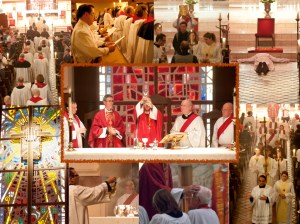
Ordination. All Saints, Phoenix

Ordination. All Saints, Phoenix

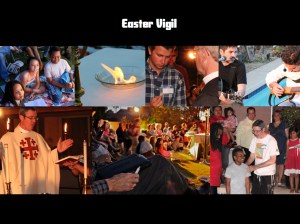
St. Jude's Outdoor Easter Vigil

St. Jude’s Outdoor Easter Vigil

Modern worship, the early church and tradition.

In many ways, liturgy is the opposite of modern worship forms. Let me describe modern worship for a moment. (And I really am attempting to describe rather than criticize.) Today worship in most of evangelical America follows what is known as the “Relevant” model – “worship” as several songs and a sermon. This model utilizes the connecting points of our culture in order to be “outsider friendly.” The connecting point where today’s culture engages with one another are the coffee house, the concert hall, and the comedy club. When you think about your church, how many of those are present? The “relevant” liturgy is essentially horizontal and aimed at relating to the unchurched. It is referred to in many churches as a worship “experience.” The goal of “relevant” worship is to alter the delivery method toward the styles and events people prefer without altering the message. The standard objection is, “What is wrong with that? Don’t you want non-Christians to be comfortable in church?” The answer, and this is coming from a missional person who has spent his career in evangelistic ministry, is “Not really.” Let me explain…

Liturgy in many ways is exactly the opposite of the modern church. Liturgy is focused, not on the outsider but the insider – the person already committed to Jesus. Not that liturgy doesn’t sometimes speak powerfully through symbol to the non-believer, especially in this post-modern age. However, the goal of liturgical worship is to make believers specifically uncomfortable; To involve us physically in order focus us vertically on the greatness and grandeur and holiness of the triune God. In that way it is a Romans 12:1 experience “Do not be conformed to this world but be transformed by the renewing of your mind.” From that uncomfortable worship that unraveled our idolatrous image that we are the center of the universe, the early followers of Jesus went into the highways and byways telling the world the Good News of Jesus that was transforming them in their daily time with God and their practice for heaven each week in the liturgy.

The liturgy isn’t mine or yours. It isn’t endlessly malleable by the church staff to do whatever they want in church. In short, it’s not about what we like or what we “prefer.”  The shape of the liturgy was handed to us by the earliest Christians. They borrowed the pattern of Word and Sacrament from the Jewish synagogue and temple. We find hints of it in the New Testament and see it laid out in detail by 150 A.D. And don’t miss the significance of this – when we read what those writers describe, they describe it as already ancient, established practice. (You can read Ignatius from 110 CE, Justin Martyr from 150 CE, Clement from 200 CE, and Hippolytus from 225 CE.) Most of the church has followed that pattern since then, because, when your heart is surrendered to God, liturgy works.

Perhaps you have a sense of curiosity about the ancient ways of the faith. I would encourage you to go experience those ways at a church that is thoughtfully liturgical. I would be most surprised if you do not find it spirit-lifting, even though much of the symbolism is subtle and will probably be missed the first few times through.

So go old-school this year: Come worship with us!

How we worship…and does it matter? (Pt. 1)

Henri-Le-Secq-Chalice-ca-1850-painting-artwork-printWhen the subject of worship “style” comes up, people generally start getting antsy. We stop listening and begin forming our objections. The young among us say, “I can worship any way I like.” The more mature, recognizing the self-centeredness of statements like this, will rightly counter with Paul’s limitations on Christian liberty, (1 Cor. 10:23-33) but go on to say, “How we worship is optional, subject to the preferences of the unbeliever, and not mandated by Scripture.” Whether or not that is true will be the subject of a later post.

Let us suspend those arguments for a moment and ask why worship matters… Passages of Scripture that immediately come to mind include the first two commandments, the Psalms, the practice of Jesus both in private and corporate worship (In the gospels we often see Jesus in the synagogue, temple, & private prayer. Jesus begins his ministry at Baptism and ends it with instituting the Lord’s Supper before going out to pray on his way to the Cross to lay down his life. The life of Jesus is surrounded and ordered by worship.) In the book of Revelation, the last thing we are doing is engaged in the “chief end” of humanity, in the words of the Westminster Confession, “to worship God and enjoy him forever.”  Indeed, It appears an inescapable fact that all humans, regardless of religion or irreligion, worship something. We were made to worship.

How then, I wonder, can we say, that the manner in which we worship does not matter? Unless, of course, the object of our worship does not matter.

What if we assume three things about worship, simply because it is true of all of the Christian life: First, that what other Christians have done and thought through time is relevant. We stand on the shoulders of giants. Asking how those who stood closest to Jesus worshiped, is surely wise. Second, that the aspirations of our youngest members is relevant, since they will carry the baton when we are gone. Third, that we are part of a universal church, “one holy catholic and apostolic,” …that we are umbilically tied to every Christian in every corner of the globe, so their practice is also relevant.

Interestingly, On all three of those assumptions, the question arises, “What about liturgy?” After all, It is the way the first Christians worshiped and is the worship pattern enjoyed by 90% of all Christians who have ever walked the earth. Liturgy is also making a comeback among young evangelicals in unlikely places like PhoenixOne, a 1000 person young adult gathering, and on the stage of the church that invented the non-denominational “seeker movement,” Willow Creek. Third, it is the form of worship utilized by 2/3 of the Christians on the planet today. So you might want to check liturgical worship out, if only to see what the cool people are doing. Ok, so I’m joking. Sort of.

The most important thing about liturgy is that it isn’t taught, it’s caught…or, more accurately, something you get caught-up in it…like being tossed into a cold swimming pool by the older kids in elementary school.

The Greek word leitourgia comes from two root words – laos, “the people”, and ergas, “a work”. Therefore, you will hear it said that liturgy is “the work of the people.” That’s a little bit true since liturgy is participatory…the term “pew aerobics” comes to mind. Liturgy does involve all of you in worship – your whole body, which is important because our hearts and heads follow our bodies. You know that intuitively if you have raised your hands or bowed down in worship.

But “work that people do” is not really the meaning of “liturgy” at all. leitourgia was the word to describe an act of public service initiated by a wealthy benefactor. For instance, a person of means might build a temple and foot the bill, but the work itself benefited the community. Any public work done in service to the gods, but for the benefit of the community was liturgy. So liturgy is work dedicated to God, initiated for people, and which serves to transform the worldand that is the big meaning: liturgy is about the faith community being transformed for the purpose of going out and transforming the lost world. And a transformed community that couldn’t stop sharing the Good News is exactly how 11 scared dudes turned the most powerful empire in the world upside down in less than 300 years.

So liturgical worship is for God, transforms us, and benefits a lost world. Who wouldn’t want that?

“Get your head in the game!” Seeing our need for a Savior.

Plains, trains and automobiles

A Sermon: Luke 3:7-18

John has quite the attention getter for his message. I wonder what it would do to Sunday church attendance if preachers today opened sermons the way John did: “You guys…You. (pointing around the room) Guys…are a bunch of poisonous snakes. What are you doing here? Who warned you that God is about to play whack-a-mole and you’re the mole?” As I recall, the first lesson in high school speech was “Don’t insult your audience.” John the baptizer apparently took a different elective.

Last week we learned that John was appointed a task even more difficult than his outfits and diet: Preparing the way for the messiah. How does one prepare the way for the Savior of humanity? What does one do and say to “make straight the paths of the Lord”? The answer was a one-word message: “Repent!” Repent is a word your Bible translators left un-translated. Literally it means: “Change your mind.” Today we might say, “Get your head together!”

When John was preaching this sermon Jesus was still under wraps… he has not yet began his 3-year public teaching ministry. Not yet come, in his words, “to seek and to save the lost.” (Luke 19:10)

How does “getting our head together” prepare us for Jesus’ coming? Receiving a savior presumes we realize that we need one. That, in a nutshell, is John’s task…

Story: Remember the movie Planes, Trains and Automobiles? Steve Martin is stuck on a trip home for the holidays with a somewhat deranged shower ring salesman played by John Candy. In one scene they get turned around while driving at night. They end up on the wrong side of the freeway. A car on the other side of the guardrail realizes the error and the couple inside furiously motions for Martin and Candy to roll down the car window. The couple in the car shouts at our protagonists, “You’re going the wrong way!” “What?” “You’re going the wrong way!” Martin and Candy are oblivious. They think the couple frantically warning them wants to race…then, when they hear the warning, assume the couple is drunk. After all, they reason, “How would they know where we are going?” Finally, Steve Martin realizes that he is looking at the wrong color road stripe. He looks up and sees two sets of semi headlights bearing down on them. In shock Martin begins to breathlessly warn, “truck, truck!”

…Is there any doubt today that we as a culture are going the wrong way? And what is a culture but a collection of individuals. The conclusion is inescapable: If the culture is going the wrong way, it is all of us. To quote the Blues Brothers: “You, me, them. Everybody. Everybody.”

We are going the wrong way.

In the shadow of the events at the Sandy Hook school 3 days ago, we cannot deny the effects of evil and sin and societal breakdown and failed solutions. One would have to have their heads deep in the sand to not be painfully aware that the world is going the wrong way. Sandy Hook wasn’t even our first mass-murder this week. That happened in Portland. In seven previous mass-murders this year alone, 41 other people have died in 7 other mass shootings.

Our world is broken. We are broken. If we are honest we will admit that most of us are but a few missed paychecks, a few bad months, a few broken relationships, a few bad decisions, and a little bit of self-medication away from unraveling our lives. There but for the grace of God go we.

And it is no longer enough to play the rugged individualist card. We live interconnected lives. What I do with my life matters to you. What you do matters to me. What we do matters to our neighborhood. We cannot say, “Stop worrying about me…take your hands and your laws off of my life.” Every freedom I have involves a corresponding responsibility upon each of you. And, in a time of social breakdown, we must all pull together, lay aside our rights and step up our responsibility for the common good. We must, “Get our heads together.

In verse 8 John is saying, in effect: “Are you God’s child? Then live like it! Don’t live off of yesterday’s spiritual accomplishments…don’t claim some spiritual pedigree.” John points out the obvious: “trees that don’t bear fruit get cut down and burned so that other trees might bear fruit.” This isn’t necessarily anger. It is just reality. In every realm of life, if we don’t get the job done, someone else will.

How did the crowd respond to John’s “Get your head in the game!” Message? They ask the obvious question: “How?”

3 times 3 groups ask “How?” The crowd. The tax collectors. The soldiers. “How do I live like a person with my head in the game?”

It is the right question. For them. And for us.

John gives them obvious advice that makes sense in their context: Share. Don’t cheat. Be satisfied with your pay…obvious for them, and still pretty obvious for us today.

I see three implications in this passage. Two are overt. One we learn later when Saint Paul comments on the meaning of the Christ event:

First: Come humbly. Humility is the hallmark of a life ready to receive God. Live in a way that is open-hearted to God. Let God continually change your mind. Humility is the mark of one who walks with God. So come humbly.

Second: Live Selflessly. As a result of our humility before God, live a life that lays down our wants for other’s needs. The world really needs us to…but more than that, because turning from our self-centered sinfulness always has the effect of proving to us how unable we are to actually pull it off. Living selflessly leads to the third implication:

Third: See your need for a savior.

John is reminding the crowds of God’s law: the Old Testament standard. The law functions like that measuring stick at Disneyland. The one where if you aren’t big enough you don’t get on the good rides. The Law is the measuring rod to reveal to God’s children that we don’t measure up. Paul said it like this: “…if it had not been for the law I would not have known sin. For I would not have known what it was to covet if the law had not said, “Do not covet.” (Romans 7:7-12) The law is God’s yardstick to make us realize how much we need a savior!

How does the message “Get your head in the game…”and bear the fruits of repentance” pave the way for the One who is to come? The more God increases the more our pride decreases. That is why Paul says, “O wretched man that I am.” (Rom. 7:24) It isn’t self-loathing. It is glory-of-God-awareness. More than a few old saints have told me that the closer they get to the God, the more aware they become of their fallen-ness and God’s great goodness.

What is the result?The people were filled with expectation.” They ask John if he is the one they are waiting for.  We all cling to hope. Like Jamie Foxx, who at the BET awards in November referred to “Our Lord and Savior, Barack Obama,” we are always looking for a Savior. But like the President who rolled his eyes at the comment, John is very clear, “Another is coming after me whose shoes I am not worthy to untie.” And the one who comes will also have his own baptism: “the Holy Spirit and fire.”

What does being immersed in the Holy Spirit bring? Jesus said in John, “He will bring to mind all Jesus taught us.” (John 14:28) And,  “He will convict of sin, righteousness and judgment.” (16:8)

Conviction is a divine invitation to allow God to work. God is love, but loving us involves helping us to become most fully the person we were made to be, and when we allow trees not bearing good fruit to grow up in our lives, well, the Holy Spirit helps with that.

In verse 17, John uses a final word picture, that of “His threshing floor.” A threshing floor was a flat spot in a breezy area. A farmer would throw his harvest in the air so that the heavier grain would fall at their feet while the breeze could blow away the dead chaff. The harvest was collected. The chaff? It is burned. That was what you did with garbage before landfills.

We all have chaff in our lives. John’s message is that the time is right to expose the chaff in our lives to the wind of the Spirit. The time is right to let God blow that which hides the harvest away.

Do you have something against another? We are going to be reconciled in the Passing of the Peace. Use that time to make it right.

Is there something between you and God? We are coming to the Lord’s table. We will come as we ought: on bent knee, with open hands. Offer to God whatever it is the Holy Spirit is convicting you is in the way.

If you have not yet, placed your life in God’s hands. Put your trust in God and receive God’s gift of life in Christ. Come forward and ask one of the ministers to explain a relationship with God.

John’s final sentence this morning: “with many exhortations John proclaimed the Good News.” We don’t think of exhortation as a part of Good News. But if we do not have a diagnosis we do not want to drink the medicine.

Here is the exhortation: Let God blow away the chaff.

Here is the Good News:

-We are forgiven by God as a gift purchased by God’s son on the cross.

-We are adopted as God’s own children as a gift.

-We have growth in faith and knowledge and wisdom as a gift.

-We have a calling to participate with God in extending his Kingdom A.

*All is gift.

And the way to receive any gift is with thanksgiving…hands open and a smile on our face. That is what “Eucharist” means: Thanksgiving.

It is almost Christmas: the celebration of God sending the gift of his Son. Christmas is not OUR birthday. And yet, the world received a gift. That is why it is so important that we Come Humbly, Serve Selflessly, and See your need for a savior.

As we await Jesus’ coming at Christmas, to walk among his creation, and to purchase victory through his passion, let us, as the old Eucharistic prayer says, “offer and present unto thee, O Lord, our selves, our souls and bodies, to be a reasonable, holy, and living sacrifice unto thee; humbly beseeching thee that we, and all others who shall be partakers of this Holy Communion, may worthily receive the most precious Body and Blood of thy Son Jesus Christ, be filled with thy grace and heavenly benediction, and made one body with him, that he may dwell in us, and we in him.

Amen.

Today: Tears and prayers. But what next?

hc-newtown-school-shooting-20121214The tragedy at Sandy Hook Elementary School is a punch to the gut of an already wobbly America. Can any of us imagine anything more horrifying than a classroom full of dead first graders?

I wonder if we are exhausting our ability to process senseless tragedy. I had a meeting with a friend yesterday. We had an important agenda, but in the wake of breaking news, this brilliant up-and-coming academic could discuss nothing else. My 16 year-old son asked to be tucked in for the first time in 5 years. My 70 year-old father-in-law, posted his shock on facebook. Even the president was reduced to tears. The media is full of information on how to process this with our children. But all over America adults sobbed ourselves to sleep last night.  Our theological frameworks are stretched. Our trust in our fellows diminished. Our numbness increases.

Several things I cannot get out of my head today:

1) The sinking awareness that it is easier for the mentally ill to get a gun than help.

2) The report that since Columbine in 1999, there have been 31 school shootings in the U.S. and 14 in the rest of the entire world. (Source: ABC Nightline)

Newtown, Ct. isn’t even our first mass murder this week. Portland has that distinction. Prior to that, in 2012 alone, there were 41 other murders in 7 other mass-shootings. (Source: Think Progress)

We will say prayers for the victims and for the shooter. We will pray for our country. Our grief will eventually subside. And, if past history repeats itself, do you know what we will do next? We will lock up our schools even more tightly.

Our communities will become a little more paranoid, and our children a little more afraid to venture and roam and try new things. Parents will helicopter more and children risk less. The cost of the Sandy Hook tragedy will be paid by every single elementary school student in America….and our entire society will pay a price for yesterday in lost inventiveness and entrepreneurship. (See Mindset: Carol Dweck)

When something like this happens we tend to “politicize” it in the worst possible way: We retreat into corners and lob partisan platitudes rather than work together to solve our problems. But what if “politicize” meant to “muster the courage to work together to make our nation a better place”? Then what better thing could we do to honor the dead than by working together to see that mass-killings stop? Surely we can meet in the middle and agree on the obvious: Criminals and people with mental illness should not have high capacity semi-automatic guns. It shouldn’t be easier for me to get an assault rifle than a law enforcement officer. We need to become better at identifying potentially dangerous people. We need more accessible help for those with violent tendencies. We need to take seriously the connection between violence in the media and video games and violence in the real world.

People are dying at an accelerating rate at the hands of unhinged people wielding high-capacity, semi-automatic weapons. And we can all agree that a risk-averse, fear-based future is not the right solution for our children. Do we really want to lock up our schools rather than our guns?

This is America. We will never have a country without privately owned guns. It will just never happen. But if we know that humans are sinful and broken, then surely those whose brokenness involves violence should not be in possession of semi-automatic weapons. Unlimited access to high capacity weapons and mental illness have proven to be a disaster: A study in the Journal of Trauma and Acute Care Surgery found that the gun murder rate in the U.S. is almost 20 times higher than the next 22 richest and most populous nations combined. (Source: Nightline) Google a timeline of shootings since 1982. The number that appeared upon cursory inspection to be committed with hunting weapons: 0

We are not a totalitarian state. No one will come and force a solution upon us at the point of their gun. In our system we have the opportunity and responsibility to work together to solve our problems.

We have the opportunity and responsibility to not allow these children to have died in vain. Pull together. Avoid the all or nothing rhetoric that is coming. Live peaceably. Pray faithfully. Worship in your faith community. Vote dutifully. Speak forcefully. Love relentlessly.

The President is right, “He heals the brokenhearted and binds up their wounds. (Psalm 147:3) But what happens after that is up to you and to me.

Illegitimacy: A far bigger “fiscal cliff”


mentor-200x300

Soon, we are told, we will go over the “fiscal cliff.” When it happens our politicians and corporations will make a beeline to our tv screens and exhort us to do our part: spend money.

No one is talking about it, but we have a much bigger drag on our economy than the fiscal cliff. It drags our nation down every minute of every day. It is children born out of wedlock, what used to be known as “illegitimacy.” 42% of American children are now born out of wedlock. Why is this a problem? Because, generally speaking, 3/4 of children born OUT OF wedlock are born INTO poverty.

I have spent 30 years in youth ministry. Largely this amounts to being a friend and a mentor…sort of an uncle to young people during their critical adolescent period. What I have seen time and time again is that to successfully make the jump to adulthood means making just a few big decisions right. With those few big decisions, people generally end up in a pretty good place. You don’t have to be anywhere close to a perfect person, but for life to go fairly well for most of us, meant three choices:

  1. Don’t do anything in which the worst thing that could happen is for you to like it. (ie. addiction)
  2. Get an education (in something that will get you a  decent paying job)
  3. Get married.

In the absence of someone else to pay the bills, if you don’t make the Big Three major decisions in order, life gets very difficult, very quickly. 

You might ask, “Where is faith in this equation?” Faith is the fourth predictor. My son is in Student Council at a Title IV high school. Of the students whose homes kids go to for events, it is the 1/3 who are church members whose homes are invariably used. That is because they tend to be the ones at the school with homes large enough to use. Their faith gave them a moral framework and supportive relationships to make the Big Three! For me, the Big Three decisions are 2nd, 3rd, and home plate. First base is faith. In baseball if you don’t get on first base nothing else really matters. Yes, someone can have a decent life in the here and now without faith because, as Jesus said, “The rain falls on the just and the unjust.” (Matthew 5:45) People can engage the faith decision anywhere around the Big Three and end up fine. But without the Big Three young people send themselves into poverty and set up their children to continue that dangerous cycle.

We have to help young people know the consequences of their life life choices. Here is a web link to a NJ news article that describes the connection between poverty and out-of-wedlock childbearing: (http://blog.nj.com/njv_editorial_page/2012/11/qa_why_marriage_may_be_the_str.html) It is controversial if you are a progressive, but in my experience, spot on. Helping young people with the other big decision, education, is controversial if you are a conservative and want to cut funding for public education. Isn’t it time we put our young people ahead of our politics?

Amare Stoudemire used to have a non-profit called, “Each one. Teach one.” I have no idea what that organization did. But the idea is right. If every person who reads this blog forwards it to your fb friend list and every one of us mentor one young person of poverty, from today until the day they graduate from college…we will have done far more to help our nation’s future than anything else in our power. So forward this to your friends and then become a Big Brother/Big Sister, a Young Life leader, join Mentor Kids USA or become a volunteer in your church’s youth ministry…find a way to longitudinally follow a young person as a wise aunt or uncle.

It will matter to them. It will change you. And the nation you save may be your own.

Won’t you join me and find a young person to share your life and wisdom with?

They Didn’t Call Him “Golden-Mouthed” for Nothing…

They didn’t know what they were doing when they made John Archbishop of Constantinople. They learned not to give a captivating speaker a microphone if you don’t know what he is going to say. John Chrysostom or “golden-mouthed” had a promising career in Greek rhetoric that he dashed by becoming a Christian, then a hermit to memorize the Bible. When his health forced him back to civilization, he became a preacher of great fame. He taught the scriptures practical everyday application, including preaching against the hoarding of wealth (angering some of the wealthy), and that priests should serve where assigned rather than touring for honorariums (angering the priests). He was the first (that I am aware of anyway) since the biblical authors to treat intimate marital relations as a good thing.

Image

Here is a sermon excerpt from the late 300’s.  Homeboy could preach!

On the burial place and the Cross 2: Adam and Christ, Eve and Mary

Have you seen the wonderful victory? Have you seen the splendid deeds of the Cross? Shall I tell you something still more marvelous? Learn in what way the victory was gained, and you will be even more astonished. For by the very means by which the devil had conquered, by these Christ conquered him; and taking up the weapons with which he had fought, he defeated him. Listen to how it was done:

A virgin, a tree and a death were the symbols of our defeat. The virgin was Eve: She had not yet known man; the tree was the tree of the knowledge of good and evil; the death was Adam’s penalty. But behold again a Virgin and a tree and a death, those symbols of defeat, become the symbols of his victory. For in place of Eve there is Mary; in place of the tree of the knowledge of good and evil, the tree of the Cross; in place of the death of Adam, the death of Christ.

Do you see him defeated by the very things through which he had conquered? At the foot of the tree the devil overcame Adam; at the foot of the tree Christ vanquished the devil. And that first tree sent men to Hades; this second one calls back even those who had already gone down there. Again, the former tree concealed man already despoiled and stripped; the second tree shows a naked victor on high for all to see. And that earlier death condemned those who were born after it; this second death

gives life again to those who were born before it. Who can tell the Lord’s mighty deeds? By death we were made immortal: these are the glorious deeds of the Cross.

Have you understood the victory? Have you grasped how it was wrought? Learn now, how this victory was gained without any sweat or toil of ours. No weapons of ours were stained with blood; our feet did not stand in the front line of battle; we suffered no wounds; witnessed no tumults; and yet we obtained the victory. The battle was the Lord’s, the crown is ours. Since then victory is ours, let us imitate the soldiers, and with joyful voices sing the songs of victory. Let us praise the Lord and say, “Death is swallowed up in victory. O death, where is thy victory? O death, where is thy sting?”

The Cross did all these wonderful things for us: the Cross is a war memorial erected against the demons, a sword against sin, the sword with which Christ slew the serpent. The Cross is the Father’s will, the glory of the Only-begotten, the Spirit’s exultation, the beauty of the angels, the guardian of the Church. Paul glories in the Cross; it is the rampart of the saints, it is the light of the whole world.

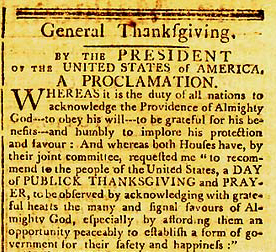
The First Thanksgiving Proclamation: George Washington, 1789

Note the perspective of our first President on the relationship between people of faith and civic responsibility, the idea that we, as a nation, would need the involvement and intervention of Almighty God, and in the final sentence, the idea that religion, virtue, science and prosperity are interconnected rather than opposed.  Make of it what you will. Surely not all change is progress…

THANKSGIVING DAY 1789
BY THE PRESIDENT OF THE UNITED STATES OF AMERICA – A PROCLAMATION

Whereas it is the duty of all Nations to acknowledge the providence of almighty God, to obey his will, to be grateful for his benefits, and humbly to implore his protection and favor – and Whereas both Houses of Congress have by their joint Committee requested me “to recommend to the People of the United States a day of public thanksgiving and prayer to be observed by acknowledging with grateful hearts the many signal favors of Almighty God, especially by affording them an opportunity peaceably to establish a form of government for their safety and happiness.”
Now therefore I do recommend and assign Thursday the 26th day of November next to be devoted by the People of these States to the service of that great and glorious Being, who is the beneficent Author of all the good that was, that is, or that will be – That we may then all unite in rendering unto him our sincere and humble thanks – for his kind care and protection of the People of this country previous to their becoming a Nation – for the signal and manifold mercies, and the favorable interpositions of his providence, which we experienced in the course and conclusion of the late war –for the great degree of tranquillity, union, and plenty, which we have since enjoyed – for the peaceable and rational manner in which we have been enabled to establish constitutions of government for our safety and happiness, and particularly the national One now lately instituted, for the civil and religious liberty with which we are blessed, and the means we have of acquiring and diffusing useful knowledge; and in general for all the great and various favors which he hath been pleased to confer upon us.
And also that we may then unite in most humbly offering our prayers and supplications to the great Lord and Ruler of Nations and beseech him to pardon our national and other transgressions – to enable us all, whether in public or private stations, to perform our several and relative duties properly and punctually – to render our national government a blessing to all the People, by constantly being a government of wise, just, and constitutional laws, discreetly and faithfully executed and obeyed – to protect and guide all Sovereigns and Nations (especially such as have shewn kindness unto us) and to bless them with good government, peace, and concord – To promote the knowledge and practice of true religion and virtue, and the increase of science among them and Us – and generally to grant unto all mankind such a degree of temporal prosperity as he alone knows to be best.
Given under my hand at the City of New York the third day of October in the year of our Lord 1789.
GO. WASHINGTON.

Youth Ministry after “Cool Church”: Sample Youth Teaching on Genesis 1 & 2

Youth leaders always want to know what theory looks like in practice. Here is an example of one component of a youth group meeting: the teaching time…

Our church plant has a small youth group (usually about 25 students) with 6 very committed young adult volunteer leaders. They recently began a semester of working through the Old Testament.

For Genesis 1 and 2, instead of a sermon or video, the group was divided into two groups by gender. In one room the boy group read Genesis 1 together several times. In the other the girls read Genesis 2. Each group took notes and discussed what the text said and emphasized for the hearers. Then they outlined the chapter. The leaders gave guidance in the form of questions to take the students back to the text when they started reading into it. On a large poster board with colorful markers, each group drew a graphical/artistic representation of their chapter. Then they came back together and the students taught their chapter to the other group from their poster. Having students teaching one another engaged students in the learning process in a way that was wonderful. By the end, each group knew the contents of both chapters.

Then one of the leaders did a wrap-up to help students get the “big picture” and think theologically about their lives – a 7 minute mini-message on “Have you noticed that the first two verses of Genesis One say exactly the same thing your biology teacher taught you?” After reading Genesis 1:1 and 1:2, the leader gave a message that went like this:

Did you notice that both Christians, who think God is the author of life and truth, and scientists, who observe life, have the same version of what happened in the very beginning of the universe? Does that surprise you? More subtle though is the enormous difference between the two narratives. Science, not as a discipline but as an “ism” (called materialism) follows a very different narrative. BTW, We are not anti-science here, but materialism is a philosophy of life that what you see explains everything that is. When you know what materialism teaches you might choose to reject it.  For the materialist, time and chance explain everything. For the Christian, the hand of a loving Creator is the ultimate explanation. For the materialist, because they believe only in time and chance, all of life is an accident. For the materialist, you might be “unique,” but you are a unique accident.

On the other hand, for the Christian, all of life is a gift. Life was made on purpose, with a high and holy purpose. So, in the Christian narrative, you matter. What you do matters. What you don’t do matters. Everyone around you matters to God too.

Think of the difference the narrative you believe about your life makes: Can you see how what you do with your life gets shaped by the narrative you believe about who you are? What choices do you make with your life when life has no purpose? (Discussion)

How does it change your choices if you are absolutely convinced that you and everyone else was created on purpose, with a purpose? (Discussion)

If the materialist story is true, nothing you do matters. You don’t matter. If the Christian story is true then everything you do either spreads our Creator’s beauty and redeeming love or shuts it down.

Which narrative do you see being played out around you? What might life look like if everyone you know, new God’s love for them in Christ? You see, both the Christian and the materialist see the same events, they just interpret them differently.

Which narrative would you rather follow with your life? Thinking about what you said in our said in our discussion, why is it important that your friends know “the hope that is within you”?

As a result of the teaching time students left with the ability to tell us what Genesis 1 & 2 actually says…and what it doesn’t say. They learned something about exegesis: letting the text, rather than other’s ideas of the text speak. And more, they left with a powerful doctrine of Creation and can tell you why that doctrine is important. They went to small groups and prayed passionately that God would help them stay clear on who they are and whose they are…and that they would have boldness to share with their friends the Good News of God’s love in Christ-because of how desperately their friends need a different narrative on which to base their life.

Duped?

I don’t do political rants. First, because I believe the most important races are for school board and town council and no one wants to read about those. Second, because political rants alienate half your friends. The good news is that I have found a way to alienate 100% of my friends, making it possible for me to put up the first, and probably only, political post you will ever read from me. How does one make everyone angry? First, to say I like Obama. Those are “fightin’ words” to half of America. Second, to say, “He duped me and everyone else on his email list.” Those are “fightin’ words” to the other half. How were we duped?

I received multiple emails like the one on top from the Obama campaign urging me to give immediately because of how badly the campaign was being out-fundraised by Romney. Tuesday night CNN ran this graphic revealing that the President not only wasn’t desperately behind in fundraising, but Obama actually outspent Romney 342 to 164 million dollars. Days before the end of the election and I was being told of an urgent need to “get on board” financially when in actuality the President was outspending his opponent by more than a 2:1 margin.

Hmmnnn.

We live in a great country. We listened to two good men campaign on different solutions for our problems. We went out and made our choice. I just wish telling the truth were held in higher regard in the process.