Funerals: Recovering hope in a culture terrified of death (2 of 2)

clip of leaves

Snark MeterrealMID.003

I promise you interesting reading on a topic you were not looking for in the middle of Advent. Although not the usual topics for youth ministry and/or church planters, as advertised in part one (The obsession we cannot avoid), here is the text to our Q & A on funerals.  It will give you a glimpse into the purpose and power of the traditional burial office. It was produced by Nicholas Knisely, Bishop of Rhode Island, Bryan Owen, Rector of St. Luke’s Baton Rouge (blogs as Creedal Christian), and myself. It is available as text for websites or as a customizable flier.

Why have a funeral in a church?

One of the characteristics of an Episcopal or Anglican Church is that you will often see graves inside the church or on the church grounds. When we speak of the Church, we mean both the church militant (those who are alive right now) and the church triumphant (those who have died and ended their earthly race). When you worship in a liturgical Church you are literally and tangibly in the presence of the whole Church. A funeral in the church building is a sign that, even though death seems to divide us from those we love, the Body of Christ is never divided. As members of Christ’s body, we are still connected with those we love but see no longer. Therefore, a funeral in the church building foreshadows that day when we will be reunited with the entirety of the Body of Christ in the presence of God.

Why a burial office (prayer book funeral service) instead of a memorial?

Rather than focus on what we believe to have been important about our loved one’s life, the burial liturgy reminds all present that we are brought into a reconciled relationship with God after our death because of what God has done, not because of what we did in life. Using the burial office rather than trying to create a particular and personal memorial service is a consequence of that belief. In the burial office the gathered body of Christ expresses gratitude for God’s redeeming work in our loved one’s life, hands them over to God’s gracious care, and looks forward in hope to God’s future resurrection of us as well.

Why do clergy accompany the family on the initial consultation with the funeral home? 

It is often a good idea to have the church funeral planner accompany you to the mortuary in order to coordinate arrangements at the beginning of the planning process. The clergy/church representative is your advocate and a calm and supportive presence at a time when difficult decisions must be made.

Why is it important for the body or cremains of the deceased to be present?

Christians believe in the bodily resurrection, not just of Jesus, but of each of Jesus’ followers. We do not know what our new bodies will look like, but we do know that God is going to transform the essence of our whole selves, our minds, our souls, and our bodies. The presence of the body or cremains of our loved one is a sign to all of our trust in God’s plan to redeem and transform us in the end.

When there is a body, why is the casket closed and covered with a pall? 

Holy Scripture tells us that “to be away from the body is to be home with the Lord” (2 Corinthians 5:8). We close the casket because our loved one is no longer present-only their remains.

Once inside the church the casket is completely covered with the “pall.” As Easter people we are dressed in white in our final church service. The pall points to the reality that, whatever our station in life, we all come before God by virtue of being clothed in robes made white by Christ’s loving action on our behalf.

Why are there no eulogies?

Although there is a degree of latitude granted in some parishes, there is a longstanding tradition of not having eulogies in the burial office. This is because the burial office, rather than fixating on the past, orients our faces toward the future promised by God that is a consequence of our relationship with Jesus. It is a good thing to remember the lives of our loved ones and to give thanks for all they have meant to those who remain behind. That work of remembering, though, happens best when we can do it in conversation. Perhaps you will want to have someone speak about your loved one’s life during visitation hours before the burial office, or at the reception following.  You also have the option of having a Vigil the evening prior to the funeral as a time to offer prayers and to share memories of the deceased. (BCP, 465-466). *Feel free to speak with your priest if you wish to discuss this further.

Why is that ‘big candle’ used in the service?

The Paschal Candle is first lit each year in the Easter Vigil to symbolize Christ dispelling the darkness. As the candle is brought into the darkened church, we sing that the light of Christ has conquered the darkness of the grave. The Paschal candle is lit every time the Church celebrates a baptism. In baptism we are “sealed by the Holy Spirit” and “marked as Christ’s own forever.” (BCP, 308) The candle is lit at every funeral to remind us of this unbreakable bond and the truth that nothing in all of creation, including death itself, can separate us from the love of God in Christ Jesus our Lord (Romans 8:38-39).

Why Is the church adorned in white?

The church is adorned in white because the burial office is an Easter liturgy and focuses on the unexpected joy of the resurrection, which the Church has proclaimed for two thousand years. In the liturgy, there is a beautiful phrase, “Yet even at the grave we make our song, Alleluia, Alleluia, Alleluia.” It is in the hardest, darkest times of our lives, that we insist on proclaiming our hope that “in Christ all will be made alive” (1 Corinthians 15:22).

Why does The Prayer book select certain Scripture readings to be used in the service??

The Book of Common Prayer is the result of centuries of thought and theological reflection. As the result of this intentional conversation across generations, the prayer book has provided selections from the Holy Scriptures to sustain us at the time of death. There is a certain latitude given to the officiant and the family planning the liturgy to chose favorite hymns or alternative readings, but the appointed readings have been chosen because they speak directly to the resurrection hope that lies at the heart of the Christian faith.

Why do we have Communion?

God has given us the chance to be united with those we love but see no longer through the redeeming action of Jesus’ sacrifice on the cross. When we share in the sacrament of bread and the wine, partaking in the body and blood of our Lord, we are united with all the hosts of heaven, and all the members of Christ’s Church of all time. We share this final Communion meal, the family meal of God’s own household, in anticipation of that great day. We will not be able to share Thanksgiving or Christmas, birthday or anniversary meals any longer with the people we have lost, but we will, for eternity, share this Eucharistic meal with them. *There are occasions in which communion may not be desirable. Discuss this with the church when planning the particulars of the service.

In Summary

Few are the times in this present age when people are aware of God’s acting to graft us in to his larger and eternal purposes. Baptisms, weddings and funerals are among those occasions. It is in those events when time and eternity touch that we and our loved ones need the truth, beauty, and comfort of the words of Holy Scripture and the great tradition. The burial office exists because the final goodbye to your loved one is simply too significant a matter to make it up as we go.

The liturgy for the dead is an Easter liturgy that finds all its meaning in the resurrection of Jesus Christ.  It gives us permission to express deep sorrow over the death of loved ones.  It also reassures us that all who die in Christ share in the victory of his triumph over death.  Using this liturgy in the church for the burial of a Christian reaffirms and strengthens our faith that just as God raised Jesus from the dead, he will also raise us.

We are glad that you are considering our church for this important event in the life of your family.

Please contact the St. Jude’s church office at (602) 492-1772 to set up an appointment to plan the particulars of the ceremony.

We are planning for this to be the first of a series entitled “Your Church. For Life.” It will include Baptism, Confirmation, & Marriage, four events people look to mark in the church.logo
All of which is to say: When I die, do the world a favor. Give me a funeral.

Death: The obsession we cannot avoid and dare not admit (1of 2)

Funeral1

Snark MeterrealMID.003

In our rush from the church, have we begun using entertainment as religion to answer the questions fundamental to human thriving?

Our culture has almost entirely insulated us from the reality of death. Most of us are awkward with the topic in conversation and go to great lengths to avoid the appearance of nearing death with a plethora of products, services and surgeries designed to cheat aging at any coast. Our post-modern avoidant/fascination with death struck me last night at our local cineplex. The new release lists are heavy with vampires, zombies and time travel…except for the ones about super heroes with death-defying powers. When did death-avoidance become the central theme of our entertainment?

Although we may abandon organized religion, it appears that we do so at our own existential peril. In our rush from the church, it seems we have begun using entertainment as religion to answer the questions fundamental to human thriving.  Last night’s trip to the theater was instructive. The opening line to the movie The Book Thief is “Everybody is going to die someday.” The closing line of the last preview before the movie started was from The Winter Tail: “Maybe it is possible to love someone so much that they cannot die.”  Interestingly, the Christian message is precisely that there is a love so strong it will overcome death. But instead of considering that message, most of us will avoid thinking about death until we stare it in the face – literally looking down at the remains of someone we loved lying in a casket.

Our obsession with death becomes even more curious when viewed in light of our near total buffering from it. In previous generations death came earlier, more often, and closer to home-most likely even in the home. Today we have longer life expectancies, become infirm in care facilities, and enter hospitals when illness becomes terminal. Today when we take our last breath it is usually in an institution rather than in the places of our lives. (This has been covered in the press recently (NPR) and was picked up on the Episcopal Cafe.) Add to these layers of insulation, the entertainment industry. Big entertainment includes in it’s notoriously unreliable curriculum the lesson that people don’t actually die at all. They are “offed” (often quite creatively) only to appear next week on another network, perhaps even in the same time slot.

The media is merely a barometer of our desires – It packages and sells us what market research tells them we want. Having discovered our discomfort with our own mortality, it sells our anxieties back to us in the form of a seemingly endless array of zombies and vampires, with their promise of a life-of-sorts. Perhaps, though, the clearest barometer of our post-modern denial of death is found in the new Tumblr site, “selfies at funerals“. If we cannot cheat death, at least we can laugh at other’s deaths. Turn up the music, dude!

tumblr_mvewmnvDqh1smbgw2o2_r1_500

Perhaps the epitome of our post-modern denial of death is found in the new Tumblr site, Selfies at Funerals...Turn up the music, dude!

All of this, of course, affects the church. Many Christians now have an “It’s a Wonderful Life” theology of the afterlife more akin to ancient Greek (or perhaps LDS) beliefs than orthodox Christianity – this is the popular view we “pass on” to become angels trying to win our wings by aiding the frustrated left on earth.

Contributing to this fuzzy theology is the demise of the traditional funeral. You may never have been to an actual funeral, but you have surely been to a memorial service. A memorial is, of course, about looking backwards – of “memories.” The general liturgy of a memorial is to sing a few of the deceased’s favorite songs and, to continue our It’s a Wonderful Life metaphor, share our remembrances of Uncle Billy.  Occasionally a few too many remembrances, and for too long…glossing over flaws and overstating things a bit on behalf of someone whose life might have actually left a lot to be desired. To be realistic, returning again to It’s a Wonderful Life, although Uncle Billy’s absent-mindedness was cute, it caused the family a great deal of trouble. The pastor then closes the memorial with a short message that makes some reference to Jesus’ as accounting for the deceased’s goodness and gently asking those present to consider a relationship with God in order to join Billy in his eternal home.

As heartwarming and well-intended as it is, the memorial is all about looking backwards. A funeral is all about looking forward. It is about promises and hope bought vicariously. It is about real and eternal life, new bodies, and paradise found, purchased at another’s initiation and another’s expense.

The memorial, when viewed in light of the old-school funeral, reveals a very low view of the transition between life and death, and a fuzzy view of the afterlife…both of which, when added together, diminish our understanding of the purpose of the time we have here on earth. The memorial has very little teaching on the afterlife, very little explanation of what comes next and very little of the historic Christian narrative, “Christ has died. Christ is risen. Christ will come again.” (BCP 363)

In our times of greatest loss our most profound need, besides the presence of those we love, is for the comfortable words of the faith. We need reminders of what lies ahead rather than what lay behind. We need to know that we do not stand alone at the precipice – we are surrounded by the great cloud of witnesses (Heb. 11:1). And because death could not hold Jesus Christ, neither can it hold those who are found in him (1 Cor. 15:20-23). That is why in the traditional Christian funeral we shout in hope, “even at the grave we make our song: Alleluia, alleluia, alleluia.” (BCP, 499)

Here is where I may get into trouble with you: It may feel as if I am treading on the toes of those of us who planned the final services for our parents or wife or brother or Uncle Billy. I should say that, as a pastor, I have done more than a few memorial services myself. We sent my mother on her eternal way with a memorial service. After more theological reflection I can only say that I wish I knew then what I know now. I was the victim of a lack of theology of death and the afterlife. And, as a result, those under my leadership were limited by my lack of understanding. I now see the memorial as a far cry from a prayer book funeral.

Interestingly, while this end of life conversation was going on, three clergy in the Episcopal Church: Nicholas Knisely, Bishop of Rhode Island, Bryan Owen, Rector of St. Luke’s Baton Rouge (who blogs as Creedal Christian), and myself have been working on a question and answer on funeral practices as a customizable parish resource to give people a brief glimpse into the purpose and power of a proper funeral service. It will be available as text for websites or as a customizable flier. I will put up the text that we have worked out as a post in the next several days.

We offer this, not as a condemnation of what anyone has done, but as a resource to help us have a broader perspective on life, death, and the afterlife. The hope is that this would be a helpful planning resource for a time when you need it. The traditional funeral has the perspective of twenty centuries of Christian reflection that both blesses and relieves us of the absurdity of seeking for answers to our deepest longings in zombies and vampires. It offers a more hopeful hope. Not just for Uncle Billy, but for us as well.

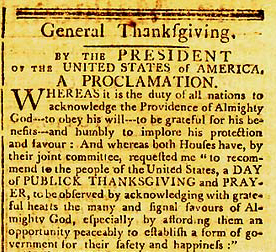
The First Thanksgiving Proclamation: George Washington, 1789

I put this up last year. A fellow Episcopalian involved in ministry with college students, Charlie Clauss, reposted it yesterday with the observation that if George Washington made this proclamation today he would be panned as a religious zealot. For your reading enjoyment…

Matt Marino's avatarthe gospel side

Note the perspective of our first President on the relationship between people of faith and civic responsibility, the idea that we, as a nation, would need the involvement and intervention of Almighty God, and in the final sentence, the idea that religion, virtue, science and prosperity are interconnected rather than opposed.  Make of it what you will. Surely not all change is progress…

THANKSGIVING DAY 1789
BY THE PRESIDENT OF THE UNITED STATES OF AMERICA – A PROCLAMATION

Whereas it is the duty of all Nations to acknowledge the providence of almighty God, to obey his will, to be grateful for his benefits, and humbly to implore his protection and favor – and Whereas both Houses of Congress have by their joint Committee requested me “to recommend to the People of the United States a day of public thanksgiving and prayer to be observed by acknowledging with grateful hearts the…

View original post 396 more words

Spiritual Baseball: the unlikely path to intimacy with Jesus

Babe-Ruth-at-bat

Snark MeterrealMID.003Every once in a while you meet someone and immediately sense they are wise and grounded. One of those for me was a Roman Catholic youth pastor. We met some fifteen years ago at an outdoor cafe. While the coffee cooled he made small talk by mentioning the Protestant activities his children were involved in: Awana, Fellowship of Christian Athletes, Young Life, and attending a Christian high school. I laughed and probed just a bit: Was he a wanna be Protestant? He laughed back and said, “Absolutely not. It’s just that it is pretty hard to come to faith in my Church.” His answer baffled me. Why, I asked, would he choose to be involved in a church in which it was hard for his children to come to faith? How, I wondered, did he not see himself as making my point for me? The jovial youth minister grinned again, handed me a pen, pushed a napkin toward me and said, with the hint of a smirk, “Make a list of your ten favorite authors.”

I scratched names on the napkin until he reached over and grabbed the pen, and said, “Ok, I’m stopping you at fifteen. I notice that of your fifteen favorite authors, thirteen of them are liturgical Christians.” I had never heard the word ‘liturgical’ and didn’t want to admit it, so I glossed over that detail and asked him what his point was.

He asked, “Why do you like those authors: Nouwen, Lewis, Temple, Wesley, Chesterton, Wright, Manning, Stott?”

“I guess because they write as if they have intimacy with Jesus,” I said.

He answered without hesitating, “Exactly,” he said, “I’m in my Church because it is how you become intimate with Jesus.”

“O, come on!” I objected.

He pointed at the napkin and reminded me it was my list. He then said something that took me a decade to understand, “If you want true intimacy with Jesus, it will probably happen in a liturgical church: Catholic, Orthodox, Episcopalian, old-school Lutheran.”

We sat there another half hour and I decided that what he was saying is that if the spiritual life were a game of baseball, then first base is a relationship with Jesus. If one does not get on base, nothing else matters. That was why his kids were in evangelical activities. Second base might be knowing the Bible. Third, giving your life away in service for God and the Kingdom. But a “home run,” in the Christian life, is intimacy with Christ…what the Orthodox masters call “theosis” – a fulfillment of the image of God. I left that meeting wanting to “make it home,” but without the least awareness that, for millions over the last 2,000 years, the “home run” I longed to experience has been a common one in liturgical traditions.

And yes, I do realize that statement sounds arrogant and just plain incorrect to evangelical ears. After all, every evangelical church in America has a healthy collection of members who left the liturgical world precisely because they hadn’t gotten “on base” in a liturgical church.

What you may not realize is how non-normative the American 4 song/sermon worship format is in the scope of things. For 3/4 of Christian history, the liturgy was the only form of Christian worship. Even today, nearly 3/4 of the Christians on the planet worship God in the ancient pattern of Word and Sacrament. That doesn’t make the liturgy better, worse or more or less biblical, it does say that what most Christians know as “worship” is a bit of an outlier.

I am not saying that liturgical churches are perfect or have more holy people or that there are not dead liturgical churches…I’m fairly sure that dead liturgy might be the worst sort of dead. Just that for the lion’s share of Christians who have ever lived, worship was not song and sermon but Scripture and Supper.

…for the lion’s share of Christians who have ever lived, worship was not song and sermon but Scripture and Supper.

I didn’t understand what my Catholic friend was talking about precisely because I had been to a liturgical church a few times and found it repetitive and, frankly, numbing. What I discovered was that the power is precisely in the repetition…that, as a rough rock in a stream becomes a smooth stone from years of water flowing over it, the Christian is formed into the image of God when we surrender ourselves to the three-fold pattern of daily immersion in the Scriptures, weekly feeding in the Eucharist, and the annual cycle of the Christian year, combined with contemplative practices like those of the desert fathers. I have found that these are re-orienting my perception of reality, the way I view time, life, and the world around me, in ways that words on a page cannot fully capture. It is freeing me to love those who oppose me and work for the good of those who seek my harm.

You may not be interested in walking the path to the ancient Church, known in Anglicanism as “the Canterbury trail.” I was not either. Ironically it is a journey that has given a depth to my walk with Christ that I never imagined. Like someone who has never tasted ice-cream, I didn’t know what I was missing.

What about you? If you have walked with Jesus for several decades, is intimacy/spiritual union something the church you worship in is nurturing in you? In what ways, corporately and individually are you finding intimacy with Jesus? Or have you, like many, given up on intimacy with God as having a corporate expression? If so, I invite you to the sandlot to play ball.

Batter up.

You don’t seriously think…”man’s rules” matter, do you?

“You don’t seriously think…” is a format for responding to reader’s questions in more depth.

All traditions are not created equal.

All traditions are not created equal.

Snark Meter Sorta Snarky.002Greg, responded to this week’s “Why I dropped church” post on his blog thependulumeffect. He writes:

I AM a traditionalist…I traditionally believe that we should love God with all of our heart, soul, mind and strength…we give Him our lives in faith. THAT is tradition. The rest is just man’s rules…Jesus…teachings are devoid of anything dictating whether or not we have stained glass windows, acolytes, liturgies, music, organs, guitars, pews, coffee, candles, multimedia and light shows, or even church buildings…Christians should test everything we believe and practice against Christ’s teachings. If anything doesn’t pass the test, do we have the courage to abandon such beliefs?

Hello Greg,

Thank you for responding to my post in your blog. It is a great complement when others write to you, even more when they blog in response to your ideas. The simple answer is: “No and Yes.”

I  am right there with you, Greg, when you say that the main thing is to “love God with all of our heart, soul, mind and strength.” However, faith as the main thing was not in question in my post. It was assumed. My purpose was the search for a deeper discipleship.

All Traditions are NOT created equal

Your argument, in essence, is: Since faith is what matters, traditions do not. From your list of “traditions,” you appear to mean “practices in historic worship.” I am curious as to why you view those as categorically opposed to faith? Traditions might be irrelevant. However, “traditions” that teach faith, shape faith, and form faith matter specifically because of what they accomplish: the building of faith. To say anything else is to say that the actions of a Christian DON’T matter, something I am pretty sure you would not say.

Any faith practice can be perverted, subverted and elevated beyond recognition. They can distract or bury the Gospel…this is true of modern “traditions” as well as ancient ones. “Traditions” can also be used as they were intended – to cause a greater surrender to Jesus, a growth in grace and mercy and as deep discipleship to send Christians into a lost world to bring the Good News of Jesus.

The “Rules of Men”?

There is a big difference between “the rules of men” (rabbinical teachings added to the Law), and “the practices of Christians in worship.” Let me use one of your examples: acolytes. I have never met anyone who would say that an acolyte is a worship necessity. However, many would say that the procession in which acolytes march is edifying: The Cross of Jesus is brought into the place of worship, reenacting the consecration of pagan Roman sites for the worship of the Lord, Jesus Christ. It is the reclamation of Roman processions in which Christians, forced to bow before the emperor when he came through town, were now able to bow before the emblem of the real King who had come to establish God’s new Kingdom. That is a “tradition” about a new citizenship in a new Kingdom-one for the benefit of “men” but most definitely not about “men.”

In thegospelside I try to get people to question uncritically held assumptions about the way we do things and where they lead…the backsides of every coin. Everyone can see the downsides of dead tradition. Although we are beginning to see a change, people are still embracing unquestioned mega-multisite-evangelical virtual-popery.

Preferences. Schmeferences.

I do not write about preferring one style over another. I point out two essentially different visions for Sunday worship: One is worship as “an experience for the unchurched.” In this model, the Sunday worship “environment,” is “church for people who don’t like church,” as Andy Stanley and North Point Church articulate quite compellingly. In the relevant model the Christian exists as an “inviter” for the high-horsepower preacher and the sanctuary exists to evangelize the lost. In the ancient model, church was to “equip the saints for the work of service,” to quote Paul in Ephesians 4, in order that individuals would each go to the world to evangelize it. The relevant model utilizes the gifts of the gifted to accomplish what the gifts can accomplish. My assertion is that use of gifts in the sanctuary to do the ministry rather than to equip others to do it is a new “tradition,” one divorced from 2000 years of Christian tradition…and one that will not help us in the long run.

Historic Christian worship was to accomplish the purposes of building faith and equipping the believer through things such as having us kneel before our Savior in the public confession of our sins…come to the Lord’s table with outstretched hands to receive rather than “take communion.” Humans take nothing in grace. It is all receiving. In The Church of the Great Tradition one bows before the cross and at Jesus’ name, not out of legalism or tradition, but out of a reminder that there is a Lord, and he is not me.

Greg you asked: “Christians should test everything we believe and practice against Christ’s teachings. If anything doesn’t pass the test, do we have the courage to abandon such beliefs?” I ask you the question back. How much of what your church does on Sunday is in Scripture? The worship pattern of popular evangelical Christianity is bound by song and sermon. The pattern of the early church was Scripture and Supper-based on synagogue and Temple. Those elements were narrative based, and symbol rich. They had a purpose, purposes we lose if we subtract the symbols and narratives.

So, Greg, I thank you for reading and also for keeping the main thing the main thing. That does not mean, however, that all roads to the main thing are equally biblical or equally formative in their effect. And that was my point.

*Greg has an interesting and well-written blog: thependulumeffect

Why I dropped church and joined The Church

A German Mass during WWII

A German Mass during WWII

Snark MeterrealMID.003I came of age outside of the faith. At eighteen God found me. From that day forward, and with a love that was not my own, I have not been able to help but love Jesus back and work for the welfare of others with the overflow of that love. Yet, even with all that love, I am sorry to say, I did not love church. Oh, I liked the idea of church. I liked lots of people at church. I just didn’t like church.

At least not until I discovered the Church: The Church historic. In the Church historic; orthodox, catholic and reformed, I found something larger than I.

I came to value Christ’s bride when I wandered into an expression of it that immersed me in a different and embodied narrative: the grand story of God’s creation, fall, redemption, and working toward final justice. The Church, described by the Creeds, nourished by the Sacraments, defined by the Scriptures and led by the Holy Spirit through the 3-fold ministry, is something one can stand lashed to when the storms of life come.

Don’t get me wrong, I am indebted to the church of my conversion. The godly men and women of that movement introduced me to faith, fed me on the Scriptures, and challenged me to serve. Now, however, in the Church I am no longer adrift in a world that is a Jesus add-on to a life of my American culture’s creation. In the Church, I am connected to the original eleven “sent-out ones” by touch and by teaching. In the church of my conversion, “The gates of hell,” did, in effect, “prevail against it” from the close of the canon until the Reformation, or maybe the Second Great Awakening, or, for some, the coming of the evangelical explosion of the 1980s.

The Church is rooted in history, unchanging, with worship patterned after that of the earliest Christians. Lancelot Andrewes described the Church of the Great Tradition as bound by “One canon, two testaments, three creeds, four ecumenical councils, over five centuries.” She clarified those creeds in the Reformation. Her lay and clergy were missionaries of the Awakenings. In this Bride, the Holy Spirit is gloriously alive and balance is maintained in public worship by praying the safe, vetted words of the Church. In the Church, the old battles are not forgotten. So they do not need to be refought.

What put me off about church was that it was so like me – feeding me a steady diet of myself: my wants, my preferences, my music. It was quite “relevant.” I came to realize that I actually needed church to be UN-like me: to be transcendent. The Church is unconcerned with “relevance.” It cares not for my preferences. When I ask it to change it grins gently and asks me to change instead. In the Church, when one panics about something and accosts the clergy at the door, the chances are good the priest will say, “We have been in God’s presence in the liturgy. How about we enjoy that for a bit? Call me on Tuesday.”

The Church is maddeningly un-fearful. It is not subject to politics or fads. It does not do focus groups and market research. It is not trying to impress me, win me, or woo me. Instead of bending to my whims, it seeks to conform me to the image of Christ through immersion in patterns: daily in the Scriptures, weekly in Sacramental feeding of the Thanksgiving meal of the family of God, and living out God-time in the Christian Year. As a man of flesh, these patterns marinate me in the Gospel, bringing forth flavors in my life I never imagined.

In church I could write my own wedding vows. In the Church, self-made wedding vows, narcissistic holdovers of the 70’s, are not on the table for discussion. The Church calmly says, “Our job is to be conformed to God’s will and God’s words, not our own, so we will use the vows that have withstood the test of time, thank you.”

Many genuinely love the relevant church, I am sincerely glad for them. But for the growing group for whom church-lite is wearing thin, for whom the four songs and a sermon liturgy delivered by latte-toting pastors in skinny jeans is holding up as well as a Walmart shirt, there is an alternative. That alternative is one, holy, catholic, and apostolic. It follows a pattern that was old when Justin Martyr described it in 150 CE. It is both sacred mystery and deep discipleship. A faith in which the words and movements all tell a story. And ultimately, shape lives into the image of Jesus.

A few questions for discussion:

If you are a “relevant church” person, do you love church? Or are you giving up on it? If so, why?

Are you one of the people that goes to an expression of the Church that has a plethora of service options. (One of the Catholic, Anglican and Orthodox churches that offer services along a continuum from chanted 1700 year old liturgies to modern “relevant” models.)  If so, do people move between the offerings?

Are you in one of growing numbers of modern churches experimenting with ancient liturgies? If so, how is that going?

The Price of the Gospel

Lauren Wright, college-aged daughter of my friend and veteran Episcopal Church youth minister, Dave Wright, wrote an interesting piece about serving in a Christian ministry that would not allow the young volunteers to speak of their motives for serving: Gratitude for God’s great love in Christ.

poshlew09's avatarThe Adventures of Lauren

“For I was hungry and you gave me food, I was thirsty and you gave me drink, I was a stranger and you welcomed me, 36 I was naked and you clothed me, I was sick and you visited me, I was in prison and you came to me.’ 37 Then the righteous will answer him, saying, ‘Lord, when did we see you hungry and feed you, or thirsty and give you drink? 38 And when did we see you a stranger and welcome you, or naked and clothe you? 39 And when did we see you sick or in prison and visit you?’ 40 Andthe King will answer them, ‘Truly, I say to you, as you did it to one of the least of these my brothers,[a] you did it to me.’” Matthew 25:35-40

Work this past week was a real eye-opener!  I have been to the streets of northern Philly that are clothed with drug abuse and poverty.  I have cleaned some of the…

View original post 574 more words

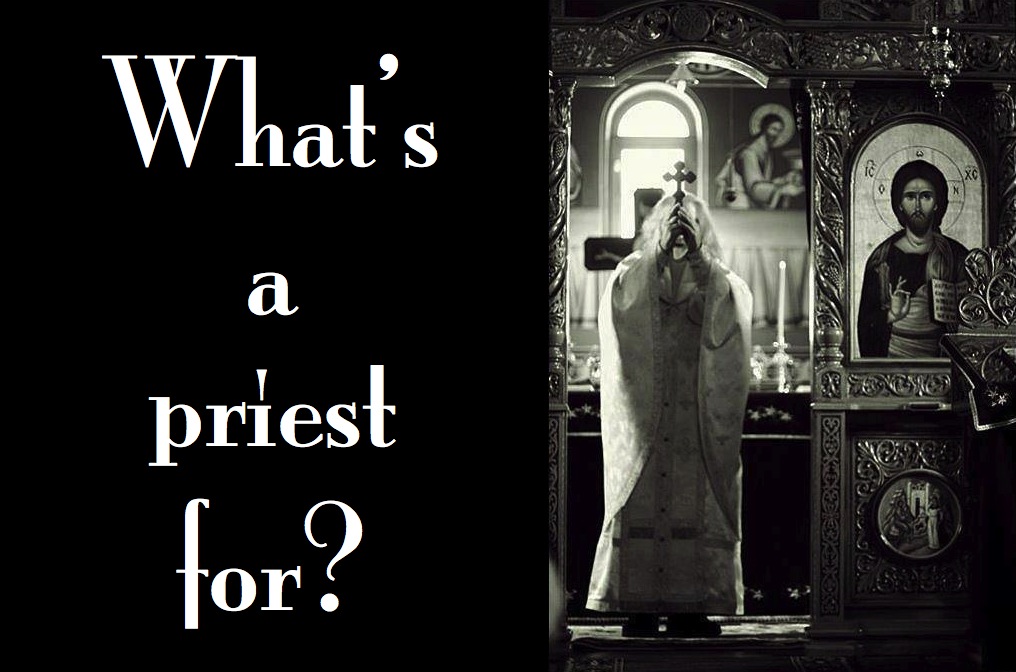
What’s a priest for?

Priest.001In the St. Jude’s Church series on the 39 Articles we come this Sunday to Article 23 – Clergy don’t self-anoint. It is an opportunity to talk about the historic vision of the Church as the gathering of the Body of Christ, and the role of clergy to call Christ’s Bride to worship and holiness of life. And, having worshipped through Word and Sacrament, for the Church to be propelled back into the world for the extension of God’s Kingdom.  Priests pray, teach, offer the Sacraments, preach, declare God’s pardon, bless and console. In short, a priest is to point the people to the Priest: the Great High Priest, Jesus Christ (Hebrews 4:14-5:4, 10:11-12).

I have the privilege of preaching the next three Sundays. We will move on from the role of clergy to consider the corporate spiritual practices of Baptism and Holy Communion.

Snark Meter.005

Young Adults and the Church: Will the Mainline benefit from Evangelical Dissatisfaction?

fleeing_from_giant_spide

Are you following the hubbub in the blogosphere of the growing disaffection among young adults with all things Evangelical? First Andrea Dilley, who left Neo-Calvinism for an Anglican church, posted Change wisely, dude. She posited that young adults are looking for liturgy. Three days ago Rachel Held Evans posted “Why millennials are leaving the church.” She pegged the issue as young adults outgrowing narrow, simplistic Evangelical answers and desiring greater social engagement. Yesterday Pastor Keith Anderson posted “Millennials, Consumerism and the Idolatry of God in which he suggested that millennials have been over-marketed to and are cynical of a “God about you.”

Will the Mainline see a resurgence from this growing discontentment with Evangelicalism? After all the Mainline is everything all three authors are advocating: We have always done liturgy. We have always been engaged in combating social ills. And, lets face it, we have never been very good at packaging and marketing. Even more, our churches are often strategically located in inner-cities, the very place that upwardly mobile, educated young adults are flocking. Our churches even have the sense of space and permanence they crave. We should be what Millennials flock to!

Will we be?

Don’t bet on it.

Here are three reasons:

1) We don’t have money. Most of our churches are theologically progressive. Progressives tend not to tithe. According to Barna 24% of Evangelicals tithe. Less than 1% of Progressives do. (Here) As a result, we tend to have far less money than evangelicals, for whom eternity is at stake. Related to this (as it takes money to fund leaders) is a second issue:
 
2) We don’t develop leaders. Evangelicals push toward ordination people who a) Have a lifetime of leadership (student body president, captain of the volleyball team, etc), and b) Have succeeded in a smaller church roles first. Then they c) Train them by mentoring them on the job in their own system of leadership development. We usually find someone who is young and nice and has the desired theology, and, whether or not they have ever led anything before, send them to three years of expensive seminary. They graduate and we put them in a college ministry or small church alone and then wonder why they flounder.
 
3) We don’t have momentum. In Phoenix alone I can think of 7 Evangelical young adult groups with an attendance of greater than 100 (including 2 more than 500). I cannot think of a Progressive young adult group with more than 30. I have actually heard our people say, “They have 500? What are they doing wrong?” Young adults are not nearly as numero-phobic as Progressives. In fact, since they tend to be dating and looking for social connections, larger events attract them. Unfortunately, we tend to fear large.
 
Until we solve these three hurdles, most of the crowd will run past us…probably back to Evangelical churches, who are pretty resilient and entrepreneurial. Not surprisingly, Evangelicals have begun to regularly ring my phone to talk about liturgy.
 
One thing we do have going for us: Some of those disaffected Evangelicals are leaders and some of them join us. When they do, they bring the leadership skills they developed elsewhere to bear in our world. In the Episcopal Church, two incredibly gifted Evangelical crossovers come to mind: Gil Stafford, former national champion baseball coach and college President and Julia McCray-Goldsmith, a former missionary. In our diocesan office, of the five clergy mission-staff, NONE of them was raised in the Episcopal Church. Each came to the church in adulthood from other traditions.
 
Let me say what non-Episcopalians regularly point out: We have a leadership identification and development issue. And until we address that issue many of those running from Evangelicalism will run right past our door.